Tuesday, October 25, 2011

Politics – October 2011


The world is shaped by those who dare.

Gilad is back at home. Veshavu banim legvulam.

~Raphael Cohen-Almagor


‎"... More than machinery, we need humanity, more than cleverness, we need kindness and gentleness. Without these qualities, life will be violent, and all will be lost ..."

~The barber in Charles Chaplin's The Great Dictator, 1940.


Gilad Shalit Is Free
Exchange with Abe Silverman
Social Justice
MK Shelly Yachimovich - New Labour Party Leader
House of Lords for Israel
European Association of Israel Studies

Internet Responsibility Conference in Paris

Dan Shechtman Wins 2011 Nobel Prize in Chemistry

Boycott China, Say Bioethicists
My New Article
New Books
Things that Are Said to Disappear in Our Lifetime
Movie of the Month – Closing the Ring
Monthly Poem
Gems of the Month (4)
Lost Generation?
Wake Up Call in Paris
Light Side


Gilad Shalit Is Free

Gilad Shalit is back at home. On October 18, 2011, Gilad was finally united with his family. Veshavu banim legvulam.

The price was high. The decision was right. Every Israeli parent should know that the government and army will do all that is in their power to bring their children back home, alive and well. Every soldier should know that when s/he gives two/three and more years of their life to defend the safety of Israel that all is done to see that they return home alive and well. This is the government's and army’s duty.


Gilad Shalit


Since his return to power, Prime Minister Netanyahu has made many decisions, most of which I criticized. This is the first decision I congratulate and celebrate. No doubt, a courageous decision. It came very late, five years and four months after Gilad Shalit was captured. But it came. We know of other precedents that not all captured Israeli soldiers lived to see the day. I am absolutely delighted for Gilad, and for his loving family who did not give up, and fought to unite with their beloved.

I wish Gilad Shalit and his family many years of good health, tranquil happiness, peace, love and joy, as they surely deserve.


Exchange with Abe Silverman

Sept 21/11
Re  "A Palestinian State is both a Palestinian and Israeli interest"
I think every clear thinking person would agree, but what price are you prepared to pay to achieve that goal.
Shana Tova
Abe Silverman
Edmonton AB


Dear Abe

I think the price Israel will pay if the conflict won’t be resolved will be extremely high.

Shana tova

23/11
But do you think it is possible to reach an agreement with the Palestinians without paying a price that is unacceptably high.
Shabat Shalom
Abe


Yes, Abe. I am talking about Abbas, not Hamas. With the latter it is hopeless. But we can strike a decent deal for Palestine, and Israel, with Abbas.

Bear in mind: Israel at present is far stronger than Palestine. But its power deteriorates by the moment. I am speaking with a great sense of urgency. The ME is changing for the worse as far as Israel is concerned. We need to move swiftly.

Shana tova to you and your loved ones,

Rafi


Sept 23/11
Interesting exchange that we have going. Lets for a moment pretend that you and I are entrusted with the task of creating a peace plan.

Lets start with what the Arabs say is the greatest obstacle to peace. Settlements. Do we both agree that most settlements should be abandoned except for those that are strategically important and for those there will be a land swap or compensation. ( You should know that it makes me angry that 1 million Arabs can live in Israel and 1 Jew will not be able to live in Palestine.)
Recognition. Do you agree that the Principal as described in the Partition Plan of 1947 is the logical way to go. One Jewish State and one Arab State?
Security. Would or could Israel agree to giving up the right to monitor the Military Activities in Palestine and in the Jordan Rift Valley? I don't thinks so. At least not for the next 25 years.
The right of return. I can't see Israel agreeing to the right of any Arab to come to Israel and claim what he believes is his property.
I do however believe that all Arab claims to property within Israel should be dealt with fairly and compensation be paid where applicable. This of course should be dealt with through Israeli Courts.
Jerusalem. I think we can agree that eastern Jerusalem should be given to the Arabs but not the old city and I'm sure an agreement can be reached on the joint administration of the Holy sites.
Did I leave anything important out? Do you think that peace is achievable? I don't. My view is the Arabs will never accept a 2 State solution. One Jewish and one Arab.

Shabat Shalom

Abe Silverman


Thank you, Abe.

I believe that the way to escape the deadlock is to rely on the Clinton parameters and the Geneva Accord. Both documents lay the foundations for resolving all contentious issues.
Borders – Israel will withdraw to the Green Line, evacuating settlements and resettling the settlers in other parts of the country. Major settlement blocs may be annexed to Israel upon reaching an agreement with the PA of territory exchange that will be equal in size. At the Taba talks, the Palestinians presented a map in which Israel would annex 3.1 percent of the West Bank and transfer to the PA other territory of the same size. Beilin said that they were willing to concede Israeli annexation of three settlement blocs of at least 4 percent of the West Bank.
Territorial contiguity – a major elevated highway will connect the West Bank and the Gaza Strip to allow safe and free passage. The road will be solely Palestinian. No Israeli checkpoints will be there.
Security – The Palestinian sovereignty should be respected as much as possible. Checkpoints will be dismantled. Only the most necessary will remain, subject to review and necessity. The Palestinian state will be non-militarized. This issue was agreed upon in 1995. Also agreed: Joint Israeli-Palestinian patrols along the Jordan River, and the establishment of a permanent international observer force to ensure the implementation of the agreed security arrangements.
Jerusalem – What is Palestinian will come under the territory of the new capital Al Kuds. What is Jewish will remain under Israeli sovereignty.
Haram al-Sharif – Palestine will be granted extraterritorial sovereignty over the site under Waqf administration. Jews will enjoy right of access.
Water – Israel and Palestine should seek a fair solution that would not infringe the rights of any of the sides and will assure that the Palestinian people will have the required water supply for sustenance and growth.
Terrorism and violence – Both sides will work together to curb terrorism and violence. I emphasize that there is zero sum game between terror and peace. Therefore, both sides will see that their citizens on both sides of the border reside in peace and tranquility. Zealots and terrorists, Palestinian and Jews, will receive grave penalties for any violation of peace and tranquility. The Palestinians, apparently, fail to understand the gravity of terrorism and are willing to accept it as part of life. Nabil Shaath said: “The option is not either armed struggle or negotiations. We can fight and negotiate at the same time, just as the Algerians and the Vietnamese had done”. Democracies, however, see things differently. On this issue there should be no compromise.
Incitement – Both sides will overhaul their education curricula, excluding incitement, racism, bigotry and hate against one another. The curricula should reflect a language of peace, tolerance and liberty.
Prisoner exchange – As an act of good will, part of the trust-building process, Israel will release a number of agreed upon prisoners. In return, Gilad Shalit and other Israeli prisoners (if any) will return home. With time, as trust will grow between the two sides, all security prisoners will return home.
Right of return – the 1948 Palestinian refugees will be able to settle in Palestine. Israel will recognize the Nakba and compensate the refugees for the suffering inflicted on them. No refugees will be allowed to return to Israel. This dream should be abandoned.

I'd be happy to publish our exchange in the next Newsletter, if that's OK with you.

Shana tova to you and your loved ones

Rafi


Social Justice

On September 26, 2011, the Trachtenberg Committee submitted its recommendations. They did not meet the expectations of the hundreds of thousands of protesters who demand immediate relief in coping with the hardships of life and the high cost of living. The main concern is that their recommendations would be implemented over a five year period. This is an eternity in Israeli politics. The government will change, and then all recommendations might sink into oblivion.

What is required is a concise list of dramatic recommendations, easy to implement with immediate effect:

Affordable public housing in all parts of Israel, regulated by the government to cater for the needs of small and large families. The housing plan should include rental as well as apartments for purchase. The Committee merely recommended the building of 15,000 units for rent, designated for families that earn 15,000 shekels or less.

Increasing minimum wage to 4000 Shekels per month ($1000);

Insuring household income of 5000 shekels for families of 4 and plus ($1300);

Update social security aid to needy people;

Increasing salaries of society’s angels: Teachers, nurses and social workers to a minimum of 5000 shekels per month;

Increased 3% taxation on those earning 50,000 ($13,500) shekels and more per month.
The committee made similar recommendation for people who earn 40,231 Shekels a month;

Decreasing government ministers and MKs by 3%, a symbolic step that shows that the government and legislators have a sense of social justice and social responsibility.

All measures should take effect from November 1, 2011.


MK Shelly Yachimovich - New Labour Party Leader

MK Shelly Yachimovich is the new Labour Party leader. On September 21, 2011, she defeated MK Amir Peretz in the second round of the Labour primary elections. Two other candidates ran in the first round: Amram Mitzna and MK Yitzhak Herzog.
Yachimovich received 54% of the votes, while Peretz received 45%. A total of 61% of Labour Party constituents exercised their right to vote in the internal elections.

"We will work together as a united party," Yachimovich said, "We intend to bridge between the historic Labor movement and the new winds blowing on the street... With you, I know that it is possible to make real changes in Israeli society."

"We will work together as a united party," Yachimovich said, "We intend to bridge between the historic Labor movement and the new winds blowing on the street...  With you, I know that it is possible to make real changes in Israeli society."


The younger generation of Labour Party supporters is dominant in the Yachimovich camp. She has received the support of many of the leaders of the recent social protests. Yachimovich has a healthy sense of social justice. She made a name for herself as a woman with a conscience about social matters, women's issues, and issues concerning religion and state that are intimately related to feminist issues.

Yachimovich is very opinionated, strong-willed and determined. A journalist by profession, she set a model as how NOT to conduct an interview. She hosted top radio shows in Israel, and made a name for herself as a sharp, sometimes relentless interviewer. She often used her interviewees to promote her own agendas, and was known to speak more than her interviewees. Her “questions” were far longer than the time she allowed her interviewees to answer. I was invited to appear in her talk shows a number of times, and declined all invitations. I did not think she was really interested in my views. Yachimovich is in the talking business, not the listening business.

When she decided to officially move to the other side of the microphone and run in the Labour primaries, people were not surprised. Her heart, mind and soul are in politics. As a journalist, she was a disguised politician. This is her true calling. I hope she has learnt to listen, as this quality is important in politics, more so when one advances to its high echelons. Yachimovich is very bright, with a clear social agenda, and liberal-democratic-socialist views. She is the second woman to head the Labour party. The first was another strong-willed, sharp woman who became prime minister: Golda Meir. Meir was also known for her inability to listen. Israel paid a high price for this inability: The Yom Kippur War.

You ask me: Whether Yachimovich can be Israel’s prime minister. My answer is: Yes. She can present a formidable challenge to Prime Minister Netanyahu. Labour is now on the rise, as usual when a leader is elected, and a new promise appears on the horizon. Polls give Labour 22 mandates if elections were to be held now, but there is a long way until elections, and Yachimovich is taking votes from the “wrong” camp, Kadima. Some 40 percent of voters are undecided as to how they would vote in the next elections. She needs to appeal to Likud supporters and sway them away from their dangerous, anti-social leadership. I think Yachimovich is capable of doing that. She loves to talk, and is quite convincing. Her views, if implemented, will do far more justice to the poorer classes of Israeli society who have been voting during the last decades for the Likud far more than they voted Labour. Yachimovich needs to convince them that they will be better off with her in the prime minister office.

In the last 2009 elections, the Labour Party received only 13 mandates, a historic nadir. In January 2011, former leader Ehud Barak split with the party, taking with him four MKs to establish Atzmaut (Independence). Thus presently Labour has only eight seats.


House of Lords for Israel

Four candidates ran in the Labour Party internal elections for leadership, including Amram Mitzna, who had failed as a former party chairman. He decided to run again, and failed miserably, coming in last, well behind Yachimovich and Peretz. People did not believe that this old horse is capable of learning new tricks. They did not wish to give him another try. Amir Peretz, one of the three architects of the most unfortunate Israel-Hezbollah War, advanced to the second round and I was hoping that people’s memory was not THAT short. I now trust that Peretz’s future is behind him.

The innovative British instituted the House of Lords designed for retired politicians who are unable to retire and/or find another job. Socialist Israel saw this option as too elitist. But give the Likud another decade in power, and House of Lords in Israel won't be that far-fetched.


European Association of Israel Studies

I attended the inaugural conference of the European Association of Israel Studies. The first session concerned Zionism. The main speakers were Prof. Anita Shapira and Prof. Derek Penslar. I put to both of them: There is a shared feeling, anxiety among lovers of Israel and hope shared by its enemies that the Zionist enterprise might not be sustainable in the long run. Israeli society is a society under constant and severe stress, and the developments in the region make Israel even more vulnerable. I asked them whether this anxiety is justified, and if it is, what Israel can do to improve its condition. Shapira answered that Israel’s fragility is a reflection of Jewish state of mind. We Jews tend to be worried. But there is a strong reality. Israel has withstood many challenges successfully, and it is here it to stay. Shapira maintained: “I have grandchildren in Israel and I certainly think there is a future for them”.

Penslar said that the Zionist project was completed in the 1970s. He explained that the Zionist project was inherently revolutionary, and in the 1970s that revolution ran out of steam as Israel became a more affluent society, the Israeli public grew cynical about its leadership and ideology in the wake of the war, and the Labour party became sclerotic and corrupt. The coup de grace came from the Likud's victory in 1977, as Menachem Begin was the first major leader in the history of Zionism and Israel - including his ostensible mentor, Jabotinsky - to separate Zionism from a mission for individual and collective transformation. Previously, Zionism demanded that Jews undergo a sea change, via the Labour Zionist ideal of haganah atsmit (self-defence) through productive labour. Conversely, the Revisionist ideal was of chivalric hadar (splendour), or some combination of the two. But Begin's message to Israelis was that they were fine the way they were. Begin's counter-revolution was a kind of inverse Copernicanism. Whereas Zionism's founders forced Jews to attain certain universal western ideals, to attach themselves to the world while dialectically creating a uniquely Jewish state, Begin championed a lachrymose parochialism rooted in a notion of eternal, external sinat yisra'el (Israel hatred).


I am certainly encouraged by the positive predictions of these two senior historians. Their optimism relieved them from the necessity to explain what Israel needs to do to sustain its existence in a growingly hostile middle east.

I had a discussion with Dr. Magnus Norell who just came from Beirut, where he met senior Hezbollah officials who insisted that they will never recognise Israel. The meeting took place in a fairly shabby office, where the electricity went out a few times. Still, the Hezbollah men have an unshaken belief that Israel will disappear from the map. According to their estimation, this will happen around 2030. Why 2030? Because by then the conditions will be ripe. Because by then (if not before) Israel will become more and more isolated. The pressure around it will grow as Egypt and Jordan will retract from their peace agreements and adopt the Hezbollah radical line. What will happen to the Israeli Jews? They will face two options. Either they remain subjects in the Palestinian state, or leave to a destination of their choice. Hamas and Islamic Jihad embrace the same game plan. More violence and further strife are bound to happen.
There is not any real scope for compromises here either; the existence of Israel is an existential problem for, not only the Moslem world, but for the whole world. Therefore, Israel has to disappear. Either it will implode (because its weakness and lack of support from outside) or it will be conquered by military force. There are no 'third options' here.

The good news came from Prof. Clive Jones who estimates that Yemen won't fall into the hands of al qaeda. Yemen is a tribal society, and tribal affiliation and sentiments are more powerful then jihadi ideology. Al qaeda may infiltrate the tribal society and affect Yemen but it is not powerful enough to overtake Yemen.


Internet Responsibility Conference in Paris


I participated in LICRA and INACH annual conference on Virtual Citizenship and Social Responsibility. LICRA is the International League against Racism and Anti-Semitism (Ligue Internationale Contre le Racisme et l’Antisémitisme). INACH is the International Network Against Cyber Hate. The 2-day conference was held at the new state-of-the-art French Ministry of Foreign and European Affairs.


I delivered a speech on Media and Social Responsibility. I was the only academic speaker invited to talk in this highly selective conference. The other participants who arrived from fourteen countries were all members of NGOs combating racism and discrimination in their respective countries as well as representatives of concerned governments and leading Internet services.

At the end of the conference we drafted a Charter of Social Responsibility for Internet Service Providers and other concerned NGOs for a responsible Internet conduct.

Dan Shechtman Wins 2011 Nobel Prize in Chemistry
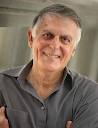


Another great achievement for Israeli academia. Professor Dan Shechtman has been named as the winner of the 2011 Nobel Prize in chemistry. He was awarded the prize for his discovery of patterns in atoms called quasicrystals.

Shechtman is a professor at Technion - Israel Institute of Technology, in Haifa, as well as
an Associate of the U.S. Department of Energy's Ames Laboratory, and a professor at Iowa State University.

The Nobel Committee for Chemistry at the Royal Swedish Academy of Sciences said Shechtman had discovered "quasicrystals", which it said were like "fascinating mosaics of the Arabic world reproduced at the level of atoms" and which never repeated themselves.

Up until then, scientists had thought the atom patterns inside crystals had to repeat themselves. Shechtman had to fight for recognition, and his way to achieve this was not easy. It is worth while telling his story.

In chemical terms, a crystal is a regular and repeating arrangement of atoms within a material. A quasicrystal presents a pattern that scientists had thought was impossible. The pattern of atoms within a material influences the material's physical properties.
Shechtman was studying a mix of aluminum and manganese in his microscope when he found a pattern that never repeated itself and appeared contrary to the laws of nature.
"His battle eventually forced scientists to reconsider their conception of the very nature of matter," the academy said.

Nancy B. Jackson, president of the American Chemical Society called Shechtman's discovery "one of these great scientific discoveries that go against the rules." When Shechtman announced his discovery of an unusual pattern of atoms, she said, other experts hesitated.

"People didn't think that this kind of crystal existed," she said. "They thought it was against the rules of nature." Only later did some scientists go back to some of their own inexplicable findings and realized they had seen quasicrystals but not realized what they had.

Staffan Normark, permanent secretary of the Royal Swedish Academy said Shechtman's discovery was one of the few Nobel Prize-winning achievements that can be dated to a single day.

Crystallographers always believed that all crystals have rotational symmetry, so that when they are rotated, they look the same. On April 8, 1982, while on a sabbatical at the U.S. National Bureau of Standards and Technology in Washington, D.C., Shechtman first observed crystals with 10 points — pentagonal symmetry, which most scientists said was impossible.

"I told everyone who was ready to listen that I had material with pentagonal symmetry. People just laughed at me," Shechtman said in a description of his work released by his university.


For months he tried to persuade his colleagues of his find, but they refused to accept it. Finally he was asked to leave his research group, and moved to another one within the institute. Shechtman returned to Israel, where he found one colleague prepared to work with him on an article describing the phenomenon. The article was at first rejected, but finally published in November 1984 — to uproar in the scientific world. Double Nobel winner Linus Pauling was among those who never accepted the findings.

"He would stand on those platforms and declare, 'Danny Shechtman is talking nonsense. There is no such thing as quasicrystals, only quasi-scientists.'" Shechtman said.

In 1987, friends of Shechtman in France and Japan succeeded in growing crystals large enough for x-rays to repeat and verify what he had discovered with the electron microscope.

"It borders on art," academy member Sara Snogerup Linse said of the quasicrystal patterns. "Humans have created similar patterns in macroscopic scale with the help of ceramic tiles, quilts, etc. But what was new was that it was found also in the world of molecules and atoms."

The academy said quasicrystals are being studied for use in new materials that covert heat to electricity:  "There is research going on in the field of thermal-electric applications, where waste heat can be converted to electrical currents or energy," said Cesar Pay Gomez, structural chemistry expert at Uppsala University in Sweden and an advisor to the prize committee.

Israel has an impressive showing when it comes to Nobel winners, with seven winners in the past 20 years. Israeli scientists have won five nobels in the past decade, including the chemistry prize in 2009, which was awarded to Ada Yonath of the Weizmann Institute for her work on the ribosome.

Immune system researchers Bruce Beutler of the U.S. and Frenchman Jules Hoffmann shared the medicine prize with Canadian-born Ralph Steinman, who died three days before the announcement. U.S.-born scientists Saul Perlmutter, Brian Schmidt and Adam Riess won the physics prize for discovering that the universe is expanding at an accelerating pace.


I have written about this issue in the past. Despite assurances that the practice is winding down, China persists in using organs from executed prisoners. In an editorial in The Lancet, several prominent bioethicists have called upon doctors and scientists to boycott everything related to organ transplants.

"The time has come to bring normal scientific and medical interchange with China concerning transplantation to a halt. We call for a boycott on accepting papers at meetings, publishing papers in journals, and cooperating on research related to transplantation unless it can be verified that the organ source is not an executed prisoner. These steps are admittedly challenging. But the international biomedical community must firmly and boldly challenge the status quo--the barbarous practice of obtaining organs from executed prisoners."

One of the authors, Arthur Caplan, of the University of Pennsylvania, says that controversial practice will not stop unless international pressure is applied. In fact, he says, China is building an international medical city to capitalise on the medical tourism market with facilities for organ transplants. He declares:


"Using organs from prisoners who are executed on demand to get parts for rich visitors may bring currency to China but it also ought to bring shame. The Chinese people who need transplants deserve a better system as do the hapless prisoners who are being victimized. The rest of the world should say so loudly and clearly."


Source:  “Time for a boycott of Chinese science and medicine pertaining to organ transplantation”, The Lancet, Volume 378, Issue 9798, Page 1218, 1 October 2011


My New Article

Freedom of Expression, Internet Responsibility and Business Ethics:
The Yahoo! Saga and Its Implications

Abstract
In the late 1990s, the Internet seemed a perfect medium for business: a facilitator of unlimited economical propositions to people without any regulatory limitations. Cases like Yahoo! mark the beginning of the end of that illusion. They demonstrate that ISPs have to respect domestic state legislation in order to avoid legal risks. Yahoo! was wrong to ignore French national laws and the plea to remove Nazi memorabilia from its auction site. Its legal struggle proved futile and may have harmed its business. This essay argues for the adoption of standards of Corporate Social Responsibility (CSR). CSR considerations may trump some forms of anti-social, highly offensive expression.

Keywords: Internet, Yahoo!, Nazi memorabilia, Corporate Social Responsibility (CSR), business ethics


New Books

Marianne Wade and Almir Mljevic (eds.), A War on Terror (NY: Springer, 2011).

This book provides a comprehensive, up-to-date discussion on European efforts to curb modern forms of terrorism today. It explores recent developments in the war on terrorism, highlights the new threats, and probes the emergence of new, supra-national actors. The book also discusses the implications of the war on terror on human rights throughout Europe.


The book consists of four unequal parts: The first part (2 chapters) discusses German police perspectives, and terrorism on the Internet. The second part (4 chapters) concerns the role of the UN in the prevention and repression of international terrorism, the role of the European Union, and policies as how to treat victims of terror. Part 3 (5 chapters) is about the war on terror and its implications on human rights in Slovenia, Bosnia, Herzegovina, Germany, Croatia and the United Kingdom. Part 4 (7 chapters) is titled “Disappearing Rights”, about the price that we citizens pay as a result of governmental counter-terrorism policies.

This is a valuable resource for scholars, legislators, decision-makers and human rights activists.

I thank Springer for sending me a copy.


Things that Are Said to Disappear in Our Lifetime

Some things are said to be part of the “old” world, and in fifty years time at most they will be gone. Some projections make sense. Other less. Some I pity. Some I do not.

I would not regret the passing of the Post Office, the Check

I will regret the passing of the Newspaper and of the book as well as the elimination of privacy.

I find it a bit curious that the projections also speak of the death of Land Line Telephone, of the entire music industry and of the television.


Movie of the Month – Closing the Ring


This is a wonderful love story, powerful and tragic. A young man and a woman fall in love. The man has to go to war. The woman is left behind. The man, Teddy, commits his friend Chuck to take care of Ethel if he doesn’t return. Chuck loves Ethel. She does not love him. There is a third man, Jack, who also loves Ethel but is too proud to tell or to admit. Teddy does not return. At the tender age of 21, Ethel feels her life is over. Ten years later, she finally marries Chuck. Jack marries another girl, and another, and a third. He keeps an eye on Ethel.

The film starts when Chuck dies. Ethel does not mourn. Chuck was a good man, but she never loved him. At the same time, a young man who is fascinated by airplanes and loves the word “fantastic” finds in Belfast a ring that belonged to Teddy. He searches for Ethel, and finds her. He wants to close the ring. Ethel needs to close the ring. So does Jack. Both need redemption. Both need to confront their deep, hidden feelings. Both need to overcome the huge shadow of Teddy.

This is a moving film, with great actors (Shirley MacLaine, Christopher Plummer and Martin McCann), great story, sensitive director (Richard Attenborough) and a great song (“Lost without You” by Amy Pearson). One of the rare movies I watched more than once, and enjoyed both times equally.


Monthly Poem

When It Comes

When it comes
Shaking grounds under feet
Trembling existence
Reaching inner
Filling your cells
Body, soul, heart.

Open the door
Take out the blankets
Cherish like a drop in the desert
Embrace gently and share
It's easy, just be yourself
Make the most of it.

Raphael Cohen-Almagor


Gems of the Month (4)

1.     Paris


Paris is a city I always enjoy. It has so much to offer. Every visit reveals new discoveries. Beautiful architecture, gardens, museums, churches. It offers the best food in the world, aesthetic flower shops, book shops everywhere, galleries, music, and the people speak a language that rhymes in my ears.


2.     August Rodin

My favourite sculpture. Amazing talent. So real results. Can’t but admire.


3.     Josh Groban


Josh Groban is blessed with a wonderful, rich voice. This month I was fortunate to see him in concert in the wonderful Manchester Concert Hall, a perfect place to enjoy Groban’s singing. Groban enjoys entertaining his audience not only by singing. For part of the show, he arranged on-stage sofas for two young girls (5 and 8 y-o) and a young couple to watch him singing from the best possible position, while `enjoying a glass of wine and, in the case of the young girls, glasses of milk.


4.     St. Martin in the Fields


During the late 1980 I taught at the Spiro Institute in London. I used to arrive early in order to enjoy the free luncheon concerts at St. Martin in the Fields. Last month, after many years, I had the opportunity to attend such a concert evoking some twenty old-years memories. Five talented musicians, Soloists of the Coldstream Guards Band, played for one hour in a packed church. I especially enjoyed Jacques Ibert's Deux Interludes for Flute, Violin and Piano. A short piece of two movements -- andante espressive, slow and charming, while the second allegro vivo, full of life, with noticeable Spanish influence. Beautiful.


Lost Generation?

Lost generation? You decide whether the forward version is right, or maybe the backward version? http://www.youtube.com/watch_popup?v=42E2fAWM6rA


Wake Up Call in Paris


RCA: I'd like to ask for a wake-up call, please.
Receptionist: Yes; at what time?
RCA: Quarter to eight please.
Noise of flipping papers
RCA: Hello?
Receptionist: Wake-up call, room 710 at four forty five.
RCA alarmed: No. I ask for quarter to eight, 0745.
Receptionist: Oh sorry; room 745 at 710.
RCA: My room number is 710. And I'd like a wake-up call at 0745.
Receptionist: 710 at 0475.
RCA: No. Please 0745.
Receptionist: Ahah yes, 0745.
RCA suspicious: What did you write?
Receptionist: Room 710 at 0745.
RCA: Thank you.
A few hours later, the phone rings.
Reception: This is your wake-up call.
RCA: Thank you
I open the light and look at my watch that, to my complete horror, says 0445.
RCA: I asked for a wake-up call at quarter to eight. Why did you wake me up now?
Reception: Ohuu, I am really sorry. There was a mistake. I will wake you up at 0815.
RCA: You know what? Wake me at 0730.

Light Side

Extracts from television and radio programmes:

BEG, BORROW OR STEAL (BBC2)
Jamie Theakston: Where do you think Cambridge University is?
Contestant: Geography isn't my strong point.
Theakston: There's a clue in the title.
Contestant: Leicester.
BBC NORFOLK
Stewart White: Who had a worldwide hit with What A Wonderful World?
Contestant: I don't know.
White: I'll give you some clues: what do you call the part between your hand and your elbow?
Contestant: Arm.
White: Correct. And if you're not weak, you're...?
Contestant: Strong.
White: Correct - and what was Lord Mountbatten's first name?
Contestant: Louis.
White: Well, there we are then. So who had a worldwide hit with the song 'What A Wonderful World'?
Contestant: Frank Sinatra?
BEACON RADIO ( WOLVERHAMPTON)
DJ Mark: For £10, what is the nationality of the Pope?
Ruth from Rowley Regis: I think I know that one. Is it Jewish?
ROCK FM ( PRESTON)
Presenter: Name a film starring Bob Hoskins that is also the name of a famous painting by Leonardo Da Vinci.
Contestant: Who Framed Roger Rabbit?
THE BIGGEST GAME IN TOWN (ITV) Steve Le Fevre: What was signed to bring World War I to an end In 1918?
Contestant: Magna Carta?
JAMES O'BRIEN SHOW (LBC)
O'Brien: How many kings of England have been called Henry?
Contestant: Er, well, I know there was a Henry the Eighth ... ER ..ER .. Three?
CHRIS SEARLE SHOW (BBC RADIO BRISTOL )
Searle: In which European country is Mount Etna ?
Caller: Japan.
Searle: I did say which European country, so in case you didn't hear that, I can let you try again.
Caller: Er.... Mexico ?
LUNCHTIME SHOW (BRMB)
Presenter: What religion was Guy Fawkes?
Contestant: Jewish.
Presenter: That's close enough.
PAUL WAPPAT (BBC RADIO NEWCASTLE ) Paul Wappat: How long did the Six-Day War between Egypt and Israel last? Contestant (after long pause): Fourteen days.
DARYL DENHAM'S DRIVETIME (VIRGIN RADIO) Daryl Denham: In which country would you spend shekels?
Contestant: Holland?
Denham: Try the next letter of the alphabet.
Contestant: Iceland ? Ireland?
Denham (helpfully): It's a bad line. Did you say Israel?
Contestant: No.
THE VAULT
Melanie Sykes: What is the name given to the condition where the sufferer can fall asleep at any time?
Contestant: Nostalgia.

I thank Lord Philip Norton for these gems.


Peace, Freedom and Love,

Yours as ever,

Rafi

My last communications are available on http://almagor.blogspot.com/
Earlier posts at my home page:
http://hcc.haifa.ac.il/~rca/

People wishing to subscribe to this Monthly Newsletter are welcome to e-mail me at r.cohen-almagor@hull.ac.uk
Follow me on Twitter at @almagor35

Thursday, September 22, 2011

Politics – September 2011


A Palestinian State is both a Palestinian and Israeli interest.

Leadership requires daring. Peace in the Middle East requires vision and boldness.
 

Gilad is still in captivity. Veshavu banim legvulam.

        ~Raphael Cohen-Almagor


Reflections on the August 2011 Newsletter
Social Justice
Why Israelis Elected the Most Hawkish Government in the Country’s History?
Egypt
Discussion with Lord Mayor Colin Inglis
10 Years to September 11
A Question
Capturing Bin-Laden
Daniel Levin (1970-2011)
Farewell Afghanistan
More than A Single Strike Is Needed to Halt Iran's Quest for Atomic Weapons
Libya
Syria
Suffocating Gaza or the Emperor's New Clothes
Gaza-Egypt
Dick Cheney’s In My Time: A Personal and Political Memoir
Australia has also withdrawn from the upcoming United Nations Conference on Racism over concerns of Israel-bashing
International Day Against Fascism and Antisemitism

My New Article
Follow me on Twitter at @almagor35
Books Received
Movie
Monthly Poem
Light Side
Washington DC – November 2011
Shana Tova


Free Gilad Shalit. The government should invest in his release. It should be one of its top priorities. Veshavu banim legvulam.

I wish the Palestinians and Israelis good luck in the UN. The recognition of a Palestinian state is both a Palestinian and Israeli interest.


Gilad Shalit


Reflections on the August 2011 Newsletter

I was asked about the differences between the Israeli demonstration and the English riots. Well the common factors are justified grievances against the respective governments, and the utilization of social networking platforms to mobilize people. But there are significant differences between the two phenomena that yield very different situations.

In Israel, the middle class went to streets, or rather to the tents. In England, the middle class stayed at home. For the success of such social movements, the middle class must be mobilized.

Racism is not a factor in the Israeli demonstrations. It was a factor in the English riots.

The Israeli demonstrations are orderly and peaceful. There are no clashes with the police. Fundamentally, many police officers identify with the ends of the social movement as they experience similar hardships and would like to better their situation. The English riots were the outcome of gangs that wanted to exploit the situation for anti-social, criminal interests. From the start, those who pushed the motion forward were not motivated by social justice, but by anti-police sentiments and illegality. We are talking of different people, with different motivations which make the comparison baseless. In my August Newsletter I voiced my disappointment that justified economic and social grievances did not translate in England into a social movement. Instead, criminals exploited the uproar and launched vicious, anti-social attacks. Things escalated rapidly as looting spread like fire, with fire. What a shame, I wrote. A wasted opportunity to demand policy changes.


Tim Friedman, from Leeds, wrote:

Hi Rafi,

Thanks for your informative Newsletter which is worth reading, as always.

If you cannot express your personal opinion in your own newsletter, where on earth can you write what you think? Nevertheless, I think your readers less familiar with the UK scene should be aware that your analysis of the cause of the recent riots in England is shared by few mainstream analysts or politicians and your criticisms of the government's economic policies are shared by a minority only and are both contentious and highly partisan!

Of course, the social networking sites facilitated the gatherings of looters but was not a cause of the rioting. Further, it is argued that the killing of a black suspect by the police may have been the catalyst for the response in one of the trouble spots - but, it is generally accepted, nowhere else.

Even opposition commentators largely discount the economic deprivation interpretation in favour of the view that the riots were criminal acts perpetrated by those who thought they had the opportunity to steal and commit serious acts of vandalism anonymously under the protection of general mayhem.

There are various reasons suggested as to why there is a group of mainly young males - white and black - prepared to act in this criminal way. These include the absence of parental guidance or control (sometimes the absence of parents altogether), growing up in a family where no-one in two or three generations works but all live on state benefits out of choice, a lack of discipline, an absence of respect for any authority and the overweening influence of gang-culture on many young lives.

In such complex situations, there is inevitably a large number of relevant factors and not all will be applicable in a specific case. However, economic deprivation as a cause of the riots comes far down the list in the judgement of most expert commentators over the entire political spectrum and racism does not usually feature on their lists of causes outside Tottenham.

Best wishes
Tim


Colin Inglis, Lord Mayor of Kingston-upon-Hull, wrote:

… As to the riots, I've said to colleagues from London that the city is "another country", its ethnic makeup, culture, cosmopolitanism, huge distinctions of wealth between adjacent neighbourhoods make it so. I remember, even in the 80's working in Notting Hill, as a Social Worker and dealing with poverty and deprivation and neglect of kids within yards of millionaires' mansions. The spread to other major cities and even smaller market towns like Gloucester was very much more "copy-cat" I suspect, inspired by pictures on the all-pervasive media.

As to the spark in London itself, the shooting of that man whilst his arrest was being attempted, whilst hardly co-incidental, was equally insufficient a spark to be the cause of what then occurred. The gang culture which has pervaded certain cities, linked into an organised criminal underclass with no respect or ties to wider society, except to exploit its weaknesses was much more the cause and the police being unprepared to "nip it in the bud". I'm afraid I don't believe there was a political inspiration to what happened at all, much as I disagree with many of the policies of the current Government. If you look back in British history far enough, there was a pattern of such outbreaks. The 20th Century was very much the exception of reasonable orderliness. The London "Mob" was once notorious and successive governments lived in fear of it erupting from the Middle Ages onwards. I suspect, what we saw was much more a modern evocation of that, then as I said, copied because of the blanket media coverage.

The fact that a fairly significant city like Hull but not only Hull, saw no violence is interesting. We have no such gang culture, no Mob, to speak of and certainly no organised culturally validated criminality as you might find in London and spreading to some of the other major cities like Manchester, Birmingham and Liverpool.

Your thoughts on policing are interesting. The British method is very much "policing by consent" the Police are part of Society, not some paramilitary force dominating it, the trouble comes I suppose from those, who, probably without realising, live lives where, ironically, there is "no such thing as Society". Quite how we bring them within the wider fold is the question which must be answered, most of those rioting were unemployed, though not all and the rampant materialism which pervades all our lives is clearly part of the problem. When the sole purpose of existence is to own the latest iPhone, no matter how you might acquire it, then we are all in some difficulty.

Regards
Colin


President (ret.) of the Israeli Supreme Court, Meir Shamgar, sent me the Israel Democracy Institute recommendations to change the system of governance and the electoral system. The 55-page document is based on scientific work that examined other democracies and that is aimed to secure a more stable Israeli democracy.

I am happy to report that the Ministry of Finance and the Israeli Physicians Union signed a new collective salary agreement that improves the physicians’ salary significantly, providing special incentives to those willing to examine patients in the periphery.


Professor Stephen Newman wrote from Toronto:


Dear Rafi,

I'm troubled by the politics in my native country. A strangely anti-intellectual right-wing seems to have gained control over the Republican party. Their favorite candidates for 2012 appear proud of declaring their ignorance (as when Rick Perry, the current front-runner, decries global warming or when Sarah Palin and Michelle Bachman state that they would have allowed the country to default on its debt). Speaking of hate and bigotry, the anti-immigrant sentiment is terribly popular among the same group. I cautiously hope that the vast majority of Americans will reject all this stuff in the general election, but I cannot be sure.

Best wishes,
Steve


My reply:


Dear Steve,

In England, all three candidates during the last elections -- Cameron, Brown and Clegg -- referred to immigration as "a problem". Cameron added that multiculturalism had failed.

In my country, Palestinian bashing is in mode. My foreign Minister suggests a loyalty oath. My government wishes to inspect education curricula on all levels, including university, to ensure comparability with Zionism, however they define it. Bad winds are in the western world.

Best wishes

Rafi


Social Justice

As quiet is now been restored on the Israeli borders (until the next round), the Israeli public returned to the dominating topic of this summer: Social justice. On Saturday, September 3, 2011, the largest ever demonstration was held in Tel Aviv. This time, the organizers learnt the lesson of the previous demonstration and realized that the location is crucial; thus the demonstration was held in Hamdina (Nation) Circle. 400,000 people attended, calling upon the government to decrease the financial pressure and provide them with opportunities to maintain a decent standard of living. One of the placards read: “I Love you Mom, but I don’t want to continue living with you”.


The government, hopefully, now realizes that this won’t go away; that this movement reflects genuine thoughts of genuine people who have realized that things can be different. As the world has become smaller, and people travel, they compare their standard of living, their taxes, and the prices they have to pay for goods only to realize that somehow, in Israel everything is dearer. Even dairy food and transportation that used to be comparatively cheaper are now as expensive as in other parts of the world. True, in Israel a third of the budget goes to defence but still, there is no justification for the very high taxes on goods.

Few lessons can be learnt from the Egyptian upheaval that brought about the end of the Mubarak regime:
Involve the poor people; get them organized and mobilized. They are the first to wish to change their lives for the better;
Take over a symbolic square and establish a permanent presence there, while calling upon thousands of people to join and demand social justice. The Knesset hill can be a worthy place for such a permanent gathering;
Use the Internet and cell phones to mobilize people; the Egyptian also used taxi drivers to spread messages swiftly about grouping and regrouping;
Demand the removal of the government that believes in empowering the rich at the expense of the common people.


Why Israelis Elected the Most Hawkish Government in the Country’s History?

The common explanations are:
The Israeli-Palestinian conflict – Hamas non-recognition of Israel, its brutality, violence and terror radicalized Israel;
The growing number and influence of religious people, especially of those who believe in the holy trio of Torat Yisrael, Am Yisrael, Eretz Yisrael (bible, people, land);
The Russian immigration that tends to think of nationalism, large land, authoritarianism, non-compromise.

Current events lead me to believe that there might be another influential factor that was insufficiently explored until now and deserves probing: History has shown that social despair, poverty, inequality, and unemployment drive people to radical views. Israel’s neighbouring countries provide many examples. Unlike them, however, Israel has elaborate mechanisms to have communication, voice grievances, exert pressure on the government. What Israel does share with them, however, is that lack of civic society led to revolution, while in Israel when the elaborate democratic mechanisms did not yield the expected results, civic society crystallized into a social movement that demands immediate change and relief. The simplistic black-and-white picture of reality, as portrayed by the Likud, was appealing to the lower classes. They cannot change their class situation, but at least are able to show the Arabs who is the boss. By the way, the pushers and movers of the present social justice movement are not of the lower classes. These are members of the middle class who are pushed down the ladder and protest against their deteriorating status of living.


Egypt

First Turkey and now closer to home. On the night of Friday, September 9, 2011, an angry mob stormed Israel's embassy in Cairo. Most of the embassy staff was away from office, but six Israeli security guards were trapped inside a secure room for several hours whilst the embassy was ransacked. The scenes from Egypt were most troubling. The guards feared for their lives as the mob made its way into the embassy. Prime Minister Benjamin Netanyahu and Defense Minister Ehud Barak attempted repeatedly to reach the head of Egypt's Supreme Military Council, Mohamed Hussein Tantawi, to no avail. Egyptians said every time that they were not able to track him down. The frustrated and worried Netanyahu then called the head of Egyptian intelligence, Gen. Murad Muwafi. Barak, in turn, called U.S. Secretary of Defense Leon Panetta, asking him to discuss the issue with Tantawi. An American source said that Tantawi failed to answer incoming calls from U.S. officials throughout the evening, finally answering after more than two hours of attempts.

"There's no time to waste," Panetta reportedly told Tantawi in the 1 A.M. call, warning of a tragic outcome that "would have very severe consequences." Meanwhile, the mob was already banging on the last door that separated the inflamed mobsters and the frightened Israeli guards.

Egyptian commandos were finally called to intervene. They released six besieged security guards from the Israeli Embassy, while an Israeli Air Force plane evacuated over 80 diplomats, including family members from Cairo, after a mass group of Egyptian protesters broke into the embassy.

See http://www.haaretz.com/news/diplomacy-defense/u-s-told-egypt-it-must-rescue-israeli-embassy-workers-or-suffer-consequences-sources-say-1.383675

Israel should strive to maintain good relationships with both Egypt and Jordan, and to invest in them. This is of utmost importance for Israeli best interests. Israel must integrate into the region. And the key to its integration is solving the Palestinian problem. Israel did invest in its relationship with both Egypt and Jordan, not realizing that as long as the Palestinian issue is not dealt with, the elephant is still in the room, and it is larger than life.

My grandfather was an interesting man who played a major role in my young life, and helped shape my worldview. Yoseph Chaim Cohen was an Orthodox Jew who went to the synagogue every day of his life. He spoke fluent Hebrew, Arabic, English, French and Ladino. He was a socialist-Zionist who believed that the key to Israel's survival is its reconciliation with its neighbours. Time and again he said that Israel should find a place in the Middle East as a Middle Eastern country that is appreciated for its qualities and contribution to the region. His view was different from the first Israeli Prime Minister, David Ben-Gurion’s, who wanted Israel to be a European oasis in the Middle East, and dreaded the thought that Israel would become another Arab country. Grandpa believed in integration into the region as another Middle Eastern society that looks at its neighbours with appreciation. Grandpa worked with Arabs all his life and embraced many elements of the Arab culture. He loved Arab movies and films and could tell the origins of the art by the accent.

It is time for Israel to seek different methods and to accommodate its relationships with its neighbours. The task is important and urgent. Israel is a society under stress because its neighbours never fully accepted her, and because Israel adopted an elitist view about them. Ben-Gurion said time and again Israel does not wish to be “Like them”. His view was shared by all Mapai leaders. I do not, of course, mean that Israel should become authoritarian and less liberal. God forbid, no. It should strive to establish good neighbourly relationships with all countries and nations around it, first and foremost with the Palestinian people. Did I already say this is the key to its survival?

Indeed, the key for Israel’s security is peace: Make your neighbours your friends. Find the paths to their hearts and minds. Have a continued conversation with them. Do not isolate yourself.


Discussion with Lord Mayor Colin Inglis

I had a long conversation with Colin Inglis, Lord Mayor of Kingston-upon-Hull. We spoke about many issues, including British politics, Israeli politics and the city of Hull. I was quite impressed with his knowledge of Israeli politics. He believes Israeli politics is far more complicated than British politics. I am not sure about this. I asked him whether there is a possibility for signing a sisterhood agreement between Hull and an Israeli city. His candid answer was along the following lines:

I used to be a great supporter of Israel, he said. As a young man, I was absolutely thrilled with Israel’s victory in the Six Day War. I thought it was a just war. I recall the photos from that period. I used to have a map of the Middle East, and I moved pins on it as the Israeli forces were advancing into the Sinai desert and the Golan Heights. As a socialist, I wanted to volunteer one year in the kibbutz. What could be a better experience for a young socialist? This did not materialize for different reasons, but I really wanted to do this. Many people of my generation and political outlook went to various kibbutzim.

But, Mr Inglis maintained, things have changed since then. You keep electing governments that are interested in land, not in people. I do not fully understand what exactly your leaders have in mind. You are a country of about 8 million people, surrounded by hundreds of millions of Muslims. You should seek peace with your neighbouring countries as soon as you can. But instead of trying to find a solution to the Israeli-Palestinian conflict, your leaders only aggravate the situation. Your government keeps building in the occupied territories, expanding Jerusalem and the settlements at the expense of Palestinian territory. What exactly does your government have in mind? Your foreign minister Lieberman wishes to throw out the Arab citizens. Can this happen in any other democracy, that a top minister calls to discriminate against twenty percent of the population? Things like that do not add points to the crumbling Israeli reputation in the world. You are losing your friends. This is a real shame. So the answer to your question, whether Hull would sign a sisterhood agreement with an Israeli city, is: Probably not. It would be imprudent on my part to table such a motion. It would be rejected tout court by most Council members. On this issue there won’t be dividing political party-lines. Socialists and Liberal Democrats (the two major parties in the Hull Council) do not like what you are doing to the Palestinians.

On the other hand, said Mr Inglis, if such a Palestinian motion were to be tabled, I bet that it will pass. No, not Gaza (he answered my question) but Ramallah, nominally controlled by the PA and therefore part of the entity engaged to some extent in the peace process, would be looked at favourably.

Mr Inglis does not strike me as anti-Israeli. He is anti-certain-Israeli-policies. As a matter of fact, his views are similar to mine, and I am certainly not an ant-Semite or anti-Israeli. I love Israel with all my heart. I am saddened to see how far to the right the Israeli population went, electing the most extreme government in the history of Israel, with no real hope for a different policy in the short run. The common feeling in Israel is that Mr Netanyahu does not have a real challenger. He is the best person around, so I was told. This is sad. I would give Ms. Livni a chance. The mood may change. But this was the mood of the people I met in Israel during August 2011.


10 Years to September 11

I was invited to a conference organized by the British Academy and St. Andrews University. I asked Professor Audrey Cronin whether US involvement in Afghanistan increases or decreases the threat of terrorism for American citizens. She answered that this depends on the terms by which US depart Afghanistan. Certain conditions need to be met ensuring or at least promoting regional and world security. This necessitates regional cooperation by key players – India, Pakistan and also China. When I questioned whether the US would welcome Chinese involvement, Cronin answered that some positive steps to engage China have been made by the US State Department. I asked what if the necessary conditions won’t be met, and Cronin replied that the government will have to address public opinion. There is an increasing unease among the American public regarding continued involvement in Afghanistan. Thus, the US might depart prematurely, before fulfilling the necessary security conditions.


Professor Sir Lawrence Freedman said that the Palestinians are everyone’s cause, but they are also everyone’s second interest.


From Professor Conor Gearty I learnt that in the early 1980s grenades were thrown from Lebanon into Israel. Gearty explained that common standards of international law have been deteriorating, undermining human rights. For instance, the killing of bin Laden transgressed international law. The operation had violated Pakistan’s sovereignty and assassination is wrong. Gearty maintained that the UK is as violent as its enemies. Its history is based on violence. Somehow, Israel also featured in his talk as he needed a third party to complete the evil trinity: The US is the most evil, then the UK is the medium evil, and Israel the smaller evil. Size does matter as the bigger you are, the more evil you are able to inflict; but principally speaking evil is evil and all three are equally evil. The Palestinians are the occupied, the weak, the disadvantaged, who are discriminated against. No word was uttered about Palestinian terrorism. A black-and-white picture is easier to grasp.

While I am the first to condemn the occupation, and have been doing so since 1985s like Old Cato, I insist on studying the context. Every speaker who engages in such narrative should study the facts and the historical-political context. Without context, statements become groundless.

What does Israel have to do with a lecture on ten years for September 11? It does not matter. It is an easy target, a popular topic for the London crowd, and is needed to complete the unholy Trinity.


The conference participants paid tribute to Professor Paul Wilkinson, a towering figure in the terrorism field who died earlier this year. Paul was generous to me during the early 1990s, when I made my first steps in world academia. I learnt a lot from his writings and always appreciated his wisdom. He is sorely missed.

I thank Professor Sir Adam Roberts for his kind invitation.


A Question

Suppose that you are the person who makes decisions at the White House. You receive intelligence that Ayman al-Zawahiri is in place x; you have a window of opportunity to do something. What would you do?


Capturing Bin-Laden

UK Channel 4 broadcasted a documentary on the capturing of the al-Qaeda founder and leader. The CIA followed al-Qaeda messengers. In mid-2010 they noticed that one of the main messengers was visiting a large house in Pakistan, not far from a large Pakistani military base. The CIA started to watch the house. All movements and people were recorded. One tall man, who usually stayed inside the house but in the afternoons went for walks only in the house perimeter looked familiar. The watchmen noticed that all rubbish was burnt. Children were playing outside. Whenever a ball crossed the elaborated fences surrounding the house, the guards did not return the balls. Instead, they compensated the kids with money to buy another ball. Small things that together accumulated to the conclusion that possibly Bin-Laden was living in that suspicious house.

However, there was no firm conclusion. Aerial photos were insufficient to provide certainty regarding the identity of the tall afternoon walker. The Americans were sure that an al-Qaeda senior terrorist was in the house. They were unable to conclude it was Bin-Laden. Deliberations went on for months, while a look-out team was gathering information. The White House considered three options: Asking the Pakistani government to investigate the house; bomb the house from the air, or raid the house.

The first option was ruled out. The Americans did not trust Pakistan. They called their supposed ally “Friendenemy”. How could al-Qaeda establish a base in the vicinity of the Pakistani army? They suspected that some senior Pakistani officials provided the people in the house with security guarantees.

The second option was ruled out because of collateral damage. There were women and children in the house. The Americans did not wish to harm innocent people. Moreover, they wanted to know who the tall man inside the house was. They wanted to know that they killed Bin-Laden. Without proof, Bin-Laden might continue to live forever.


Once the Americans were left only with the raid option, a top army commander was assigned to prepare the best possible assault team: Unit 6 of the Navy Seals. They began training without knowing the identity of their target. They trained for more than six months, without knowing their target. They realized that the target was Bin-Laden only hours before raiding the house. The White House wanted to prevent any leaks. Only those who had to know, knew about the operation.

After intensive deliberations, the White House reached the conclusion that there was a likelihood of 50 percent that the tall man was Bin-Laden. High stakes were on the table. Launching an attack on Pakistani soil was a risky thing to do. The operation might fail. Images of the 1980 Iran hostage crisis and the failed attempt to rescue them were in the minds of the decision-makers. President Obama, who was interviewed for the Channel 4 program, convened his senior advisors. He asked for the opinion of each person around the table. They all said it was a tough call. At the end of the round, about 50 percent of the advisors were in favour of the attack, while fifty percent opposed. The president said he will sleep on the decision and advise them of his conclusion the following morning. The next morning he entered into the conference room and said: Let’s do it.

The president had much to lose if the operation were to fail. Again, images of the 1980 Carter’s presidency were no doubt on his mind. Heavy responsibility was on his shoulders. It was a quintessential decision.


The raid took place on a dark, moonless night. Two MH-60 Black Hawks, the most advanced helicopters on earth, took the Seals to the house in a quiet suburb of Abbottabad. When they were above the house, one of the helicopters malfunctioned. The pilots were able to land but the helicopter went out of use. The raid team had to readjust its plan. They wanted to attack from the ground and from the roof. Now the roof option was gone. They advanced to the house on foot.

Al Qaeda gunman emerged with a woman from a small house adjacent to the bigger house. An exchange of fire ensued. They were now running against time as they feared that the tall man might escape, and/or that the Pakistani army in the nearby base will intervene. They advanced rapidly, killing gunmen they encountered and sparing the lives of women and children inside the house. On the third floor there was the tall man. One navy seal shot him. Now they needed to escape to a safe territory in Afghanistan. But they had been instructed to gather all intelligence information that they could find, to take the body with them for DNA verification, and to destroy the abandoned helicopter. The Americans did not wish the Pakistani army to put its hands on one of the most sophisticated and secret weapons they have. As only one helicopter was available, the backup team was called in to assist with the evacuation.

The Pakistani army did not intervene. The raid team returned safely. DNA verification revealed that the tall man was, indeed, the most wanted man on earth. An operation that started with fifty percent chance of success was completed with immense success.

Channel 4 has produced yet another enthralling documentary in a very short time.


Daniel Levin (1970-2001)


I was touched to see and read the story of Daniel Levin, an Israeli who was on one of the planes that crashed into the twin towers, who tried to fight the terrorists as they made their way to the cockpit and was stabbed to death. Those of you who understand Hebrew are invited to see his short, successful and tragic life story,


Farewell Afghanistan

Away from public eye the US is quietly pulling out of Afghanistan. 
My confidential sources reported that large shipments of equipment are now doing the reverse way back to bases in North America -- USA and Canada.
At a time of austerity the US cannot afford pointless investment in a foreign country that is more likely to turn against the US than appreciate its help and investment.

The US could have saved lots of resources and many human lives if they were to learn from the mistakes of experience of the Soviet Union before getting tangled in the Afghan mess.


More than A Single Strike Is Needed to Halt Iran's Quest for Atomic Weapons

Israel would not be able to halt Iran's reported quest for atomic weapons with a single strike, said a senior Israeli defence official.

Both Israel and the United States have hinted they might consider taking military action as a last resort to stop Iran getting the bomb.

"We're not talking about Iraq or Syria where one strike would derail a programme," the official said, referring to Israel's 1981 air strike that destroyed Iraq's atomic reactor and the bombing in 2007 of a Syrian site which the U.N. atomic agency said was very likely a nuclear reactor. "With Iran it's a different project. There is no one silver bullet you can hit and that's over," the official said, maintaining: "With all respect to Israel ... the greatest fear of the (Iranian) regime is the USA. There is no question about it."

Recent Israeli estimates do not show Iran developing nuclear weapons before 2015.


Libya

I was relieved to see the end of the Gaddafi regime. People ask me: But what do you know of the new regime? It might be worse. My answer to that is very simple: I do not support, under any circumstances, dictators. I am always relieved to see them gone. I am not a prophet and cannot see the future. The result can be bad for the Libyan people, for Israel, for the world at large. But in such cases the saying that it is better to have a bird in hand than two in the bush is simple false. Saying that will continue to subject good people to a tyranny. We are born free and would like to continue our lives as free human beings. I cannot ever support a dictatorship for fear that the replacement might be worse. By the way, the people who ask me this question are hardly ever citizens of the dictatorship in question. They are citizens of other countries, worrying about their partisan interests, and not about the citizens who experience day in, day out, the horrors of coercion and arbitrary judgments.

With the downfall of Gaddafi we can expect instability. It is very difficult to build a stable government from the remnants of a long-established dictatorial regime. As Libya enters this critical juncture and the National Transitional Council (NTC) transitions from breaking things to building things and running a country, there will be important fault lines to watch in order to envision what Libya will become. A Stratfor recent publication analysed the immediate problems.

One challenge is the transformation of the Libyan new rulers from rebels to a credible sovereign who can restore peace and order. The country is rife with historic ethnic, tribal and regional splits which brought about this revolution. While the Libyan people are almost entirely Muslim and predominately Arab, there are several divisions among them. These include ethnic differences in the form of Berbers in the Nafusa Mountains, Tuaregs in the southwestern desert region of Fezzan and Toubou in the Cyrenaican portion of the Sahara Desert. Among the Arabs who form the bulk of the Libyan population, there are also hundreds of different tribes and multiple dialects of spoken Arabic.

It is no mistake that the Libyan revolution began in Cyrenaica, which has long bridled under Gaddafi’s control and has been the scene of several smaller and unsuccessful uprisings. The jihadist Libyan Islamic Fighting Group (LIFG) has also traditionally been based in eastern Cyrenaican cities such as Darnah and Benghazi.

While the NTC is an umbrella group comprising most of the groups that oppose Gadhafi, the bulk of the NTC leadership hails from Cyrenaica. In its present state, the NTC faces a difficult task in balancing all the demands and interests of the various factions that have combined their efforts to oust Gaddafi. With the regime overthrown, the various factions involved in the revolution begin to pursue their own interests and objectives, which often run contrary to those of other factions.

Outside influence exploiting regional and tribal fault lines is also a potential danger in Libya. Egypt is a relatively powerful neighbour that has long tried to meddle in Libya and has long coveted its energy wealth. While Egypt is currently focused on its own internal issues as well as the Israel/Palestinian issue, its attention could very well return to Libya in the future. Italy, the United Kingdom and France also have a history of involvement in Libya. Its provinces were Italian colonies from 1911 until they were conquered by allied troops in the North African campaign in 1943. It is no accident that France and the United Kingdom led the calls for NATO intervention in Libya following the February uprising, and that the Italians jumped also on the bandwagon. It is believed that oil companies from these countries as well as the United States and Canada will be in a prime position to continue to work Libya’s oil fields. Qatar, Turkey and the United Arab Emirates also played important roles in supporting the rebels, and it is believed they will continue to have influence with the rebel leadership.

Following the discovery of oil in Libya in 1959, British, American and Italian oil companies were very involved in developing the Libyan oil industry. Gaddafi was hostile to the West, aligning himself with the Soviet Union and later Russia, which has supplied him with the bulk of his weaponry. It is believed that Russia, which seemed to place its bet on Gaddafi’s survival and has not recognized the NTC, will be among the big losers of influence in Libya.

China also has long been interested in the resources of Africa and North Africa. China has already invested some $20 billion in Libya’s energy sector, and large Chinese engineering firms have been involved in construction and oil infrastructure projects in the country. China remains heavily dependent on foreign oil, most of which comes from the Middle East, so it has an interest in seeing the political stability in Libya that will allow the oil to flow.

Source: http://www.stratfor.com/weekly/20110824-libya-after-gadhafi-transitioning-rebellion-rule


Syria

It is autumn, and the Arab Spring continues to try to raise its head in Syria. The brutal regime does its best to crush its citizens. Numerous human rights violations are recorded. Highly disturbing scenes are revealed, yet NATO does not rush to help the “rebels” as it did in Libya. Are the Syrian people less justified to try to topple their regime? Was there, until now, less violence against civilians than was the case in Libya? How more atrocities are needed to rush help against the Assad dictatorship? I wonder.


Suffocating Gaza or the Emperor's New Clothes

Sometimes, and during the past few years more often, I reflect on my government’s policies with puzzlement. A policy should have clear aims: There are means to achieve this and that. I wish to share with you some of the items that Israel prohibited entry to Gaza in the past, apparently because they might have undermined Israeli’s security. I mean, you never know for what purpose products may be used, and you can’t be too careful…

§ sage
§ cardamom
§ coriander
§ ginger
§ jam
§ halva
§ vinegar
§ nutmeg
§ chocolate
§ fruit preserves
§ seeds and nuts
§ biscuits and sweets
§ potato chips
§ gas for soft drinks
§ dried fruit
§ fresh meats
§ plaster
§ tar
§ wood
§ glucose
§ industrial salt
§ plastic/glass/metal containers
§ industrial margarine
§ tarpaulin sheets
§ fabric (for clothing)
§ flavor and smell enhancers
§ fishing rods
§ fishing nets
§ buoys
§ ropes
§ nylon netting for greenhouses
§ dairies for cowsheds
§ irrigation pipe systems
§ planters (for saplings)
§ heaters
§ musical instruments
§ size A4 paper (letter/legal size)
§ writing implements
§ notebooks
§ toys
§ razors
§ sewing machines


Then, some people who have no idea how dangerous these things are protested and organized flotillas to break Israel’s justified blockade on the terrorists of Gaza. And then there was a violent encounter at sea, people were killed, more friendly countries turned hostile, and Israel faced an international investigation.

With all due respect to Israel’s generals and decision-makers whose infinite wisdom is irrefutable, wouldn’t it be still more prudent to allow sage and coriander, and reluctantly take the risk of facing these dangerous substances?

I understand that a few months ago Israel amended the list. If anyone has the updated list, please send it to me. I’d be happy to publish it here.


Gaza-Egypt

On September 12, 2011, Egypt and Hamas reached an agreement on the flow of people and goods. Hamas security sources said the Islamic regime has arranged for cooperation with Egypt on border security. The sources said the cooperation would focus on monitoring the flow of people and goods from Egypt's Sinai Peninsula to the Gaza Strip. "The agreement means that Hamas will relay data on all smuggling activities," a security source said.
The sources said Hamas agreed to close many of the 1,500 tunnels that span the 14-kilometer Sinai-Gaza border. They said Egypt has consented to maintain several dozen tunnels to ensure the flow of vital goods from Sinai to the Gaza Strip.
The agreement included a Hamas commitment to relay the names of those who enter or leave the Gaza Strip through the tunnel network. The sources said Hamas has also pledged to reinforce its security presence in southern Gaza, the venue of the tunnels.
The sources said the accord reflected growing security and political cooperation between Egypt and Hamas in wake of the ouster of President Hosni Mubarak in February 2011. They said the new military regime in Egypt, urged by the Muslim Brotherhood, has been willing to ease restrictions on the Gaza Strip.

Source: http://israelbehindthenews.com/bin/content.cgi?ID=4505&q=1


Dick Cheney’s In My Time: A Personal and Political Memoir

Speaking of Syria: In a combative and score-settling new book, former vice-president Dick Cheney reveals how he unsuccessfully tried to persuade George W Bush to bomb a suspected Syrian nuclear site, and takes sharp aim at his "moderate" rivals of the time, Condoleezza Rice and in particular her predecessor as Secretary of State, Colin Powell.

In My Time: A Personal and Political Memoir confirms that Mr Cheney was one of the most influential vice-presidents in US history. It also confirms the public perception of Cheney as secretive and sibylline, whose already conservative views were only hardened by the trauma of 9/11.

But the Syrian episode also bears out the widespread evidence that his sway diminished in Mr Bush's second term, as the administration adopted a more multilateral approach to global issues, and the problems left by the 2003 Iraq invasion, of which Mr Cheney was arguably the most fervent advocate in the administration, became all but intractable.


"I again made the case for US military action against the reactor," Mr Cheney writes of a June 2007 White House meeting on the issue. "But I was a lone voice. After I finished, the President asked, 'Does anyone here agree with the Vice-President?' Not a single hand went up around the room." The site was destroyed three months later by Israel.

Well aware of his unpopularity, Mr Cheney offered his resignation on several occasions before the 2004 election. But each time the President rejected them.

Mr Cheney castigates Ms Rice and General Powell. The former for her naivete in dealing with North Korea. Indeed in a chapter entitled "Setback", Mr Cheney is scathing about the State Department and the "utterly misleading" advice it gave on some foreign policy issues, especially in the second Bush term. But the fiercest barbs are reserved for Colin Powell, whose State Department was often in undeclared war with Donald Rumsfeld's Pentagon and the Vice-President's office during the run-up to the Iraq war.

In Mr Cheney's eyes, General Powell's biggest sin was disloyalty, writing that "it was as though he thought the proper way to express his views was by criticising administration policy to people outside the government". Mr Powell's forced resignation in December 2004, the book drily notes, "was for the best".


Australia has also withdrawn from the upcoming United Nations Conference on Racism over concerns of Israel-bashing

The government was not convinced that "unbalanced criticism of Israel and the airing of anti-Semitic views" would be avoided, and therefore withdrew, it announced.

A spokesperson for Prime Minister Julia Gillard confirmed Tuesday that Australia had decided not to attend the meeting in New York next month.

It has been dubbed "Durban III" after the original anti-racism conference in the South African city in 2001 that was marred by anti-Semitism, prompting Australia, among other western countries, to walk out. The Labor government subsequently boycotted the second conference in 2009, during which Iranian President Mahmoud Ahmadinejad unleashed a vitriolic attack on Israel and the Jews.

Gillard's spokesperson said Australia remained involved in early consultations "to oppose attempts to endorse extreme language or explicit references to the text of the Durban Declaration."
But Australia would not be able to "support a meeting that chooses to reaffirm the original Durban Declaration, as appears likely," the spokesperson said.

Executive Council of Australian Jewry president Dr. Danny Lamm welcomed the decision, which he had been urging since last November."We have said that Australia should take no part in a process that remains irredeemably corrupted by racism and by attacks on Israel's legitimacy as the State of the Jewish people," he said.

"When a respected middle power democracy like Australia decides to stay away from as high profile an event as Durban III it sends a powerful message to the international community that the U.N. Human Rights Council and related organs of the U.N. General Assembly need to clean up their act."
Australia joins the United States, Canada, Israel, the Czech Republic, Italy and the Netherlands in declining to attend.

Link:
http://www.jta.org/news/article/2011/08/23/3089082/australia-withdraws-from-durban-iii-over-israel-bashing-fears


International Day Against Fascism and Antisemitism

BE LOUD AGAINST FASCISM
Action. Courage. Solidarity. Resistance.
- Join the campaign! -

9 November 2011International Day Against Fascism and Antisemitism
Get active, order free campaign material and inform us about your activities (see forms below).


We all believe in equality, diversity and antidiscrimination and hold antifascist values - but what do we do about it? Maybe we don't vote for fascist parties, we stay away from fascists on the street, or shake our heads at fascist graffiti. But it is not enough to hold a view, we need to express it, showing loud and clear that fascism is at odds with our values and cannot be tolerated in society - Be Loud Against Fascism!

"We should get out on the streets on 9 November not only for memory, but to have a common date to keep together, in every country, whatever political tradition we belong to, the parallel between past and present, that memory is not a ghost, but an active link to take lessons for present and future. Whilst a political common ground is not possible, this common date is the only occasion to show antifascism in all its diversity, at the same time, on the same ground"(Robert, Antifascist Journalist and Activist).

Hundreds of organizations and informal groups of all kinds have taken an active part in the campaign over the years. It is time for you, too! The campaign is pluralist and open: there is place and space for all. Its strength is in having a diverse European movement taking part in a common action, collectively using one theme and slogan. We use different approaches and methods but we have one shared vision, of a society without hatred and discrimination, based on human rights.
So join your voice and let's get active and UNITED!

Why this campaign?
9 November 1938 marked the beginning of the "Kristallnacht" pogrom and it is seen today as the symbolic beginning of the Holocaust, the policy of systematically murdering millions of people. It reminds us that the Holocaust did not start with deportations and concentration camps, but developed step by step. Nazi propaganda and hate speech against Jews and laws depriving Jewish citizens of their rights were the first steps which eventually led to the murder of millions of Jewish people and "enemies of the German state": homosexuals, criminals and "asocial" people, members of diverse religious communities, people with mental disabilities, political "offenders" such as communists and socialists, Spanish republican refugees and minorities like Roma and Sinti among others.

Looking to the right-wing tendencies in modern Europe, we must be aware that history can repeat itself and the Holocaust happened with the silent acceptance and support of the broad majority of society. Nowadays right-wing extremism is increasing in force on the entire continent. Hate crimes are turning into regular facts, extreme right-wing parties are elected into local and national parliaments and xenophobic propaganda is becoming legitimate in societies.

LET'S CAMPAIGN TOGETHER!
Get active, order free campaign material and inform us about your planned actions. Providing us with information about planned activities helps us to create a platform to facilitate more easy and effective networking and support among active groups.

Your activities will be published on-line and printed through the List of Activities, which creates visibility and attention all over Europe. In this way you also contribute to the creation of a strong and diverse European-wide campaign.
Don't forget: Even small acts can change the world!

For more campaign information see the UNITED website under "campaigns".

UNITED can send up to 2 kilos (100 posters) campaign material free of charge, so please calculate how many copies you need. For more than 2 kilos we ask for contribution towards the mailing costs but if you need more free material for special purposes don't hesitate to contact us.

contact: 9November@unitedagainstracism.org

UNITED is the pan-European network against nationalism, racism, fascism and in support of migrants and refugees, supported from more than 550 organizations from 48 European countries. How to join the network: see www.unitedagainstracism.org 'joining the network'

This event is supported by the Council of Europe (European Youth Foundation of the Council of Europe) and European Commission (Youth in Action Programme)

UNITED for Intercultural Action
European network against nationalism, racism, fascism and in support of migrants and refugees
Postbus 413 - NL 1000 AK Amsterdam
phone +31-20-6834778 - fax +31-20-6834582
info@unitedagainstracism.org - www.unitedagainstracism.org


My New Article

“Fighting Hate and Bigotry on the Internet”, Policy and Internet, Vol. 3: Iss. 3, Article 6 (2011), http://www.psocommons.org/policyandinternet/vol3/iss3/art6.

Journals usually send out articles to two or three referees. Policy and Internet sent my article to five referees, and the two Oxford-based editors had further comments and remarks. A thorough process it was which lasted exactly one year from submission to online publication.
Hate speech is a specific type of online content that is designed to threaten certain groups publicly and act as propaganda for offline organizations. Hate groups use websites for sharing ideology, propaganda, link to similar sites, recruit new converts, advocate violence and threat others. The aim of this paper is to analyse the ways Nethate can be countered. It is written and argued in the realm of ethics, or rather applied ethics. It offers a discussion on moral and social responsibility. Unfortunately, this is a neglected issue in the New Media literature.
This study focuses on articulating possible solutions to specific problems and on providing a framework within which these problems can be identified and resolved by accentuating moral and social responsibility. Section II introduces the underpinning concepts of this essay, moral and social responsibility. Section III discusses the targets of hate on the Internet. Finally, Section IV offers practical proposals to address this increasing problem and fight against it. Socially responsible people should not stand idly by while others are abusing the Net to discriminate and victimized their targets for hate.

Keywords: Aristotle, bigotry, hate speech, ISPs, Nethate, moral and social responsibility


Follow me on Twitter at @almagor35

For quick updates and impressions, join my Twitter group at @almagor35.


Books Received

Adam Frederic Dorin, Jihad and American Medicine (Westport, CT: Praeger, 2008).


Residents of the United States are vulnerable targets. They are naive and in denial. But this can be remedied. Adam Dorin makes these points abundantly clear in his latest book, Jihad and American Medicine. Dorin, an anesthesiologist, naval officer, and medical administrator, aptly analyzes the US health care system and exposes its vulnerabilities. Who better than an anesthesiologist to look for potential weaknesses and devise a contingency plan—it is what he does every day.


I thank Praeger for sending me a copy.


Gordon Lynch and Jolyon Mitchell (eds.), Religion, Media and Culture: A Reader (London: Routledge, 2012).


This is a most useful reader on media and religion. This Reader brings together a selection of key writings to explore the relationship between religion, media and cultures of everyday life. It provides an overview of the main debates and developments in this growing field, focusing on four major themes:
  • Religion, spirituality and consumer culture
  • Media and the transformation of religion
  • The sacred senses: visual, material and audio culture
  • Religion, and the ethics of media and culture


    I thank Routledge for sending me a copy.


    Monthly Poem

    A Glimpse

    A GLIMPSE, through an interstice caught,
    Of a crowd of workmen and drivers in a bar-room, around the stove,
    late of a winter night--And I unremark'd seated in a corner;
    Of a youth who loves me, and whom I love, silently approaching, and
    seating himself near, that he may hold me by the hand;
    A long while, amid the noises of coming and going--of drinking and
    oath and smutty jest,
    There we two, content, happy in being together, speaking little,
    perhaps not a word.


    Light Side


    A wife was making a breakfast of fried eggs for her husband.   Suddenly, her husband burst into the kitchen.   'Careful,' he said, 'CAREFUL! Put in some more butter! Oh my gosh! You're cooking too many at once. TOO MANY! Turn them! TURN THEM NOW! We need more butter. Oh my gosh! WHERE are we going to get MORE BUTTER? They're going to STICK! Careful. CAREFUL! I said be CAREFUL! You NEVER listen to me when you're cooking! Never! Turn them! Hurry up! Are you CRAZY? Have you LOST your mind? Don't forget to salt them. You know you always forget to salt them. Use the salt! USE THE SALT! THE SALT!'   The wife stared at him.   'What in the world is wrong with you? You think I don't know how to fry a couple of eggs?'   The husband calmly replied, 'I just wanted to show you what it feels like when I'm driving.'                   


    Washington DC – November 2011


    In early November 2011 I plan to be in Washington and would love to see friends. Please get in touch to arrange meetings.

    I am invited to deliver some talks and may be available to deliver further lectures to interested parties.

    Shana Tova

                  
    As we are about to celebrate our New Year, a year of small magical moments, of new hopes and accomplishments, filled with Peace, Love, Joy and Happiness.


    Yours as ever,

    Rafi


    My last communications are available on http://almagor.blogspot.com/
    Earlier posts at my home page:
    http://hcc.haifa.ac.il/~rca/

    People wishing to subscribe to this Monthly Newsletter are welcome to e-mail me at r.cohen-almagor@hull.ac.uk
    Follow me on Twitter at @almagor35