Wednesday, March 22, 2006

March 2006

Elections, Trip to Australia and New Zealand; Profile of Hamas; Sanitizing Hamas; Olmert's Plans; Darfur; Media Coverage of the Israeli-Palestinian Conflict; Anti-Semitic Attacks in France; Genes, Politics, and Academic Freedom; Multiculturalism in Canada; Physician-Assisted Suicide in Oregon; Tabloid Format; Ordering Pizza in 2010; Book
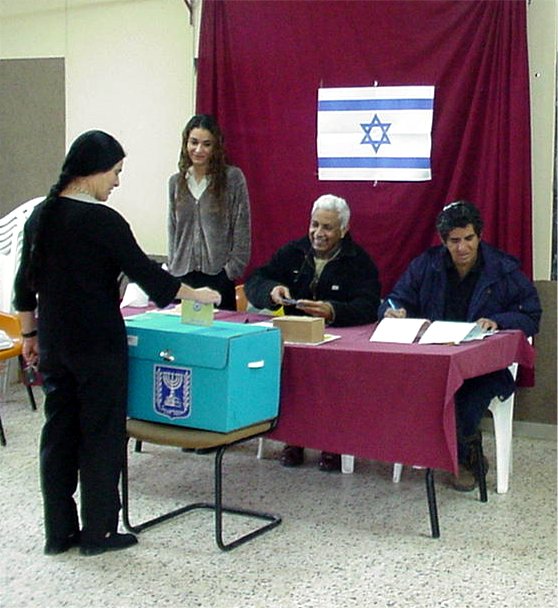

Elections

In the current state of affairs, if I were the new prime minister, I would invite to my coalition Labour and Shas. Labour agrees with the political worldview and plans; Shas is highly pragmatic, essentially cares for funding their social-welfare initiatives, and would provide the bridge to the Mizrahi ultra-religion, religious, and Masorati sectors.

My hopes for the upcoming elections are:

That Kadima will receive at least 38 seats;
That Labour will receive at least 20 seats;
That Meretz (Civil Rights Party) will receive 6 seats;
That Likud will receive no more than 15 seats;
That Shas will receive no more than 9 seats;
That the Russian Party Israel Our Home, headed by the extreme right winger Ivet Lieberman will receive no more than 9 seats;
That the extreme right wing party National Unity will receive no more than 9 seats.


Trip to Australia and New Zealand

I was invited to deliver lectures in Australia and New Zealand. On my way to Sydney I stopped in Bangkok. Bangkok can be described as colourful, bustling, sunny, oriental with western touches, flavours and twists. Bangkok can also be described as hot, humid, smelly, crowded, polluted and immensely busy.

Some describe Bangkok as the largest parking lot in the world. Sometimes that description had entered my mind. Trip to the airport that optimally would take half hour may take you, on a bad day, close to two hours. So slow you have the urge to get out and walk. Due to heavy traffic, the best way to maneuver in Bangkok is by the Tuk-Tuk, a small vehicle that can enter between cars with sharp turns. This is not for the frail hearted. A few times I thought we are about to crash. Nothing happened. Amazing drivers. After one crazed ride I asked the driver whether it is difficult to drive in Bangkok. He answered with a smile: "Very easy. Didn't you see?". Collecting my breath I continued, asking whether it is risky. "Not at all," was the answer. Drivers apparently know that the Tuk Tuk might enter into the smallest space and move around.

While the taxis that look like candies, bright and colourful in orange, yellow, green, red, blue, pink, purple, red and blue, and yellow and green, the Tuk Tuks look like army leftovers from the 1940s. While the taxis run on meters (their name is Taxi Meter), the Tuk Tuks operate on bargaining. A typical conversation would go like this:
- "How much does it cost to go to X?"
- "How much you pay"
- "You tell me"
- "300"
- "50"
- "250"
- "40"
We settle on 50.

Or you get an offer: 40 Baht with a stop at a clothing store. Or free ride if you are willing to stop at a jewelry store. Tuk Tuk drivers receive from the shops commission for bringing clients: 2 liter gasoline from clothing stores; 7 ltr from jewelry stores. You can hire a Tuk Tuk for 3 hours shopping with multiple stops for 300 Bahts ($8), or for free if you know the art of bargaining. The driver will have tea at the shop's expense + gas while you shop.

Usually, countries try to show the tourists the best they have to offer. Not in Bangkok. One of the most popular tours is a canal tour, when you go on a fast (very noisy as the engine is outside), or slow boat and see the way people are living on the Bangkok Chao Phraya River. Their standard of living is somewhat remote from Western standards. I watched the kids jumping into the water, playing. I asked my travel guide about the risks of swimming in such waters. She said "they are used to it". I hope so. Possibly they develop a sturdy immunization system.

Thai way of achieving efficiency reminded me of the Turkish: Labour is cheap, hence put 3 to 5 people where in the west organizations put one person. Together, the collective experience and wisdom will achieve some form of efficiency.

If you seek beauty in Bangkok, go to the palace and the countless temples. I'd rather distribute the wealth of those shrines (as well as of European cathedrals) among the poor, but nobody asks me.

A visit to the old capital Ayutthaya is worth doing. You can learn a lot about Thai history, culture, religion and wars, see old ruined temples, and touch, feed, and ride elephants.

From Bangkok I flew to Sydney with Thai Air (recommended). Sydney is beautiful and stunning as ever. Always so much to do. I delivered my first lecture "The Big Bangs in Israeli Politics" at the Lowy Institute for International Policy. I spoke of the disengagement from Gaza, and the establishment of "Kadima", explaining why I consider both as vital big bangs in Israeli democracy. I hope to maintain contact with this thriving private institute.

I was told Canberra is a boring, planned city. It is, indeed, a planned city, but I found it most pleasant. It has a center, not far from the university. After living in LA I know how to appreciate a city that has one marked center. Nothing is taken for granted. Canberra has all that a small city can offer. It is not as beautiful and interesting as Sydney, but there are not many cities in the world that match Sydney, so the comparison is a bit unfair on the capital. Australian National University (ANU) has a great campus. Literally. Land is not Australia's prime problem. It takes a while to find your way. I felt like in a big maze.

Here I gave three lectures, one per day:

"Liberalism and Multiculturalism" at the Law Faculty;

"Euthanasia in the Netherlands" (about my book which carries the same title), at the Centre for Applied Philosophy and Public Ethics Colloquium;

"On Compromise and Coercion" at the Department of Philosophy.

I received some good comments, and the people, generally speaking, were very hospitable and nice. The most popular closing sentence in conversations with service people in Australia and NZ is "no worries". The Australians sometimes add "mate", while Kiwis add "man". Indeed, little worries they have in these two countries.

I met with the Israeli Ambassador to the region, Nati Tamir, who briefed me on Israeli relationships with Australia, New Zealand, Papua-New Guinea and Fiji. By far, Israel's relations with Australia are the best among the four countries.

From Canberra I flew via Sydney to NZ southern island, to Christchurch. The southern island is said to be more beautiful than the northern island. It is less populated (that is, by humans, not sheep) and I could sense a slight envy regarding the "Center", i.e. Auckland. I did not have much time to tour around, and was impressed by the little I saw. I delivered one lecture on Israeli politics, the Big Bangs lecture, and was somewhat surprised to be asked about possible return of Israel to the 1948 borders. Welcome to New Zealand. I dismissed this question as irrelevant, non-issue, not on the agenda of all Zionist parties in Israel. Rather it is on the agenda of those who wish Israel's demise.

My last stop was Auckland. I delivered three lectures in two days:
"The Scope of Tolerance", about my new book, at the Department of Philosophy, University of Auckland;

"Language and Reality at the End of Life", Auckland City Hospital;

"Media Coverage of Terrorism: Problems and Remedies", Department of Political Studies, University of Auckland.

The last lecture attracted media and public attention. Terror is a big issue also in New Zealand. Luckily for them, it is mostly theoretical, and should remain so. Some students with kaffiyas sat in the first rows, to make a point. Two students were quick to unfold a huge banner crying for "Justice for Palestine" and "End the Occupation". Well, I am all in favour of both. I am also in favour of justice, peace and tranquility for Israel. I made all this clear during question time. The post-lecture was as interesting as the lecture, as I was surrounded by 12-15 people with "pressing questions" and ideas. Some wanted to know what do I think about state terrorism (Israel, USA, and the UK are the prime examples), while others complimented me, saying I should be Israel's ambassador to New Zealand. Well, we should first open an embassy there. It was a gross mistake to close the embassy and let Canberra deal with four countries, including New Zealand. New Zealanders, like some European countries, have deep empathy with the underdog. The combination of leaving the stage for Palestinian propaganda, lack of understanding of the Israeli-Palestinian conflict, sympathy to the powerless, and the foolish MOSSAD episode put Israel in an uneasy position.

Auckland is the Sydney of NZ, without the Opera House and some other minor qualities. It is the center of everything NZ has to offer, but politics. A ferry trip to Devonport is recommended, and so is a trip to the geysers and boiling mud pools of Rotorua. The Pohutu Geyser spurts boiling water and steam high into the air on a regular basis. What I would have liked to do but did not have the time is to visit the Waitangi Treaty House. This is where the Treaty of Waitangi was signed in 1840 between Maori Chiefs and the British Crown. This Treaty became the basis for life in NZ as we know it today. NZ history, which more or less started when the Zionist immigration to Palestine had started, is very different from the Australian history and the way the British settlers treated the indigenous people of Australia.

People told me about the food quality in New Zealand. Everything they said is right. I was very impressed. Some of the restaurants were truly superb, and the dairy products in the supermarket are as good as in Israel.

The architecture and city planning of Australia and New Zealand sometimes reminded me of Britain, and sometimes of the United States. It seems both great countries have inspired the local decision-makers and planners. Sometimes you find next to the other both styles.

My friends in Baltimore may like to know that the cicadas are alive and deafening New Zealand, and that there is also a town that is called after this nagging fly.

New Zealand inspired me to write the following (sorry, folks, for lack of translation);


????? ?????

?????? ??? ???? ????? ???? ?????
??? ????? ???
??? ??? ??? ?? ????
??? ????? ???? ????? ?????
??? ???? ?? ???
??? ?????? ?? ??
???? ?????? ?????
????? ???? ??????
??? ???? ?????, ?????? ?????.

????? ????? ????? ?? ?????? ????
?? ??? ??
????? ?? ??? ?? ????
?????? ?????? ???? ??
?? ???? ?????? ?? ???
??? ????? ?? ????? ??????
???? ?????? ????? ??? ??????
????? ???? ??????? ?????
??? ????? – ?? ???.


I wish to thank my kind and wonderful hosts: Sally and Bob O'Neill who provided the best possible welcome party to Australia, Cameron Stewart, Shirley and Malcolm Fisher, Tom Campbell, Dean Cocking, Bob Goodin, Nancy and Stuart McMillan, Murray Smith, Stephen Streat, Paul Rishworth, John Bishop and Geoff Kemp.


Profile of Hamas

Can be found at The Intelligence and Terrorism Information Center website http://www.terrorism-info.org.il/engsite/html/search.asp?isSearch=yes&isT8=yes&searchText=T86&pid=104&sid=13&preview=


Sanitizing Hamas

At least for the time-being, there is widespread revulsion regarding the Hamas victory in the Palestinian parliamentary elections, and general agreement that the United States, Israel and Europe should not be dealing with Hamas or with a Hamas-run government. Hamas has begun taking steps to sanitize its image, even while pursuing a parallel course of terror, in order to gain international acceptability. Hamas has begun making statements to the western press that make it sound moderate but that are directly contradicted by what its officials say in Arabic to their own population, statements that do not hold up under close scrutiny. More importantly, the terrorist networks in Palestine and the Arab world are alive and kicking.

H.R. 4681: Representative Ileana Ros-Lehtinen (R), Chair of the Middle East and Central Asia Subcommittee of the Committee on International Relations, and Tom Lantos (D), Ranking Democrat on the Committee, joined by Representatives Eric Cantor, Steve Chabot and Gary Ackerman, have introduced H.R. 4681, the “Palestinian Anti-Terrorism Act of 2006” to prevent any aid from being used to prop up Hamas or a government in which Hamas is a participant. Here are the key provisions of the bill:

· It forbids the transfer of any U.S. taxpayer funds the Palestinian Authority unless it can be certified that no ministry, agency or instrumentality of the P.A. is controlled by a terrorist organization and no member of a terrorist organization serves in such ministry, agency or instrumentality. And it forbids such transfer until the P.A. publicly acknowledges Israel’s right to exist as a Jewish State, recommits itself to all prior agreements including the Road Map, purges its security services of terrorists, dismantles the infrastructure of terrorism, and halts all anti-Israel incitement;
· Calls on the President to direct the US Executive Director at each international financial institution of which the U.S. is a member (IMF, World Bank, etc) to use the voice, vote, and influence of the U.S. to prohibit assistance to the PA during any time that the above requirements for certification are not met;
· Declares the P.A. to be a terrorist organization and deems the territory under P.A. control to be a sanctuary for terrorists or terrorist organizations, until the above conditions are met. And it places constraints on U.S. exports to such territory under the Export Administration Act of 1979; U.S. Foreign Assistance Act, and the Foreign Relations Authorization Act (1988 and 1989);
· Bans assistance to any non-governmental organizations in such territory except for humanitarian aid;
· Bans visas for any official of the P.A. to travel to the United States;
· Limits the travel of P.A. officials at the UN to a 25-mile radius;
· Calls for the closure of the all P.A. offices, other than its U.N offices;
· Bans diplomatic contact with any P.A. official that is a member of Hamas.

How you can help: Please contact your Representative in Congress by email by clicking on the TAKE ACTION NOW link below and ask that he or she sign on to H.R. 4681. Also let Representatives Ros-Lehtinen and Lantos know how much we appreciate their leadership on this issue.

Russia, apparently, is yearning for the good-old Brezhnev days when it played a crucial role in the history of the Middle East and wishes to return to the scene. The way to do this is by taking contra-American steps, like forming a relationship with Hamas. Given the alliance between Hamas and the Chechnyan rebels, this move seems imprudent as I am sure Russia will soon realize.


Olmert's Plans

On Friday, March 10, 2006 Acting Prime Minister Ehud Olmert told Haaretz that Israel will continue to build in the disputed E-1 zone between Ma'aleh Adumim and Jerusalem, despite American pressure to the contrary. Olmert also said that if he is elected prime minister Israel will set down permanent borders within four years, separating itself from the "decisive majority" of the Palestinian population of the West Bank.In contrast to the expectations that Olmert will stay silent, continue to blur, and sail away to victory without saying much, Olmert decided to put his cards open before the public, saying explicitly that Gaza First meant Gaza First, and now comes the turn of Judea and Samaria. Israel, if needed, will continue implementing unilateral steps. Olmert, I said, is an astute politician. He chose this candid policy, being aware that the Israeli public, on the whole, understands the need for separation, and for giving parts of Eretz Israel in return for tranquility, if not peace. By this move, Olmert pushes Labour aside, as they don't have anything else to offer in the diplomatic sphere, leaving them only one frontier to attack him: the social-economic frontier. Olmert knows very well that the decisive criterion for election was and remains security. At the same time, this move shows Netanyahu's radicalism and extremism. If you want to be stuck in endless and hopeless fight against terrorism, vote Bibi. But most of the public understands at this point that in order to win tranquility, there is a need to give something in return.

According to Olmert, "It is inconceivable that we should speak of Ma'aleh Adumim as a part of the State of Israel, while leaving it as an island or an isolated enclave. It's entirely clear that the [territorial] continuity between Jerusalem and Ma'aleh Adumim will be a built-up continuity. This is clear both to the Palestinians and to the Americans. In my view, there is an absolute consensus in Israel on this issue" (Olmert is right about the Israeli consensus; I am not so sure whether he is right also in saying that the issue is clear for the Palestinians. I hope he's right. RCA).He added that "the course of the fence - which until now has been a security fence - will be in line with the new course of the permanent border. There may be cases in which we move the fence eastward, there may be cases in which we move the fence westward, in line with what we agree upon."Olmert said his Kadima party, if elected, would move decisively in solidifying "Israel as a Jewish state, one in which there is a solid and stable Jewish majority, a majority which is not in danger." The guiding principle for delineating the permanent borders will be "ingathering [isolated residents of outlying settlements] into large settlement blocs, and thickening these settlement blocs."I don't want to get into their precise definitions now, but everyone knows that Gush Etzion will remain within the state of Israel, and the Ariel bloc will remain within the state of Israel, and the Jerusalem Envelope [the city and its environs] will be part of the state, as well as Ma'aleh Adumim."Olmert refused to specify what a coalition government would look like should he be elected to form the next cabinet. He said he would not disqualify any Jewish Zionist party and that he would not invite an Arab party to the coalition. He also refused to promise that the security portfolio would remain in the hands of Kadima in the next government."The only portfolio I will say is definitely staying in Kadima is the education portfolio, and that is following Sharon's promise to appoint Professor Uriel Reichman to Education Minister. If I become prime minister, Reichman will be education minister," Olmert said.

Olmert could not remain silent vis-à-vis his arch-enemy and thus strongly criticized Likud Chairman Benjamin Netanyahu, saying that he had not learned any lessons from the atmosphere of incitement that preceded the assassination of then prime minister Yitzhak Rabin. Olmert's statements followed the publication of an image on Likud's unofficial Website in which the acting prime minister appeared wearing a green cap with the Hamas logo on it. "I thought he would have learned the lesson," Olmert said."It gives a signal to vote for the youths from the hilltop youth when the leader of the Likud says that Olmert is Hamas. Hamas is Israel's worst enemy," he said.Darfur

A most tragic humanitarian crisis continues to escalate in Sudan's western Darfur region. More than 200,000 Sudanese have died and more than 3 million civilians have been uprooted by a violent campaign of ethnic cleansing. Ruthless militias are terrorizing villagers, forcing them off their land, systematically raping women and girls, murdering boys and men, and attacking even the camps on the Sudan/Chad border where they have sought safe haven.

Last July 13th, the American Jewish Congress called on the international community to end these atrocities in the Darfur region. Now AJCongress has joined the Million Voices for Darfur Campaign, a coalition of more than 150 faith-based advocacy and humanitarian aid organizations united in a renewed attempt to stop the slaughter by raising the levels of Darfur awareness and advocacy.

The Campaign involves:
1. Collecting and delivering to President Bush one million signatures on postcards, petitions and emails, urging him to support a larger, stronger, multi-national peace force to protect the citizens of Darfur;
2. A monster rally in Washington, DC on April 30th.
On December 2, 1942, American Jewish Congress President Stephen S. Wise wrote to President Franklin D. Roosevelt, asking him to "speak a word which may bring solace and hope to millions of Jews who mourn, and be an expression of the conscience of the American people." Today, we once again ask the President of the United States to act for the conscience of the American people "to bring solace and hope" to the civilians of Darfur. As Elie Weisel has said about Darfur: "What is at stake is our own humanity. We must tell the Sudanese victims that they are no longer alone, that we know what is happening to them. . . ."

Please print the following message
Dear President Bush:
We commend the Administration's actions in brokering a resolution of the north-south conflict, in recognizing the genocide in Darfur, and in sending humanitarian aid to that desperate region.
Now we urge you to use the power of your office to support a stronger multi-national force to protect the civilians of Darfur.
Thank you.
Signature: _________________________________

Name:

Email:

Address

Address

City, State Zip:


PLEASE mail it to:
American Jewish Congress
825 Third Avenue
Suite 1800
New York, NY 10022
Att: Campaign for Darfur


Media Coverage of the Israeli-Palestinian Conflict

The violent reality of the Israeli-Palestinian conflict exacts a very heavy blood toll from both sides. Since the beginning of the second Intifada in September 2000, more than 3,300 Palestinians have been killed by Israeli security forces. In the same period more than 1,000 Israelis have been killed by Palestinians.

The way the killings are covered affects media consumers’ ability to understand the complexity of the conflict, to interpret its varied contexts and to weigh the factors that contribute to its escalation. The conflict and the current circle of violence cannot be understood without knowing basic facts about reality on both sides. Israeli citizens are exposed to broad and intensive coverage of events in which Israelis are killed by Palestinians. One of the main questions that we seek to investigate here is whether Israeli media consumers receive basic information on killings of Palestinians by Israeli security forces.

Keshev, an Israeli organization that monitors the media, investigated media coverage of such events in December 2005, during which time, according to the major media outlets in Israel, 22 Palestinians were killed. They examined the daily editions of the three major newspapers, Ha’aretz, Yedioth Ahronoth and Ma’ariv, and the evening television newscasts on Channels 1, 2 and 10. Within these editions and broadcasts, they studied all items concerning events in which Palestinians were killed by Israeli security forces as well as items that dealt with the subject more generally (for example, items that discussed the “liquidations” policy or dealt with the responses of both sides to these events). A total of 135 items were examined.

I am most grateful to Keshev for permission to publish their main findings, infra:
In media coverage of events where Palestinians were killed by Israeli security forces during December 2005 a number of editing patterns stand out:
§ Events that were not defined as “liquidations” were reported just a little more than half as often as “liquidation” events.
§ The vast majority of reports were based on the IDF version of events alone. The few cases in which an alternative to the IDF version was presented were events that were not defined as “liquidations”. The alternative versions were reported in relatively marginal places compared with the IDF version.
§ A critical discussion of the “liquidations” policy was lacking in the media discourse. Where there was such discussion, it was in most cases merely implied or ambiguous and could be found only deep in news items, in commentaries or in supplements. Critiques of the effectiveness of the “liquidations” policy, or of its legality or morality, appeared in very few places. This, despite the fact that from the news reports it is evident that, even within the security establishment, this is a controversial policy.
§ The reports hardly related to the circumstances and wider context in which violent events occurred. In reports that did refer to the context, it was found that interpretations which presented Israel as responding to Palestinian aggression were put forth by official Israeli sources and by senior commentators. By contrast, alternative interpretations were presented, in most cases, by Palestinians involved in acts of terrorism – which served to undercut the legitimacy of those claims.
§ The media discourse almost completely lacked any critical discussion of the term “targeted prevention”, which was adopted widely by four of the six media outlets that were examined. Reports of casualties among passersby during actions that were supposedly “targeted” mostly appeared in the margins of news items or did not appear at all.
In conclusion, the findings indicate that the Israeli media tend to assign minor importance to events in which Palestinians are killed by Israeli security forces. On many such events it does not report at all. When the media does report on these events, in the vast majority of cases its reporting is based on only one version of events—the official version of the security establishment—and significant investigations or alternative accounts are not presented.
Coverage of “liquidation” events is even more problematic. In coverage of these incidents the IDF version of events appears in headlines without qualification. The terminology that is used to describe “liquidation” events is consistent with the viewpoint of the security establishment. There is no critical discussion of the “liquidations” policy itself and its many ramifications. As mentioned above, “liquidation” events are covered at twice the rate as other killing events.
These editing patterns suggest that in its coverage of killings of Palestinians by Israeli security forces, and especially in its coverage of premeditated killings, the media fail to fulfill its main role in a democratic society – to report and critique and to provide the public with a full picture, as much as possible, of the main news events that transpire.

The full report is available on
http://www.keshev.org.il/FileUpload/Keshev_report_200603_English.doc


Anti-Semitic Attacks in France

March 6, 2006/New York City - The American Jewish Congress-Council for World Jewry today issued a protest against the most recent spate of attacks on French Jews.
Over the weekend of March 3-5, Jews were attacked in three separate occasions in the Parisian suburb of Sarcelles.

On Friday afternoon, a local rabbi’s 17-year-old son was attacked by two men near the synagogue, and suffered a broken nose and an 18-year-old man was attacked by a group of five men, who insulted him and stole his cell phone. On Saturday night, a 28-year-old man wearing a kipah was verbally and physically abused by four men and suffered a dislocated shoulder. Arrests were made in the last attack.

"Council leaders visited Sarcelles just over a year ago and learned first hand of the threats the Jewish community there faces every day," said Chairman Jack Rosen. "There is a large concrete barrier protecting the community center and barbed wire fences surrounding the community Jewish school."

"For months we’ve been warning that the situation of French Jewry remained dire. Others were lulled into complacency by the drop in attacks on Jews in 2005 as compared to 2004 combined with a new frankness on the part of top French government officials in acknowledging anti-Semitism. The fact is that despite progress made, the basic problem is getting worse."

Two French political leaders, who may be in the running for their respective party’s presidential nominations, both denounced the new attacks. Interior Minister Nicolas Sarkozy announced he was dispatching police reinforcements to Sarcelles. Dominique Strauss-Kahn, a former finance minister and parliamentary deputy from Sarcelles, said, "Anti-Semitism is on the rise in our country and it would be wrong to not want to see this."


Genes, Politics, and Academic Freedom

http://observer.guardian.co.uk/international/story/0,6903,605798,00.htmlJournal axes gene research on Jews and Palestinians Robin McKie, science editorSunday November 25, 2001The Observer

A keynote research paper showing that Middle Eastern Jews and Palestinians are genetically almost identical has been pulled from a leading journal.

Academics who have already received copies of Human Immunology have been urged to rip out the offending pages and throw them away.

Such a drastic act of self-censorship is unprecedented in research publishing and has created widespread disquiet, generating fears that it may involve the suppression of scientific work that questions Biblical dogma.

'I have authored several hundred scientific papers, some for Nature and Science, and this has never happened to me before,' said the article's lead author, Spanish geneticist Professor Antonio Arnaiz-Villena, of Complutense University in Madrid. 'I am stunned.'

British geneticist Sir Walter Bodmer added: 'If the journal didn't like the paper, they shouldn't have published it in the first place. Why wait until it has appeared before acting like this?'

The journal's editor, Nicole Sucio-Foca, of Columbia University, New York, claims the article provoked such a welter of complaints over its extreme political writing that she was forced to repudiate it. The article has been removed from Human Immunology's website, while letters have been written to libraries and universities throughout the world asking them to ignore or 'preferably to physically remove the relevant pages'. Arnaiz-Villena has been sacked from the journal's editorial board.

Dolly Tyan, president of the American Society of Histocompatibility and Immunogenetics, which runs the journal, told subscribers that the society is 'offended and embarrassed'.

The paper, 'The Origin of Palestinians and their Genetic Relatedness with other Mediterranean Populations', involved studying genetic variations in immune system genes among people in the Middle East.

In common with earlier studies, the team found no data to support the idea that Jewish people were genetically distinct from other people in the region. In doing so, the team's research challenges claims that Jews are a special, chosen people and that Judaism can only be inherited.

Jews and Palestinians in the Middle East share a very similar gene pool and must be considered closely related and not genetically separate, the authors state. Rivalry between the two races is therefore based 'in cultural and religious, but not in genetic differences', they conclude.

But the journal, having accepted the paper earlier this year, now claims the article was politically biased and was written using 'inappropriate' remarks about the Israeli-Palestinian conflict. Its editor told the journal Nature last week that she was threatened by mass resignations from members if she did not retract the article.

Arnaiz-Villena says he has not seen a single one of the accusations made against him, despite being promised the opportunity to look at the letters sent to the journal.

He accepts he used terms in the article that laid him open to criticism. There is one reference to Jewish 'colonists' living in the Gaza strip, and another that refers to Palestinian people living in 'concentration' camps.

'Perhaps I should have used the words settlers instead of colonists, but really, what is the difference?' he said.

'And clearly, I should have said refugee, not concentration, camps, but given that I was referring to settlements outside of Israel - in Syria and Lebanon - that scarcely makes me anti-Jewish. References to the history of the region, the ones that are supposed to be politically offensive, were taken from the Encyclopaedia Britannica, and other text books.'

In the wake of the journal's actions, and claims of mass protests about the article, several scientists have now written to the society to support Arnaiz-Villena and to protest about their heavy-handedness.

One of them said: 'If Arnaiz-Villena had found evidence that Jewish people were genetically very special, instead of ordinary, you can be sure no one would have objected to the phrases he used in his article. This is a very sad business.'


Multiculturalism in Canada

In this era of sensitivity to cultural rituals that do not always conform to liberal standards, the Canadian Supreme Court has recently decided for multiculturalism. G and his father B are orthodox Sikhs. G believes that his religion requires him to wear a kirpan at all times; a kirpan is a religious object that resembles a dagger and must be made of metal. In 2001, G accidentally dropped the kirpan he was wearing under his clothes in the yard of the school he was attending. The school board sent G's parents a letter in which, as a reasonable accommodation, it authorized their son to wear his kirpan to school provided that he complied with certain conditions to ensure that it was sealed inside his clothing. G and his parents agreed to this arrangement. The governing board of the school refused to ratify the agreement on the basis that wearing a kirpan at the school violated art. 5 of the school's Code de vie (code of conduct), which prohibited the carrying of weapons. The school board's council of commissioners upheld that decision and notified G and his parents that a symbolic kirpan in the form of a pendant or one in another form made of a material rendering it harmless would be acceptable in the place of a real kirpan. B then filed in the Superior Court a motion for a declaratory judgment to the effect that the council of commissioners' decision was of no force or effect. The Superior Court granted the motion, declared the decision to be null, and authorized G to wear his kirpan under certain conditions. The Court of Appeal set aside the Superior Court's judgment. After deciding that the applicable standard of view was reasonableness simpliciter, the Court of Appeal restored the council of commissioners' decision. It concluded that the decision in question infringed G's freedom of religion under s. 2(a) of the Canadian Charter of Rights and Freedoms (Canadian Charter) and s. 3 of Quebec's Charter of human rights and freedoms (Quebec Charter), but that the infringement was justified for the purposes of s. 1 of the Canadian Charter and s. 9.1 of the Quebec Charter.

See http://www.lexum.umontreal.ca/csc-scc/en/rec/html/2006scc006.wpd.html


Physician-Assisted Suicide in Oregon

In the first report on assisted suicide since the U.S. Supreme Court upheld the landmark Oregon law, there was little change in the number of terminally ill patients who asked their doctors for a lethal dose of medication.

The Supreme Court ruled in January that the Bush administration improperly threatened to use a federal drug law against Oregon doctors who prescribe lethal doses of medicine to dying patients who request it. The ruling affirmed that states have the authority to regulate medical treatment of the terminally ill and could turn Oregon's unique law into a national model.

The annual report, released on March 9, 2006, showed 38 people in 2005 ended their lives under the Oregon Death with Dignity Act, which went into effect in 1998. It was nearly the same number as 2004, when 37 people asked their physicians for a lethal prescription.

A total of 246 people - mostly cancer patients - have chosen assisted suicide over the past eight years, according to the Oregon Department of Human Services.

"Once again, our report shows little change in the demographics and characteristics among those who are using this law," said Dr. Mel Kohn, state epidemiologist. He noted the total number of deaths under the law reflects a small portion of the average 31,000 annual deaths in Oregon. The state report showed the median age of those choosing assisted suicide was 70.

Patients who suffer from incurable diseases repeatedly cite the loss of control over their bodies as a major concern leading to a request for a lethal prescription, according to the report. They also cite decreasing ability to participate in activities that make life enjoyable and the loss of dignity.

Most were dying of cancer, and nearly all the rest were dying of Lou Gehrig's disease or AIDS, according to the report.

At least six other states have proposed, or are considering, some form of an assisted suicide law, with bills currently in the legislatures of California and Vermont. There are reasonably good chances for the law to pass in Vermont. As for California, the Governor does not support such legislation. The public is more supportive.

A Field Poll released on March 15, 2006 indicates large majority of Californians supports giving the terminally ill an option of receiving life-ending medication. Seventy percent of all adults and 69 percent of registered voters said they believe incurably ill patients have the right to ask for and receive life-ending medication (source: "ERGO news List" right-to-die@lists.opn.org of March 15, 2006).

A smaller majority said they support allowing the terminally ill to get a lethal prescription that they could administer themselves.

"Generally speaking, Californians tend to be more open to allowing an individual to make a decision rather than having something prohibited through government fiat," said poll director Mark DiCamillo. He noted that the Field Poll has measured California attitudes toward euthanasia eight times in the past 27 years and found consistent support beginning in 1979, when 64 percent favored the idea.

The most recent poll, conducted over the two-week period ending Feb. 26, found strong support among virtually all political, ethnic and social groups -- including people who identified themselves as members of major religious organizations.

For full results and graphics go to

http://www.sfgate.com/cgi-bin/article.cgi?file=/chronicle/archive/2006/03/15/BAGOIHO9A21.DTL

http://field.com/fieldpollonline/subscribers/RLS2155.pdf


The full 2005 report on the Oregon physician-assisted suicide law can be read at

http://egov.oregon.gov/DHS/ph/pas/docs/year8.pdf

Those interested in an article I published in 2000 about Oregon are welcomed to contact me for a copy.


Tabloid Format

In the past I voiced my opinion in favour of the tabloid format, saying that this is mainly because it is much readers' friendly compared to the cumbersome broadsheet format that makes your hands stretch and the papers scramble.

More evidence was brought to show that newspaper readers like smaller formats. And while the large circulation increases reported by downsized newspapers tend to disappear over time, those newspapers that utilize format change as part of a wider commercial strategy can see gains in reader loyalty and advertising yield.

Format change was never going to be a panacea but it is proving to be a worthwhile move, in terms of raising reader satisfaction and providing a foundation for other editorial and commercial developments, said Jim Chisholm, Strategy Advisor to the World Association of Newspapers, speaking to an audience of senior American newspaper executives on February 22, 2006.

Among those newspapers that aggressively promote the change, circulation patterns are remarkably consistent. Shortly after the smaller editions are launched, circulations rise between 10 percent and 15 percent. But after a year, few titles are showing circulation gains. The end result is, at best, a one percent growth, or for many, stable sales. Many publishers, having been faced with declines, regard this as success enough for their efforts, said Mr Chisholm.

"What is encouraging is the bi-products of the activity", said Mr Chisholm. For example, one newspaper in Sweden invited readers to use their mobile telephones to order free subscription trials of the new tabloid version: 40,000 people took up the offer and 10,000 subsequently subscribed.

Most significant is the number of publishers who have reported that the greatest value was the encouragement of innovation in the newsroom.

"As one publisher said: 'It's not enough to only change the format, readers expect the newspaper to be new, so the content needs to be refreshing as well," Mr Chisholm recounted. "Changing your format does not solve everything; you also have to take the editorial content into consideration to satisfy your readers and advertisers."

This view was also true in the advertising department, where training on price maintenance and demonstration of value, regardless of size, was seen as essential.

Many newspapers chose the format change as the time to move from column centimetre-based pricing to fixed-size, modular pricing. This has proved to be very successful, with publishers able to retain prices, while newsprint consumption has fallen.

Research shows that a tabloid page advertisement is equally as effective as a broadsheet page.

Speaking at the Newspaper Association of America conference in Orlando, Florida, Mr Chisholm concluded: "On balance, smaller formats are a good idea. Readers undoubtedly prefer them, and any notion that size somehow is a badge of quality or status is demonstrably a myth. While few newspapers are showing material circulation benefits, the anticipated problems in advertising yields and prices have been overcome, and many newspapers are benefiting from improvements in content, and reduced costs."

Mr Chisholm is scheduled to speak at the WAN World Newspaper Advertising Conference & Expo in Paris on Friday: full conference details at
http://www.wan-press.org/paris2006

For more information contact:

Larry Kilman, Director of Communications, on +33 147428500 or Jim Chisholm, on +44 7775817797, WAN, 7 rue Geoffroy St Hilaire, 75005 Paris France.
E-mail: lkilman@wan.asso.fr


Ordering Pizza in 2010

The future, possibly, might be as shown
on http://www.aclu.org/pizza/images/screen.swf

Food for thought.


Book

I recently read and enjoyed Nicholas Evans' novel The Smoke Jumper. In quite a few places Evans touched my heart. It is a good read when you travel, or before going to sleep. But beware: It might keep you alert and fully awake. I warmly recommend.


With my very best wishes,


Rafi


My last communications are available on http://almagor.blogspot.comEarlier posts at my home page: http://hcc.haifa.ac.il/~rca/
Books archived at http://almagor.fetchauthor.info/
Center for Democratic Studies http://hcc.haifa.ac.il/~rca/center/


Those wishing to subscribe this monthly Newsletter are welcome to contact Raphael Cohen-Almagor at ralmagor@soc.haifa.ac.il

Sunday, February 12, 2006

February 2006

Dear friends and colleagues,

This past two weeks were dominated by news regarding the Hamas: the organization, leaders' statements, plans, reactions to, preventive actions, you name it. It seems that any substantial piece of news in Israel related in one way or another to Hamas, and the prospects we may have vis-à-vis this organization. Israel is in a state of high alert and caution, while Sharon is in state of prolonged unawareness. As the time is passing, his chances to awake are slimmer.


Comments on January Newsletter, Olmert, Amona Syndrome or Two, the Fence, The Settlements, Likud, Meretz, Offensive Cartoons, Terrorism Statistics, Clinton Sings


Comments on January Newsletter

On Suicide Murders

An American colleague wrote:
Unfortunately for all the victims, it is not true that
Palestinian terrorism is "unprecedented in scope and
ferocity." If the comparison is limited to 2002-2006, the
total number of suicide attacks in Iraq for this period is
more than 150. Of the more than 12,000 civilian deaths
(and more than 1500 coalition force deaths), about
two-thirds are attributable to suicide bombings, despite
the fact that civilians are explicitly targeted in fewer
than 5 percent of these attacks. In May 2005 alone, Iraq
suffered almost as many suicide attacks as Israel had
suffered over the previous decade.
<http://www.washingtonpost.com/wp-dyn/content/article/2005/07/16/AR2005071601363.html>

It is depressing to think that the total number of
innocents killed by Iraqi suicide attacks is greater than
that of Al Qaeda victims, even if the 9/11 attacks still
claim the greatest number for individual attacks.
More depressing still, these numbers of innocents killed
may be surpassed by victims of Tamil Tiger attacks since
1987. The Tamil Tigers were, as of 2000, "unequivocally the
most effective and brutal terrorist organization ever to
utilize suicide terrorism" (according to Yoram Schweitzer
of the Institute for Counter-Terrorism in Israel). Since
1987, there have been over 180 such attacks, with more than
5,000 victims, among them several prime ministers of Sri
Lanka and India.

The only good thing that can be said about the violent
times we live in is that since the end of the Cold War,
state-led full-scale war has been on the decline. Let's
hope that this trend applies to suicide attacks as well.

On Amir Peretz
Guy Doron, from London, wrote:

I don’t agree that the Labour candidates list has not renewed. Labour has lots of new promising faces. Not only Ayalon and Braverman but also Yechimovich. Moreover, Peretz brings a new social-human spirit to the political debate, very similar to the European’s political agenda these days. For once we start to look like Western regimes, and more importantly, the political language has suddenly changed, focusing on citizens and human beings rather than on territories and land. Peretz may open a new era in Israeli politics.... I never thought this, but it seems that for the first time in my life, I will vote Labour.


Olmert

In his first major interview since Sharon's devastating stroke, Acting Prime Minister Ehud Olmert said on January 7, 2006 that his aim is to set the country's permanent borders, with Israel giving up significant parts of the West Bank but keeping the largest Jewish settlement blocs: Maale Adumim, east of Jerusalem, with about 30,000 residents; Gush Etzion, several miles south of Jerusalem, with more than 20,000 residents; and Ariel, north of Jerusalem, with close to 20,000 residents.

In his words, the direction is clear: We are heading toward a separation from the Palestinians. Israel will hold on to the main settlement blocs. But the borders will change. I always said: Wisdom does prevail. Sometimes it hesitates but at the end people do reach common sense.
Olmert's remarks reinforce the belief that he wants to relinquish additional Jewish settlements in the West Bank and would do so unilaterally. "We will disengage from most of the Palestinian population" in the West Bank, he said. "That will obligate us to leave territories under Israeli control today."


Amona Syndrome or Two

I wish to share with you the following piece, distributed by Yisrael Ne’eman on February 5, 2006 to subscribers of Mideast: On Target. Additional articles can be found at http://mail1.icpbounce.com/icp/relay.php?r=861690200&msgid=1994050&act=SL1R&admin=0&destination=http%3A%2F%2Fmail1.icptrack.com%2Ftrack%2Frelay.pl%3Fmsgid%3D5624%26act%3DQT30J0TTIZFHR0BBDIIM%26destination%3Dhttp%3A%2F%2Fwww.me-ontarget.com%2F. I am indebted for permission to circulate this piece on my Newsletter.

Over 200 were injured in last week’s clash between security forces and settlement activists at the Amona outpost on the edge of the West Bank (Judea and Samaria) development of Ofra. Nine permanent structures built by settlers on Palestinian lands were torn down by the government. The left wing Peace Now movement brought this to the attention of the authorities even though it appears the Palestinians themselves were in the process of selling the property.

Just a few years ago it would be a non-issue if Jewish homes were built on Palestinian lands during their sale. Today, and especially after the Gaza and northern Samaria Disengagement of August 2005 radical changes are in place. If permanent settlements can be removed then there is no question concerning illegal (by Israeli law) outposts. There are another 22 to go.

The message is political/diplomatic. Acting PM Ehud Olmert’s Kadima party is committed to Ariel Sharon’s platform of “demographic boundaries” ensuring a Jewish majority in the State of Israel to the detriment of retaining the entire Land of Israel. The agreement made with the Americans committing Israel to take down all outposts built after March 2001 is the excuse, but the real answer is in the policy of unilateralism being pushed by Olmert and supported by Labor. Just to Kadima’s right is the Yisrael Beitanu Party led by Avigdor Leiberman who also hints strongly that they support such policies.

Ofra is seen to be outside Israel’s permanent borders-to-be. If such a neighborhood was built on the edge of an existing settlement inside the fence it is doubtful anyone would be enforcing the Supreme Court decision. All would seek compromise (as is happening in Modi’in Elite at the moment).

Over the years everyone duped everyone else with a wink and a nod. For decades settlement leaders from the regional councils in Judea and Samaria built illegally and received monies and legal cover from Knesset members, ministers and the government after the fact. Ariel Sharon was the # 1 conniver. Olmert expressed no objections nor did other former Likud members in Kadima of today.

In true Israeli fashion we sent the ideologues forward to lead the people and the power elite stood behind them. Sacrificing the people in the name of development and security has always been part of the nation building syndrome. Look at the immigrants sent to development towns in the Galilee and Negev in the 1950s and 1960s far from the center of the country to guarantee population dispersal and Israel’s borders after the War of Independence. They were given not much better than minimum wage jobs in the Histadrut (Labor Union) industries and built an economy as they were exploited by state capitalism while the government reinvested in infrastructure. Kibbutz and moshav ideologues went to the frontiers, farming by day and guarding by night in the name of the socialist, agricultural and secular Jewish national ideal. Today they are marginalized, privatized and bankrupt ideologically. Those who moved to Sinai in the 1970s were removed by 1982 (Ariel Sharon was defense minister and razed their homes) to enable peace with Egypt. Very few doubted then or now that such a move was a mistake.
The difference is that with their Land of Israel ideals the National Religious settled anywhere and everywhere. The law was of no significance as they followed Godly (led by the rabbis) exhortations. As opposed to the above mentioned groups, certain parts of the younger generation of the National Religious separated themselves from the secular Jewish State and became a master unto themselves, going so far as to reject the Yesha Council leadership and members of Knesset from both the hard line secular and religious right. They were perceived as selling out by participating in the secular state apparatus.

Furthermore, enforcing the law seemed like an enormous plot to undermine the right of the Jewish People to the Land. The law was not enforced before, so why now? The world did not see legality in the housing developments where they lived and many of their families settled illegally (by Israeli law) but gained law abiding status in the aftermath. The long sustained legal evasion and law breaking was “the norm.” Law enforcement was considered theoretical and extraordinarily out of place.

As in a chess game some pawns will be sacrificed and others will survive. For 30 years the legitimacy of the State was undermined once one stepped across the 1949 -1967 armistice lines. For the settlers, today's “arbitrary” law enforcement is a rule change.

For the government such law enforcement is a tool to realize a larger domestic and foreign policy goal of a democratic Jewish State in alliance with the USA. It is no surprise that so many on both sides of the argument view these efforts of “law enforcement” with such a heavy dose of cynicism.


The Fence

There are more and more testimonials about severe violations of basic human rights as a result of the existing route of the fence. In a recent opinion paper, B’Tselem rightly argued that Israel, as the occupying force, is obliged to safeguard the human rights of the Palestinians under its control. Israel’s duty to protect the life of its citizens does not release it from its obligation to protect the Palestinians’ human rights. In erecting the separation barrier, Israel completely disregards this obligation, and in doing so breaches international law.

Even if we accept Israel’s claim that it has no choice and must erect a separation barrier, Israel is required to select the route that results in the fewest human rights violations possible. It has not done this. Rather, it has selected a route that, in at least some cases, ignores human rights considerations and is based on extraneous considerations, such as perpetuation of some of the settlements, the desire to transmit a political message that erection of the barrier is not a permanent political border, the quality of life of Israeli residents, preservation of antiquities, and access of Israeli citizens to a religious site. These considerations led to the choice of a route that gravely violates human rights, without any security justification whatsoever.

The overall features of the separation-barrier project give the impression that Israel is once again relying on security arguments to establish, unilaterally, facts on the ground that will affect any future arrangement between Israel and the Palestinians. In the past, Israel used “imperative military needs” to justify expropriation of land to establish settlements and argued that the action was temporary. The settlements have for some time been facts on the ground. In the peace talks with the Palestinians, the settlements are listed as one of the issues to be discussed in negotiating the final-status agreement. In the Camp David talks that took place in July 2000, Israel’s position was that some of the settlements established in the West Bank would be annexed to Israel.

It is reasonable to assume that, as in the case of the settlements, the separation barrier will become a permanent fact to support Israel’s future claim to annex territories. In any event, the geographic reality being created by the erection of the barrier will impair any political solution based on recognition of the right of the Palestinian people to self-determination and the establishment of an independent and viable Palestinian state.

For these reasons, if it is decided that there is no choice other than to build the barrier, the government must set the route to run along the Green Line or, alternatively, within Israel. Deviations from this principle should be allowed only in exceptional cases, based on only two considerations: benefit to the local Palestinian population and meeting Israel’s military needs in the narrow sense of the term. In any event, any such deviation must be examined while taking into account its effects on the human rights of the residents residing near the barrier’s route.


The Settlements

Despite the disengagement form the Gaza Strip, the number of settlers in the occupied territories increased during the past year. During 2005, 12,000 settlers were added to the territories' population. Deduct from this some 9,000 settlers that left the Strip and Northern Samaria; the result is additional 3,000 settlers in real numbers the past year. After March 2001, 52 new settlements were created. The USA demands to evacuate all of them without exception. The only ray of light that should be mentioned is that during 2005 no new settlements were built.

Israel should see as its highest priority settling the Negev and Galilee. The occupied territories should become part of an independent Palestinian entity. Israel should cease the occupation, the sooner the better.


Likud

Likud is working on the deep sentiments of fear. Its campaign slogan: "Strong Against the Hamas: Bibi Netanyahu". Reminds me of kindergarten games: Against your bully we have our own Bibi, who is stronger, tougher, and … (add any adjective you want).


Meretz

Meretz-Yachad party just published its political platform. Its ideas remain the closest to mine: A true liberal-socialist party that cares for each and every person in society, notwithstanding his or her religion, gender, or sexual preference. Meretz strives for a better Israel, with better protection of human rights. I urge every thinking person to read the Meretz platform and decide for him/herself. I'll be happy to e-mail the platform (in Hebrew) upon request.


Offensive Cartoons

The question is not free speech as such. By liberal standards, the cartoons should be protected speech. The question is what price liberals are willing to pay in this age of globalization and clash of cultures, when you publish in Denmark and then get your embassies burnt in Cairo, Damascus or London.

The offensive cartoons were printed in the Egyptian Newspaper Al Fagr back in October 17, 2005, during Ramadan, for all the Egyptian Muslim population to see, and not a single squeak of outrage was present. Al Fagr isn't a small newspaper either: it has respectable circulation in Egypt, since it's helmed by known Journalist Adel Hamoudah.

The source for this is http://egyptiansandmonkey.blogspot.com/. Here is what the writer, who resides in Egypt, has to say:
Guess we will have to Boycott Egypt now as well, huh?
Now while the Arab Islamic population was going crazy over the outrage created by their government's media over these cartoons, their governments was benefiting from its people's distraction. The Saudi royal Family used it to distract its people from the outrage over the Hajj stampede. The Jordanian government used it to distract its people from their new minimum wage law demanded by their labor unions. The Syrian Government used it to create sectarian division in Lebanon and change the focus on the Harriri murder. And, finally, the Egyptian government is using it to distract us while it passes through the new Judiciary reforms and Social Security Bill- which will cut over $300 million dollars in benefits to some of Egypt's poorest families. But, see, the people were not paying attention, because they were too busy defending the prophet by sending out millions of e-mails and SMS-messages, boycotting cheese and Lego and burning Butter and the Danish Flag. Let's not even mention the idiots who went the usual route of "It's a Jewish conspiracy", spouted the stupid argument about the Holocaust, or went on a diatribe with the old favorite "There is an organized campaign-headed by the west and the Jews- to attack and discredit Islam, and we have to defend it". They proved, once again, that the Arab world is retarded and deserves no better than its leaders.


On February 8, 2006 the World Association of Newspapers and World Editors Forum have protested to the Jordanian government against the prosecution of two editors who published the cartoons of the Prophet Muhammad that have caused a storm of Muslim protest around the world.

"While appreciating that the cartoons have caused offence to many Muslims in Jordan and elsewhere, we respectfully remind you that the decision as to whether or not to publish such material is an editorial decision and not one with which the state ­ and in particular the criminal law ­ should interfere," the Paris-based WAN and the WEF said in a letter to Jordanian Interior Minister Awni Yerfas.

"The cartoons may have been in poor taste, but they were satirical in nature and did not incite violence," said the letter, which called for the charges to be dropped and for the journalists to be released from prison, where they are being held after requests for bail were denied.

Editors Jihad Momani of the weekly Shihan, and Hisham Khalidi of al-Mehwar, were arrested and charged with blasphemy after publishing the cartoons that were first published in Denmark. Shihan printed three of the cartoons alongside an editorial questioning whether the angry reaction of Muslims was justified, while Al-Mehwar reproduced the cartoons to accompany an article on the condemnation they had sparked.

To read the full letter to the Interior Minister, go to http://www.wan-press.org/article9164.html


Terrorism Statistics

The Department of Political Science at Ghent University (Belgium) has published its second research paper on terrorism. The paper offers a statistical assessment of terrorism in 2005, both international and domestic.

Main conclusions are the following:

1. As in our 2004 assessment, we conclude that a wide gap is still looming between perception and reality when dealing with terrorism. Since it is upon perceptions than men act in shaping their conduct, the risk of overreacting thus remains real.
2. In view of the number of international terrorist attacks and victims, it is difficult to uphold the view that international terrorism represents a major existential threat. International terrorism is more of a challenge than a threat.
3. Contrary to widespread belief, it is not international but domestic terrorism that presents the gravest danger. Moreover, instead of being a threat of a global nature, this terrorism is largely concentrated within one region, the Middle East.
4. The concentration of fatalities in this region shows that West is not the prime target of Jihadi terrorism. Muslims are the prime victims of terrorism perpetrated in the name of Islam. This helps to explain the decreasing sympathy for Jihadi terrorism and for Osama bin Laden in Muslim countries.

I'd be happy to e-mail the report upon request.


Clinton Sings

Enjoy the link, from Clinton's recent visit to Israel.

Don't forget to turn on your speakers and sing along
http://www.liel.net/Liel-ClintonVideo2.wmv


With my very best wishes,

Rafi

My last communications are available on http://almagor.blogspot.comEarlier posts at my home page: http://lib-stu.haifa.ac.il/staff/rcohen-Almagor
Books archived at http://almagor.fetchauthor.info/
Center for Democratic Studies http://hcc.haifa.ac.il/~rca/center/

Friday, January 27, 2006


January 2006

Dear friends and colleagues,

This has been a month of transition, of medicine, and of reshaping the Israeli political map. The transition was from the Sharon era, to the Olmert era. We learned a lot about strokes, what causes them, what is the right treatment for them, medication for the heart and for the blood, their side effects, especially as Sharon is concerned. "Likud" and "Labour" had their primaries which did not bring significant new voices, or faces (apart, maybe, of the introduction of Ami Ayalon, who enjoys my high esteem, to the leadership of "Labour", and Avishai Braverman who did a terrific job for Ben-Gurion University). "Meretz-Yachad" and "Shinui" had their internal elections. The forecast for each party is 5 seats or less. Apparently they will continue to serve in the opposition. "Shinui" is at the risk of evaporation, and I will certainly not shed tears.

Attack on Tel Aviv; Suicide Murderers; Sharon; Ehud Olmert; "Kadima"; Peretz; Politics, Media and Ethics; Hamas; Crossing Borders; Australia and New Zealand; New Books


Attack on Tel Aviv

On January 19, 2006 I was in Tel Aviv. In the afternoon I went to visit my uncle who was hospitalized at Ichilov Medical Center. As I was approaching the hospital, there was unusual commotion. Ambulances were screaming their way into the hospital; all entrances were blocked, clearing the way for the injured people who were rushed into the emergency room. There was yet another terror attack, this time at the old Tel Aviv Central Bus Station, just a few miles away. Thirty-one people were wounded in this suicide bombing. An Islamic Jihad cell in Nablus claimed responsibility. Defense Minister Shaul Mofaz accused Iran of funding the attack and Islamic Jihad headquarters in Damascus of ordering it.Haaretz reported that Palestinian Authority Chairman Mahmoud Abbas condemned the attack, calling it a "despicable act of terror that was carried out outside the Palestinian consensus."

Mofaz noted that the blast occurred while Iranian President Mahmoud Ahmadinejad was in Damascus meeting with Syrian President Bashar Assad - a meeting that he termed "the terror summit." Following the meeting, the two convened a press conference at which they issued a joint statement reiterating their support for Palestinian terror. "Continuing the resistance is the only way to restore the legitimate rights of the Palestinian nation and put an end to the occupation of holy Islamic lands," the statement said."Damascus is the only place where the Iranian president is still welcomed," Mofaz commented. "The Iranian-Syrian terror axis is not Israel's private problem."After consulting with security officials that night, Acting Prime Minister Ehud Olmert decided that Israel's response to the bombing would be limited to stepping up arrest operations in the West Bank, particularly against Islamic Jihad operatives, and tightening the closure on Nablus.The murderer - 22-year-old Sami Antar of Nablus - blew himself up in a shawarma restaurant at the corner of Solomon and Neveh Sha'anan streets at about 3:45 P.M. According to eyewitnesses and the police's initial investigation of the incident, he wore a long black overcoat and posed as a peddler selling razor blades to passersby. Since dozens of peddlers roam that area of Tel Aviv, he did not arouse any suspicions.It is not known how Antar entered Israel, but he is presumed to have slipped through the gaps in the separation fence around Jerusalem, like the perpetrators of other recent attacks have done.Over the last few years, there have been a few suicide bombings near Tel Aviv's old central bus station, including one in January 2003 that killed 23 people. As a result, police said, a sizable force is stationed permanently in the area. But local residents and merchants said that they were unaware of any such force.

In Israel, the abnormal is normal. Yet we are expected to behave as a normal nation. Each time we experience another national trauma. We will never get used to this kind of horror. We have to live, and die, with it.


Suicide Murderers

The Intelligence and Terrorism Information Center recently issues its comprehensive report on Suicide bombing terrorism during the current Israeli-Palestinian confrontation (September 2000 – December 2005). I thank Dr. Reuven Erlich for passing on the information. Here are some of the main findings:

Since the end of September 2002, the Palestinian terrorist organizations have been waging a campaign of terrorism against Israel, unprecedented in scope and ferocity. They have carried out 146 suicide bombing attacks. They caused the deaths of 518 Israelis, the overwhelming majority of whom were civilians – that is, approximately half of the 1,080 killed so far by terrorist attacks. The largest number of suicide bombing attacks was carried out during the first four months of 2002. Since then there has been a slow but noticeable reduction, principally as a result of IDF actions against terrorist centers in the West Bank after Operation Defensive Shield (April 2002) and of the building many sections of the security fence.

There was fewer suicide bombing attacks in 2005 because of the following reasons: effective Israeli security force measures; the positive influence of the security fence; the decrease in legitimacy among the Palestinians, especially in the Gaza Strip. It was influenced by the opposition of the Palestinian Authority (PA) under Mahmoud Abbas (Abu Mazen) to suicide bombing attacks. However, such attacks continue to be carried out and are still supported by parts of the general Palestinian public, and sometimes are even indirectly tolerated by the PA.

Hamas has carried out the largest number of suicide bombing attacks of all the Palestinian terrorist organizations: 58 attacks, or about 40% of the total. The Palestinian Islamic Jihad (PIJ) has carried out 39, or about 27% of the total. The various Fatah factions have carried out 33, or about 23% of the total. The Popular Front for the Liberation of Palestine (PFLP) has carried out 8 attacks. Eight attacks were joint operations between two or more terrorist organizations, including between Islamic and secular organizations. Only one suicide bomber attempted to carry out a suicide bombing attack on his own initiative.

Syria and Iran are the most important patrons of the terrorist organizations carrying out suicide bombing attacks. They support them in a variety of ways: Syria allows Hamas and the PIJ to act from its territory. The headquarters of these two organizations are established in Damascus and they use Syria as a base from which to orchestrate their terrorist activities, including suicide bombing attacks, and transmit know-how and weapons to the PA-administered territories. Syria and Lebanon also allow the organizations’ terrorist-operatives to train in their territory. Iran allocates funds to encourage terrorism which it then either transmits to the terrorist organizations directly, or through the Iranian Revolutionary Guards[1] or through Hezbollah.

Syria and Iran have provided military aid and political support for Hezbollah, which has played a central role in encouraging Palestinian terrorism (including suicide bombing terrorism), throughout the current violent Palestinian-Israeli confrontation. Since Israel withdrew from Lebanon (May 2000), and more so since 2003, Hezbollah has handled Palestinian terrorist infrastructures in the PA-administered territories, especially Fatah/Tanzim/Al-Aqsa Martyrs' Brigades. Hezbollah orchestration and support include instructions for carrying out attacks of mass destruction inside Israel, mediation between operatives in various centers, transmission of large sums of money and the upgrade of the terrorist infrastructures’ weapons and terrorism capabilities.

Among the Palestinian terrorist organizations, the PIJ’s dependence on Syria and Iran is especially evident. Syria allows the organization’s leadership, headed by Dr. Ramadan Shalah, to operate from its territory and from its headquarters in Damascus to orchestrate terrorist activities in the PA-administered territories. Iran, the organization’s principal patron, provides generous financial support and in fact funds most of its budget. Through their massive support of the organization, Syria and Iran have fostered the organization’s dependence on them and have thus acquired the capability to escalate (or, should they so choose, to deflate) the terrorism in the PA-administered territories without being directly involved.

The financial rewards given to the families of suicide bombers has played a considerable role in increasing suicide bomber motivation and can be added to the factors listed above. During the confrontation, immense sums of money have been transferred to the terrorist organizations in the PA-administered territories and to their civilian infrastructures (da’wah) through a variety of channels: the terrorist headquarters “outside” (chiefly those operating in Syria) are conduits for money from Iran and other sources; funds are transferred from Hezbollah in Lebanon directly to the terrorist infrastructures in the PA-administered territories; Arab financial support for the so-called intifada comes primarily from Saudi Arabia and the Gulf States; large amounts of the contributions from funds, foundations and charitable societies abroad are channeled into the Hamas civilian infrastructure.

Some of the funds have also found their way into the bank accounts of terrorist-operatives, mostly suicide bomber handlers and dispatchers, and of the families of suicide bombers after their deaths. Suicide bombers who agreed to sacrifice their lives knew that the terrorist organization that sent them out would take care of their families financially. Their families did in fact receive significant financial support, generally sums much higher than those received by the families of “ordinary” shaheeds,[2] to say nothing of the prestige of being related to a suicide bomber. The money served as an incentive for others to join the ranks of the suicide bombers.[3]


Sharon

On January 5, 2006 Prime Minister Ariel Sharon was rushed to hospital in order to stop new bleeding detected in his brain. He suffered a "far-reaching" stroke and a massive brain hemorrhage.In the first detailed announcement on Sharon's condition, Professor Shlomo Mor-Yosef, director of the Jerusalem hospital, said that the prime minister had been taken back to the operating room following a CT scan administered after more than six hours of surgery."We are in the continuation of this operation," Mor-Yosef told reporters. "There are additional areas that must be treated." Since then Sharon underwent few other operations. I think the hospital has resorted to all possible means to keep him alive. For weeks he is now in a state of prolonged unawareness. We do not know the extent of damage to his brain, and to what parts of the brain. The media slowly lost interest. It was ridiculous at first to hear that "Sharon moved his finger" or opened his eyes for a short while. One thing is quite certain: Sharon will not return to politics. I wish him and his family the very best possible wishes for people in this condition. It is not easy. It is sad to see Sharon ending in this way. Very sad.


Ehud Olmert

Many have asked me what I think about Olmert and about his chances to become prime minister. Olmert, 60, the son of a Revisionist family, grew up in Nahlat Jabotinsky, near Binyamina. His father, Mordechai, was a Knesset member who represented the Herut movement in the Third and Fourth Knessets. Thus Olmert was considered a "prince" - a second-generation member of the Herut leadership.

Olmert broke into the political arena at a very young age. In June 1966, when he was 21, he took the Herut movement convention by surprise by demanding the resignation of omnipotent party chairman Menachem Begin, due to his failure to beat the ruling government in no fewer than six election rounds.

When he was 23, after completing a B.A. in psychology, philosophy and law, Olmert took a job as a parliamentary aide in the Free Center party, headed by Shmuel Tamir. Olmert kept the job until 1973, when he was elected at age 28 to the Eighth Knesset as part of the Free Center, which was by then a division of the Likud. As members of the Knesset's subcommittee on sports affairs, Olmert and Yossi Sarid came out against leaders of the sports establishment, including the Israel Football Association, and forced them to carry out structural changes and set new norms. Their activity led, among other things, to a freeze on team demotions from divisions of the soccer league - a decision that in part resulted in the non-demotion of Betar Jerusalem to the second-tier Artzi League.

In the mid-1970s, Olmert launched a major campaign against organized crime, which he feels was his most important achievement in the course of 25 years of parliamentary activity, from 1973 until 1998. "It was the first time an MK got up and took advantage of all the power that parliamentary immunity grants him, in order to raise an important subject on the national agenda," he said. "It is no coincidence that this led to the establishment of a state commission of inquiry that investigated organized crime."

In the early 1980s, Yitzhak Shamir who has many faults prepared the ground for the Likud's future leadership. Unlike many politicians who see only themselves and do not care about the future, Shamir had put his trust in the younger members of his party: Dan Meridor, Ronny Milo and Ehud Olmert. All three of them capable politicians; all three smart with original thinking. Shamir, with his sharp eye, brought them close to his table. They learned a lot from him during his days in the prime minister office.

In the early 1990s, when Bibi Netanyahu was paving his way to the prime minister's office, the princes of the Likud moved in other directions. They never liked "the new kid" who was brought by Moshe Arens from the USA to tell "the natives" what to do. They disliked his arrogance, and distrusted his decision making capabilities. With growing dismay they watched how Bibi was taking over the party, and slowly but surely paved his way to the prime minister office. They did not wish to be part of this. Milo left national politics to become Mayor of Tel Aviv. Ehud Olmert left for Jerusalem to compete against the legendary Teddy Kollek. He won. He was the mayor of Jerusalem from 1993 until 2003 and expanded the city a great deal, building Jewish neighbourhoods all around Jerusalem, taking over land that was inside the occupied territories and evoking a lot of criticism from Arafat, the Arab countries, the United States, and the Israeli peace camp. Olmert's then hawkish worldview brought him to establish the controversial Har Homa, and to create a Jewish neighborhood in Ras al-Amud. Olmert was also involved in the 1996 decision to open the Western Wall tunnel, and acted to close Orient House, the seat of Feisal al-Husseini, in East Jerusalem. During his mayorship Olmert was indicted in the "fictitious receipts" affair related to "Likud" financing. He was accused of fraudulent entries in corporate documents, using fraud, guile and deceit, receiving goods by fraudulent means and knowingly giving a false statement. A year later in September 1997, he was found innocent of all charges.
Even Olmert's rivals - and there are many - admit that he is a talented man and a quick learner. Conversely, many assert that he is arrogant and patronizing, a hedonist who frequently travels around the world, and an aficionado of good cigars and fine restaurants. His links with tycoons raise many questions. Several billionaires helped finance his election campaigns for Jerusalem mayor, including Ron Lauder, Arnon Milchan and Yuli Ofer.

Acquaintances declare that Olmert does what is best for Olmert, and does not know the meaning of loyalty. When it was good for him, he joined Shmuel Tamir in Free Center. When he had enough of Tamir, he joined Eliezer Shostak in La'am. When Yitzhak Shamir was prime minister, Olmert was his ally, and was at Shamir's side throughout the major political battles with Ariel Sharon. Since the start of the 21st Century, Olmert allied himself with Sharon against Bibi Netanyahu and the "Likud" hawks.

In 1999, Olmert was interested in returning to the center of the political stage, and ran for the party leadership against Ariel Sharon. But he was driven back, receiving only 29 percent of the vote. In 2003 he joined Sharon, who promised to appoint him deputy prime minister and minister of industry, trade and tourism, even though Olmert had been shunted to the margins of the Likud's Knesset list and had been assigned 32nd place. Sharon did not care for the low placing of Olmert and abided by his word, making Olmert his deputy above the heads of all "Likud" leaders who were ranked much higher than Olmert. As you can imagine, they had little appreciation for this move. As expected, Olmert's arch rival was, as ever, Bibi Netanyahu. Their dislike for each other surpassed the dislike Sharon had felt for Bibi.

Because Olmert had lost charm with members of the "Likud" Center, he pushed Sharon to resign and establish "Kadima". This was a risky move as "Likud" is a prestigious name in Israeli politics. After much deliberation, which lasted months, Sharon agreed and established a catch-all, centrist party, in Israeli politics. The major casualties were "Likud", and also "Shinui", whose place as a center party was taken by "Kadima". "Shinui" has many problems, but as its future in history is in past terms, there is no need to say more about this failing organization at this stage.
It is difficult to say for sure what triggered the dramatic shift in Olmert's diplomatic stance. When did he turn from being a hawk who vehemently opposed the Camp David Accords to the individual who was sent by Sharon to be the first to voice the idea of a unilateral disengagement and withdrawal from all the settlements in Gush Katif and northern Samaria. Yossi Sarid says that in all the years he worked with Olmert in the Knesset, "He had hawkish views in the diplomatic sphere, and there were no signs of any preparedness for territorial compromises."
A few of Olmert's acquaintances believe that the leftist opinions of members of his close family have also influenced the shift in his political positions: His wife, Aliza, supported Peace Now, and his son Saul refused to serve in the territories, and identified with the Yesh Gvul movement. Olmert is a sports fan who is especially keen on football. His favourite team is Beitar Jerusalem. He crowned many owners and managers for the team, and is their most valuable supporters. His greatest sacrifice, if he will become prime minister, will be his inability to attend the games. With the elaborate security considerations, he will do everyone a favour and remain at his home or office, surely watching the games on television.

Olmert is a smart, capable politician. He has vast experience, ability to take tough decisions, pragmatic eye, and analytic mind. His behaviour during the past month, while Sharon's life hinges on a nail, was faultless. He has a great chance to become prime minister, and I hope he will continue what Sharon had started in the way of ending the occupation. He has the ability and support of the people to do this. Presently, polls envisage for "Kadima" more than 40 seats in the Knesset, a comfortable leadership position in the House.


"Kadima"

As said, "Kadima" is a centrist party. Since Sharon's hospitalization people who hesitated between "Kadima" and "Labour", or "Kadima" and "Likud", are now saying that they will vote "Kadima". The floating votes move to the center. How to explain this?
- Act of last mercy, consideration and compassion for Sharon.
- Confidence in the person Sharon had chosen as his no. 2 and in the catch-all party he had listed.
- Trust in Sharon's way – understanding that the only way to achieve peace and tranquility is by ending the occupation, withdrawing settlements, and helping the Palestinians to establish a state alongside Israel. The writing has been on the wall for many years. Rabin who started the process was murdered. His successors until Sharon lacked the ability to deliver, either because they lack leadership qualities, or did not enjoy the people's trust. Sharon, on the other hand, was conceived as a doer who could change things for the better, and Olmert is seen as a worthy successor.

If Olmert will conduct affairs prudently, won't make major mistakes, satisfy the potential spoilers - Shimon Peres, Tzipi Livni and Shaul Mofaz - his chances to become the next prime minister of Israel are very good.


Peretz

Since the 1990s, the major parties identify themselves with their leaders. It started with Rabin who symbolized the "Labour" Party and was thought to have the leadership to take the entire party on his back. For a period of time, this identification worked for "Labour", and of course it magnified Rabin to an untold measure. The dual election vote, for the party and for the prime minister, increased this trend. Bibi Netanyahu and Ehud Barak, head to head, symbolized their respective parties. The dual election vote did not last for long, I am happy to say, but the leaders liked to have the limelight directly on them. Peres, Mitzna, and Sharon had very individualistic campaigns that focused on them.

Now Amir Peretz wants the same. The slogan picked for the "Labour" Party is: "Amir Peretz. Because its about time". What a hollow, meaningless slogan. Time for what? Well, apparently, vote and then you will see. The problem is that people are reluctant to vote for a person who, in a short time after beating Shimon Peres, made so many mistakes. Even Napoleon could not afford being Napoleon, and he had charisma and reason to brag. Peretz has behaved in arrogance and poor judgment, and since the high polls of 28 seats in the Knesset immediately after his election to leadership, "Labour" has been suffering a steady decline to 18 seats, less than what the party has now. Netanyahu, who started the campaign with 13 expected seats, climbed for a while to 17 expected seats. The directions are unsteady and volatile: on the week of January 15, 2006 "Labour" was down; "Likud" was up. Last week polls envisaged "Labour" 22 seats and "Likud" 15 seats.

To strengthen "Labour", I advised Eitan Cabel, Secretary General of "Labour", to conceal this slogan, and replace it with a meaningful slogan that will shed light on teamwork. "Labour" has some capable people who should strike out and accompany Peretz. Peretz apparently fears that they might overshadow him, but if he wishes to achieve something in this elections, his ability alone will not suffice. This time, for this coming election, he may enjoy all the light of the media spots. But this will be short-lived. He will not last long after the failed elections. My advice to him: If you wish to last, share the glory. This is the only hope for you, and for "Labour". Otherwise the steady decline will continue.

I presume I was not the only person to criticize Peretz's hollow campaign. On January 18, 2006, immediately after the "Labour" primaries, the slogan had changed to "It is time for a new leadership", featuring Peretz among those elected to the party's list for the coming Knesset.

"Labour" should shed light on popular people: Yitzhak Herzog, Ofir Pines-Paz; Avishai Braverman; Ami Ayalon and Shely Yechimovitz. These personalities are not necessarily the best, but for the assignment ahead – winning the elections or at least finish second best – the campaign should concentrate on them, at least to the extent it concentrates on Peretz.

As for campaign topics: I'd like to hear about "Gaza First, West Bank Second"; ending the occupation; concrete steps to fight terrorism; reduction of air pollution, especially in the Haifa area, notorious for its polluted environment; women's rights (including right over their bodies, i.e. abortion); allowing civil marriage so couples need not travel to Cyprus for this purpose; increasing budgets of Arab municipalities; recognizing equal religious status of the reform and conservative movements; allowing public transportation on Shabbat; helping single mothers; enlargement of the medication basket; increasing teachers' salaries substantially; reducing army compulsory service to 2.5. years for men, 1.5. years for women, and monitoring radiation of cellular phone antenna. To become a normal nation, we should address everyday issues, not only security.


Politics, Media and Ethics

On December 29, 2005 I was invited to deliver a lecture to members of the Professors Circle for National Strength, a circle of academics identified with Likud. They asked me to speak on media ethics. What prompted the invitation was a lecture by Lior Horev, Sharon's strategic adviser, in which Horev said that his role is to advise journalists whatever will serve the prime minister's interests, notwithstanding whether the information is true or false. They sought a media ethics expert, and found me.

An audience of some twenty people, all of them with academic qualifications (physicians, lawyers, engineers, scientists, etc.) listened carefully to what I had to say. At the end of my lecture they raised questions that were hardly related to my lecture, but very much related to Israeli politics. Then I realized what I suspected when I received the invitation: they were looking for ways to shut the mouth of the Israeli leftist media, and I was supposed to deliver the goods. I failed miserably.

What did I learn on that evening: the Israeli media are subjective, leftist, lack principles, and support giving away the Land of Israel; this includes Channel 1, sponsored by the government and taxpayers' money; they don't wish to pay this tax anymore because Channel 1 betrays national interests. I was supposed to tell them how they could refrain from payment, providing the legal and ethical justifications. Many people in the audience explicitly said all leftists are stupid, incoherent, irrational with a defeatist worldview; "Kadima" is left. Yigal Amir did not assassinate Yitzhak Rabin. The SHABAC did; the media did not report this because they cooperate with the government and are not interested in the truth as such, just in the truth that coincides with the government's and/or leftist views. There was more, but I will spare the details. Time and again I refused to answer political questions, saying that I was invited to speak about media ethics, not about politics.

Politics sometimes is so boring and expected. I knew what was coming, but still went because I appreciate volunteer work of people who invest much of their time for common interest. Prof. Lang, the organizer of this circle had organized more than 100 lectures in the past 13 years, voluntarily and without payment (so he claimed). His opinions are remote from mine east from west, but I deeply appreciated his relentless energies to advance his agenda, providing a forum for discussion, and sort of entertainment to the revisionist elderly of Haifa, some of them vividly recall meetings with Zeev Jabotinsky and, more obviously, Menachem Begin, their eyes sparkling when they speak of those meetings. Honour is a key figure of speech, at least when discussing Jews… Arabs are in a different category. Different species. They deserve suspicion and uprooting.


Hamas

Following Hamas' sweeping victory in the Palestinian parliamentary elections, Palestinian Authority Chairman Mahmoud Abbas said on Thursday, January 26, 2006 that he remained committed to negotiations with Israel and that he'll start immediate consultations to form a new government: "I am committed to implementing the program on which you elected me a year ago," he said in a televised speech. "It is a program based on negotiations and peaceful settlement with Israel." Abbas also suggested that future negotiations with Israel would be conducted through the Palestine Liberation Organization, a possible bypass to a Hamas-led government.Hamas officials said the organization would seek to hold talks on forming a coalition, but Fatah officials rejected for the time being the possibility of joining a Hamas-led government. Final results released on Thursday Jan. 26, 2006, by the Palestinian Central Election Commission showed Hamas won 76 seats in 132-seat parliament, with the Fatah garnering only 43 seats. The thirteen remaining seats went to several smaller parties and independents. All forecasts had failed miserably. Apparently, the public did not reveal its real intentions in the exit polls.

The Popular Front for the Liberation of Palestine, or PFLP, won three seats. Badil, a coalition of small PLO factions, won two seats. Independent Palestine, a party headed by human rights campaigner Mustafa Bargouti, got two seats. The Third Way, a party led by former Finance Minister Salam Fayyad, won two seats. Four independent candidates, including three backed by Hamas, were also elected. Wednesday, January 25, 2006 election was split into a vote for 66 seats for local districts and 66 for a national ballot. According to figures obtained by Haaretz, Hamas won 45 out of the 66 parliamentary seats available on the local districts lists. Fatah obtained only 17 of the seats.In the West Bank, Hamas won all nine seats in the Hebron district, four of the five seats in Ramallah (the fifth seat is reserved for a Christian delegate), and captured the majority of seats in Nablus, Jenin, Qalqilyah, Tul Karm and Salfit. In the Gaza Strip, Hamas was the sole victor in the northern, Gaza City and Dir al-Balah districts. The group won four of the five seats in Khan Yunis, where Fatah candidate Mohammed Dahlan apparently won the fifth seat. Fatah won the majority of seats in Rafah.

According to Haaretz, Hamas leader Ismail Haniyeh said he has called Palestinian Authority Chairman Mahmoud Abbas, requesting a meeting so that they can decide on the future of the Palestinian government. "We want to meet with him to consult about the shape of the political partnership that we can achieve," Haniyeh told reporters as he received well-wishers in the garden of his Gaza home. "Hamas will cooperate with everybody for the benefit of all the people."

"We are convinced we will be partners with the other factions," said a Hamas official. "We will study the issue of forming a government after consultations with the Palestinian leadership."Hamas overall leader Khaled Mashaal called Abbas from Syria, where he is in exile, to discuss the outcome of the vote, and told him that the Islamic militant group is ready for a political partnership.The results show that Hamas has captured almost all of the 16 constituencies in the West Bank and Gaza, in particular the Jerusalem district, where Hamas won all four seats allocated for Muslim candidates. Two seats are also reserved for Christian delegates in Jerusalem.As news of the results started to trickle in, Hamas senior officials began outlining the organization's policy as the ruling Palestinian faction. Senior Hamas official Mahmoud al-Zahar said Thursday he was ready to maintain a cease-fire with Israel forged last February if Israel does likewise, but that the Islamic group will respond to Israeli attacks: "If they are going to continue commitment to what is called quietness, then we will continue," he said in an interview with The Associated Press Television News. "But if not, then I think we will have no option, but to protect our people and our land."Asked if a Hamas-run government would enter peace talks with Israel, Zahar said there that even prior to his party's apparent election success, there had been no movement toward peace and therefore, there is no point to hold dialogue at this time."We have no peace process," he said. "We are not going to mislead our people to tell them we are waiting, meeting, for a peace process that is nothing."Zahar said the fact that senior Hamas officials, many of them in Gaza, would be unable to cross Israeli lines to reach Palestinian government headquarters in the West Bank town of Ramallah would not prevent them from taking part in decision-making, as many members of the outgoing parliament had been in the same position: "They are running an administration through video-conferencing," he said. "We are going to continue this policy." He promised a complete overhaul of Palestinian public services and administration: "We are going to change every aspect, as regards the economy, as regards industry, as regards agriculture, as regards social aid, as regards health, administration, education," he said.

Members of the Palestinian Cabinet submitted their resignations Thursday in the wake of the Hamas victory, Prime Minister Ahmed Qureia's office said. "This is the choice of the people. It should be respected," Qureia said. "If it's true, then the president should ask Hamas to form a new government." The resignations were in part a formality required after an election, but the timing of the move - hours before the release of official results - was unexpected. Under Palestinian law, Abbas must now ask the party that holds a majority in the legislature to form a new government.As Hamas' victory in the election became evident, the organization reiterated early Thursday its vow to maintain its struggle against Israel: "On one hand, we will maintain the agenda of resistance," Hamas spokesman Sami Abu Zuhri said from Gaza. "On the other hand we seek to make change and reform in the Palestinian arena."

Hamas leaders will soon have to decide where they are heading: to terror and violence, which would crash the Palestinian Authority, or to the negotiation table and international recognition. With public offices comes responsibility and accountability for the Palestinian people. I am optimistic. More infra.


Crossing Borders

I took upon myself to participate in a series of meetings at Tel Aviv University, designed to promote understanding between Palestinians and Jews. In the first meeting, two Palestinian academics -- Dr. Salim Tamari (Institute of Jerusalem Studies) and Dr. Nazmi Al-Ju'beh (Bir Zeit University) -- spoke of Political-Historical Narratives to a group of some fifty Israelis who wish to enhance their knowledge and understanding of the other. The second meeting, on January 2, 2006, dealt with Political Institutions and Processes. The speakers were Dr. Mahdi Abdel-Hadi (The Palestinian Academic Society for the Study of International Affairs) and Dr. Abdul Rahman Al-Haj (Al-Quds University). Here are some highlights.

Al-Haj said that there were 100 settlements prior to Oslo (1993). Now there are 180 settlements in the West Bank. For the Palestinians, nothing of substance has changed for the better since Oslo. Quite the opposite. The Oslo "peace process" had worsened their condition. Al-Haj lived many years of his life in Poland, where he did his doctorate. He explained that the west had contributed to Poland 7 billion dollars to bid farewell to communism. This is a huge sum of money that was extremely influential in the transition period of Poland. In Palestine, the west had poured between 1993 and 2000 6 billion dollars. There is no comparison between Poland and Palestine in terms of size of land and populations. In Poland, the investment was successful. In Palestine, there was no substantial positive change in the infrastructure. One assumes that security took a large part of this sum. Yet, where did the rest of the money go? Corruption ate the money with a large spoon.

Al-Haj drew an analogy between the Palestinian people behind the wall, and the Jewish life in the Warsaw Ghetto. Soldiers open and close gates at will, determining whether people will go to work or not, whether pregnant women will reach hospitals or not. Soldiers decide whether Palestinians will receive water, electricity, food. Later in the discussion, after some protest from the audience, Al-Haj withdrew from this analogy.

Al Haj forecasts that the Hamas will gain 40-50% of the popular vote in the January 2006 elections. Many vote for Hamas not because they espouse its views, but because they oppose the Fatah, the old corrupt establishment.

Abdel-Hadi gave a provocative lecture. According to him, the Palestinian leaders did not oppose the UN Partition Plan. His research revealed that the Mufti had sent Nusseiba to London to accept the Plan, realizing that the British were about to leave Palestine, and he wanted to gain something from the process. However, the British conceived the Mufti as a Nazi, and declined talking to Nusseiba. This piece of information was new to me. I would like to see the document.

Abdel-Hadi also explained that the 1987 intifada erupted by young people who wished to co-exist with Israel, who wanted to change their situation for the better while recognizing Israel. Well, I can testify that many Israelis, including myself, never realized this. It was quite a revelation to hear this statement. A strange way indeed to express desire for co-existence.

Abdel-Hadi also spoke of the Palestinian corruption, explaining that Oslo brought lots of money to Palestine. NGOs were established, but nothing was invested in the grassroots, nothing for the people. All resources went to the corrupt elite.

Abdel-Hadi blamed Sharon for crippling everything in the Palestinian society. There are 100 check points in the West Bank, creating a culture of prison in many places. In Jenin, there is militia culture. In Ramallah, culture of NGOs and diplomatic missions. Gaza is Hamas Land. Hamas is also very strong in Jerusalem, and in Hebron, especially with the Kiryat Arba settlers in their midst. Abdel-Hadi terms Kiryat Arba "doughnut provocation".

The wall, said Abdel-Hadi, is cutting Palestinian flesh, putting them in cantons, putting them in prison. "We live behind the wall in slums. We are all prisoners. We are all de-humanized. We are all doomed to failure if we don't recognize each other as human beings". The wall will never make peace. It creates hate. It will not stop "any martyr" who wishes to kill himself.

Abdel-Hadi said he suggested Arafat to leave Ramallah and move to Jerusalem. If this is the Palestinian capital, the Rais should reside there. Arafat looked at him puzzled and asked: Do you want me to die? "Survival", explained Abdel-Hadi, "Arafat wanted to survive".

Abdel-Hadi explained that Arafat wanted to be like David Ben-Gurion, an insider, and not like Haim Weizman, an outsider. He wanted to belong and to lead.

According to Abdel-Hadi, Abu Mazen stands for reform, democracy and security. He is the leader of the transition period. One of his great tasks is to unify the many segments of security organizations into three major organs. This is not easy as no one is willing to give up their bastions of power.

Abu Mazen is a man of principles, of ethics. He needs legitimacy. He needs parliament to secure his regime, and his own back.

Abdel-Hadi forecasts that the people who spent time in Israeli jails will win elections and be elected to leadership. It is part of the prison culture and mentality. They want elections because they need legitimacy. The person who had the power to grant, or to take legitimacy is no longer around. In his absence, everyone struggles for recognition.

Arafat had the power to nominate, to pay, and to kill. No one holds this power now. Abu Mazen lacks these leadership qualities and abilities.

Abdel-Hadi thinks these elections will make Hamas part of the system. It is very important to integrate Hamas and make it part of the coalition, part of the regime. Until now they were the spoilers. Once they become part of the government, they will change their strategy. They won't be isolated. They will transform Palestinian society and at the same time transform themselves.

Abdel-Hadi is full of appreciation to Marwan Barghouti. For him Barghouti represents the future. If Sharon was clever, he would release him today, he said. Abdel-Hadi is well aware that Israelis do not share his view regarding Barghouti. To address this, he gave the owl story. He said that while for Israeli the owl represents wisdom and good luck, for the Palestinians it represents death and bad luck. Barghouti is no more terrorist than he, Abdel-Hadi, is.

The owl parable disturbed me a great deal. While I do recognize cultural differences, and do not underestimate the power of symbols, legitimizing terror in such fashion is beyond tolerance. I asked permission to speak and said that terror is terror in all societies, notwithstanding cultural differences. Terrorism is defined as the threat or employment of violence against citizens for political, religious, or ideological purposes by individuals or groups who are willing to justify all means to achieve their goals. Thus, Nathan-Zade, Ami Popper, Baruch Goldstein, Yahya Ayyash, Mohammad Deff and Marwan Barghouti, they are all terrorists. I said for the Israelis what Barghouti did was especially disturbing because he was our partner. He spoke about peace, came to Tel Aviv, took part in discussions with Israeli leaders, received our trust, and then misused the trust to launch attacks on Israel, to send snipers and suicide murderers in our midst, to kill and plant mayhem. Thus I rejected the owl metaphor.

With regard to the wall, I reminded Abdel-Hadi the reasons for its establishment. While we can argue about its exact location and features, Israel began building the wall after much debates and discussions when we were fed up with suicide murderers and decided on separation. While Abdel-Hadi is convinced that it does not stop any "martyr", I said that Israeli generals are convinced the opposite. We should consider their reasoning as well.

The third meeting, held on January 8, 2006, hosted Prof. Khalil Shikaki who is known for the public polls he conducted among the Palestinians (Palestinian Center for Policy and Survey Research, PSR). He said that the golden age of the Palestinian Authority was 1996. Then it enjoyed legitimacy and appreciation of their public. He compared how people assessed Palestinian democracy vis-à-vis Israel, the US and other democracies. The parameters were: PA's ability to supply public needs (legitimacy increases as people are happy with the PA's conduct); corruption, and leaders' popularity.

On democracy
Since 1996, the PA has been losing legitimacy constantly. In 1996, 50% evaluated Palestinian democracy as good or very good, as compared with Egypt 20%, Jordan 25% and Israel 75% (I think Israelis will evaluate their democracy less favourably).
Before Arafat's death, Israel was rated as a good or very good democracy by 75%; USA 70%; Jordan and Egypt 2-25%, and Palestine 16%, a sharp decrease in the PA evaluation.
Since Arafat's death, democracy is evaluated favourably by 35% of the population.

On corruption
In 1996, 51% said there was no corruption in the PA.
Before Arafat's death, 85% said there was corruption.
Under Abu Mazen, 87% say there is corruption.

On leadership
In 1996, 75% supported Arafat.
2003 – 50% supported Arafat.
2005- 44% supported Abu Mazen.

On main parties
In 1996 – Fatah enjoyed the support of 56% of the population. Hamas 13%. Since the eruption of the 2000 Intifada, Fatah popularity went down, until Arafat's death. Then it went up and reached 37%. In December 2004, 41% supported Fatah. In December 2005, level of support of Fatah went up to 49%.

2003 – Hamas is supported by 30%.
December 2004 – 20% support Hamas..
December 2005 – 28% support Hamas.
Israel's assassination policy increased Hamas's popularity.

2003-2004 was the worst year by all indicators. The level of PA's legitimacy decreased significantly. Corruption emerged as a vital consideration.

Most Palestinians believe Israel pulled out from Gaza due to Hamas' violence.


On suicide bombers (Shikaki's term)
In 1995-1996 the Israeli army withdrew from PA cities. The Palestinians saw that democracy is working for them. Only 20% supported suicide bombing. Even during Netanyahu's era, most Palestinians opposed violence. This was true until the collapse of the Camp David talks in 2000.

The withdrawal of Israeli forces was also a contributing factor to belief in violence, a significant driving force to resort to violence.

84% of Palestinians saw the disengagement as a victory for the armed struggle. Before Sharon's disengagement, ending Israel's occupation was no. 1 priority. Now improving the economy is the highest priority. This led to decline in support for violence.

On compromise
July 2000 – 35-40% supported a peace package.
December 2003 -40% supported compromise.
After Arafat's death – 54% supported compromise.
September 2005 – 46% supported compromise.

On refugees
About 50% of Palestinians support compromise on refugees, i.e., solving the refugee problem without insisting on their return to Israel.

On free speech
During Arafat's regime, the newspapers published Shikaki's polls while omitting figures about Arafat's declining popularity, and critique about corruption. Now, during Abu Mazen, no pressures exist to omit certain figures, and the papers publish all data without interference.

Today's main considerations
1. Improving the economy
2. corruption
3. ending Israeli occupation
4. restoring law and order

Shikaki explained that the anarchy we witness in the PA is an organized anarchy. It has a purpose. It is conducted by those who lost their power positions so as to show that Abu Mazen lost control, that he needs them, that there is a need for them to resume their power position. They also wish to postpone the elections.

According to Shikaki, the Palestinian people link two issues: future of settlements, and collection of arms. If Israel will show concrete steps to evacuate settlements, Palestinians will be more willing to disarm. Good will on the part of Israel will lead to good will on the part of Palestine.

Future (remember: This forecast was given on January 8, 2006, RCA)
Shikaki's forecast is that Fatah and Hamas will receive more or less the same no. of seats in the district (municipal) elections. Hamas is likely to win in Gaza and Hebron. Presently, Shikaki thinks Hamas enjoys 40% of the vote. Not as strong as Fatah but the trend is constant: Hamas is gaining popularity at the expense of Fatah.

Shikaki does not foresee moderation of Hamas regarding Israel. If at all, it might moderate on internal social issues. Its willingness to disarm is not great, to use an understatement.

If Hamas will join the government, upon Abu Mazen's invitation, which is very likely, it will try to constrain government's ability to negotiate with Israel. The speed of moves, or the ability to halt moves, depends on the no. of seats Hamas will gain in the elections. The more seats, the more constraints on peace.

The old guard is losing support. Marwan Barghouti and leaders of the streets are popular among the young public. Remember that the Palestinian population is much younger than the Israeli, and young people tend to be more extreme, more supportive of violence.

The Palestinian public believes Hamas is much more capable than Fatah to address corruption. Hamas is conceived as incorruptible. The perception is that Hamas is very good in running social welfare for the poor. However, Fatah is perceived to be more capable than Hamas in achieving law and order, in developing economic prosperity, and in pushing Israel to grant national concessions and withdrawing its occupation. There is a prevailing fear that Hamas, were it gains majority, will not be as democratic as the Fatah.

Shikaki argues that Israel can affect the elections results by constructive steps. If it will release prisoners, the welcome celebrations will increase Fatah's popularity at the expense of Hamas (well, Israel did not release any prisoners, RCA).


Australia and New Zealand

In mid-February I am scheduled to leave for the other side of the planet to deliver a few lectures on a variety of topics. During my three-weeks trip I hope to see as many friends as possible in Australia and New Zealand. Those of you who wish to open calendars and set meetings, please get in touch.


New Books

Mathias Klang and Andrew Murray (eds.), Human rights in the digital age (London: Glasshouse Press,2005).

C.G. Johannsen and L. Kajberg (eds.), New Frontiers in Public Library Research (Devon, UK: Scarecrow Press, 2005).

I urge you to purchase the books.


With my very best wishes,

Rafi

My last communications are available on http://almagor.blogspot.comEarlier posts at my home page: http://lib-stu.haifa.ac.il/staff/rcohen-Almagor
Books archived at http://almagor.fetchauthor.info/
Center for Democratic Studies http://hcc.haifa.ac.il/~rca/center/


[1] For example, the double suicide bombing attack carried out near the central bus station in Tel Aviv on January 5, 2003, was carried out by a Fatah cell from Nablus and funded by the Iranian Revolutionary Guards.
[2] For example, Saddam Hussein’s régime customarily transferred higher sums of money to the families of suicide bombers than to those of “ordinary” shaheeds. To encourage suicide bombing attacks, it provided $25,000 to families of suicide bombers and $10,000 to the families of “ordinary” shaheeds.
[3] For further information see our Special Bulletin "Spotlight on Al-Tadhamun Charitable Society," at http://www.intelligence.org.il/eng/sib/3_05/charity_2g.htm.