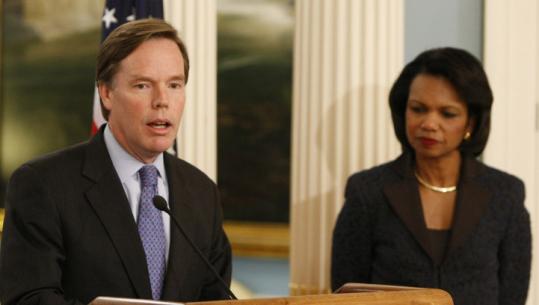
"You know the difference between a hockey mom and a pit bull? Lipstick!" - Sarah Palin
Contrary to common wisdom, dreamers can affect reality - Raphael Cohen-Almagor
An Essay on Don Quixote, Sancho Panza, Kadima (Forward) and Other Concerns
In memory of Abie Nathan, a truly passionate and caring human being.
Abie Nathan 1927-2008 -- Daniel Friedman -- Tzipi Livni -- Shaul Mofaz -- Olmert’s Legacy -- Jerusalem – A City of Gold and Tears -- Israelis on the Middle East -- International Religious Freedom Report 2008 -- Jenin, Jenin -- Sarah Palin -- Five Former U.S. Secretaries of State Support Talks with Iran -- Indigenous Children in Brazil -- International Day of Peace -- New Article -- New Books -- Inaugural Washington Institute Book Prizes Awarded -- New Resource on Israel -- Movie of the Month – Trade (2007) -- Wise-ass Lines -- My New Contact Details -- Shana Tova
Abie Nathan 1927-2008
 Abie Nathan, a man of peace who dedicated his life to the pursuit of peace, died on August 27, 2008 in Tel Aviv. He was 81. Abie was a dreamer, a believer in the human capacity to change things for the better, and above all – a doer.
Abie was a complex man who insisted on living his life as he saw fit. He was a remarkable, exceptional man, who in many respects paved the way to many peace activists who are not willing to pay the price he paid for his beliefs. Abie literally dedicated his life, his fortune, his time, his energies, to promote peace in our troubled region, and to relieve suffering wherever suffering occurred. For over thirty years, this very special man spread his ideas, collecting money with the help of international organisations and set up refugee camps for the victims of earthquakes, hunger and war in South America, Africa and Asia. In Israel he contributed to many organizations, in particular the Cancer Association, Ilan (Foundation for handicapped children), and Yad Sarah (an Israel-wide network of volunteers aiding disabled, elderly, and housebound people).
Abraham Jacob Nathan was born April 29, 1927 in Iran, educated in India, and served in the Royal Air Force as a fighter pilot, before immigrating to Israel during the 1948 War of Independence and joining the IDF's fledgling Air Force.
Abie burst onto the world of Middle East diplomacy in 1966 with a dramatic solo flight to Egypt in a rattletrap single-engine plane, more than a decade before Israel and Egypt signed a peace treaty. He wanted to break the deadlock between the two hostile countries and thought this Don Quixote act will break the ice. The amazed Egyptians returned the adventurous pilot to Israel.
He continued his campaign for peace later that year with trips to Europe, the United States and the Soviet Union, where he met with world leaders such as Pope John Paul VI and Senator Robert Kennedy, and intellectuals like Jean Paul Sartre and Bertrand Russell.
Although he failed in his initial bid to talk peace with the Egyptians, his daredevil escapade won the affection of many Israelis and launched a long and often eccentric one-man crusade to end the Arab-Israeli conflict.
 In the 1970s, Nathan went on repeated hunger strikes to try to force the Israeli government to make concessions for peace with Egypt and talk to the Palestine Liberation Organization.
Abie was an incredibly courageous man, guided only by his conscience. On May 19, 1973, his boat “The Voice Of Peace” anchored 25 km off the coast of Israel, aired its first broadcast and was heard around the Middle East. The broadcasts included musical programmes, talks about actual events and served as a platform for dialogue about any topic with emphasis on proper language and lack of violence. In 1973, when the Yom Kippur War broke out, Abie sailed to Egypt and docked opposite Port Said calling for a cease fire and a dialogue. After the war ended, Abie sailed to Marseilles when the ship was in great need of repair and funds. He stayed in Europe for a year and a half.
On February 3, 1975, Abie went on a hunger strike in N.Y. to protest against the violence inflected upon Jews by Arab terrorists in the Israeli town of Ma'alot, the bombing by Israeli planes of Lebanon and the arms shipments to the Middle East. On June 5, 1975, Abie requested permission to sail the Suez Canal to promote peace in the region and was refused. The ship turned back to her position opposite Tel Aviv and continued its broadcasts. In September of that year Abie sailed to Egypt loaded with thousands of flowers and tried to approach the coasts of Port Said. He was detained and expelled.
Abie was all over the place. Whenever you heard of a place on the planet that was hit by some sort of natural disaster, you could always rest assured that Abie would come to the rescue, raising funds and mobilizing help for the afflicted. Abie, as a true Don Quixote, had no qualms to take upon himself the responsibility of governments. For instance, In January 1976, Abie raised donations for children hospitals in Israel and Gaza. On February 12, 1976, Abie flew to Guatemala to help rebuild the town of Sanarate that was destroyed in an earthquake. He purchased food and 100,000 chocolate bars and distributed them in twenty-five villages that were damaged. With the help of some Jewish organizations, he purchased ninety-five machines to produce bricks, cement trucks and other equipment, which assisted in building about nine hundred homes. What was left was used to restore other villages.
The amazing Abie was relentless. In January 1979 he appealed to the Israeli government to accept four hundred Vietnamese war refugee orphans as a gesture of good will and a symbolic moral act to show the nations of the world that even though they refused to accept the Holocaust survivors after World War II, the Jewish people acted differently. The government approved the acceptance of one hundred refugees and Abie helped in their integration. When the Egyptian-Israeli peace agreement was signed, the ecstatic Abie organized a celebration in Tel Aviv municipal square and raised donations for hospitals in Egypt and Israel. In October 1979, when Abie heard about the horrors of the genocide in Cambodia, he purchased food in Bangkok and distributed it in villages on the border of Cambodia and Thailand. Then he proceeded to the USA to collect donations and received aid from the US government.
And so this journey of one man who not only talked continued.
Abie helped people in Ethiopia, in Colombia, in the Arab world, in Israel. Wherever there was immense suffering, Abie was there to help with the resources he was able to raise, single-handedly. A caring, passionate, true-humanitarian. Just imagine if there would have been one hundred Abies among us. This world would have looked positively different, very different.
Abie was never the darling of the establishment as he would not follow any common standards or accepted guidelines and norms. Over time, Abie earned a reputation as a maverick peace activist who often took diplomacy into his own hands. He was called a crackpot and a prophet. But many, including myself, admired the daring of the lone fighter for world peace and human understanding as he pounded on Egypt's doors, sailed his pirate radio ship “The Voice of Peace” into hostile Middle East waters or risked his life on numerous hunger strikes for peace.
In 1978, Abie began an indefinite hunger-strike protesting the building of Jewish settlements in the occupied West Bank and the Gaza Strip. The fast ended 45 days later after the Israeli Parliament, under media pressure, met in the Knesset, specifically to come to a resolution on the matter. The only thing resolved was an appeal by the government to Abie to end his strike.
In a 1996 interview Abie said that during one of his prison hunger strikes, he was certain he was going to die. He bought a grave and a tombstone. When asked what he would want written on the stone, he replied ''Nissiti,'' the Hebrew word for ''I tried.''
I met Abie a few times. He was not an easy person. He wanted things his way, and would erupt if people were slow to understand or do what he wanted of them. As a young person who used to listen to “The Voice of Peace” as I liked the music, and the ideas invoked in the programs, I visited the radio station offices in Tel Aviv. Abie was lightning and thunder, a busy ball of energy. Abie and I shared a common passion and love for Tel Aviv. I saw him in the coffee shops and restaurants we both attended. The last years of his life Abie was not well. I made a motion to the President of the University of Haifa to nominate him for an honorary doctorate. I campaigned for Abie and was truly disappointed when my university declined the motion. I thought Abie well deserved this honour, and I wanted to lift his morale. It would have been a small token of recognition and appreciation for a man who dreamed, who believed, who dared, who acted, who lived for peace. No other person in Israel embodied the zeal for peace as Abie did.
May his soul rest in peace, his spirit live forever, and his yearning fulfilled.
Sources: Ynet and AP (August 27, 2008); http://www.abie-nathan.com/pages-eng/main.html; http://www.jewishvirtuallibrary.org/jsource/biography/AbieNathan.html ; http://www.icce.rug.nl/~soundscapes/DATABASES/VOP/vop01.shtml
Daniel Friedman
I was asked, yet again, what I think about Daniel Friedman.
If the above story is the story of Don Quixote, the following story is of Sancho Panza.
 Friedman is the most innovative Minister of Justice in the history of Israel. He was nominated as a professional without party affiliation by Prime Minister Olmert on a single ticket, for a clear purpose: Weaken the justice system while strengthening the government and the legislature. From the moment he entered into office, until the moment he will exit the office, Friedman tirelessly does just that. It is the first time in the history of this ministry that the minister does not protect the best interests of the justice system and acts as a proxy of the prime minister in the ministry. In the case of Olmert, it is quite handy to have a biased, loyal servant to undermine investigations piled against you for corruption. Sancho Panza is there to attack the Legal Advisor to the Government for insisting on uncovering every piece of information relating to Olmert’s financial conduct. Sancho Panza is there to attack the police for its probe of Olmert’s relationships with business people who showered him with gifts because they “liked” him.
There are different ways to bring about changes, and Friedman is as gentle in introducing the changes as a wounded bear caught in a net. As he never forgave President of the Supreme Court, Dorit Beinish, for blocking the way of Professor Nili Cohen, his close friend, to the Supreme Court, Friedman had no interest from the beginning to cooperate with the Court in his initiatives. The result is that the Minister of Justice and the President of the Supreme Court do not communicate with each other. They do their best to ignore one another. When they are forced to sit on the same platform, their mutual resentment provides food and icy photos for the media. It is unpleasant. It damages the best interests of the justice system. It undermines the Supreme Court’s position in the public eye. Friedman, a man with a purpose and vengeance, does not care.
I presume that some of Friedman’s initiatives can perceived to be positive. But the tone, the way, the attitude make most of his conduct problematic. Would you listen to a person who screams his lungs out even words of wisdom? Friedman seems to believe that he invented the wheel, that he knows better, that he needs not consult anybody, that he can simply barge in and make things his way. I call such people peacocks: large bragging feathers, tall head to look down on others, yet the head is quite tiny. Friedman might be a clever person. He is certainly not wise.
You may ask me how damaging Friedman might be in the long run. Well, Friedman believes in law. Laws are such that they can be amended. As he amends the laws now to weaken the justice system, so the laws can be amended again to strengthen the system, and I know that the tide will change, and new winds will blow in the government, and in the justice ministry; I hope soon. Friedman has inflicted a lot of damage with his conduct and prose, some of which might be irreversible. The good news is that his days at the ministry are numbered. With Olmert, Friedman will go as well, and the justice system will loudly voice a huge sigh of relief. Hurricane Daniel will pass, and good people will come in to reassemble the pieces.
Tzipi Livni
 On September 17, 2008 “Kadima” held its primaries. The main contenders were Livni and former Chief of Staff Shaul Mofaz. Mofaz organized his campaign as a general, investing many long months in visiting communities and recruiting supporters. His tremendous efforts almost paid off. However, the crucial consideration for many “Kadima” voters was one: Who could lead the party to success in elections? Who is perceived by the Israeli electorate as most suitable to be prime minster? On this sole criterion, Livni seems more likely to win against Bibi.
Livni beat Mofaz by a margin of 431 votes, a difference of 1.1 percent. Livni garnered 43.1 percent (16,936 votes) to Mofaz's 42 percent (16,505). As for the other two contenders, Meir Sheetrit received 8.5% (3,327 votes) and Avi Dichter 6.5% (2,563 votes). Voter turnout in the primary stood at 55 percent.
The new chairman of Kadima, Tzipi Livni, said in her victory speech in reference to her primary opponents - Ministers Mofaz, Avi Dichter, and Meir Sheetrit - "they were rivals of the moment, but together we have one mission. Together we will create government stability." She now intends to "meet with the members of the Knesset factions in order to form a coalition."
Livni’s recipe in politics is simple: say little, don’t be controversial, do your work quietly without evoking controversy, be clean, depict yourself as responsible and your way will be paved upwards. The Teflon Lady’s career has been remarkable. I wish her much success in her job, with responsibility and far-sightedness.
Livni graduated from the Bar Ilan University Faculty of Law, and practiced public and commercial law for ten years. She is married to Naftali Spitzer and has two children, Omri and Yuval.
Livni is the daughter of a member of the Etzel underground, a close friend of Menachem Begin. This connection paved her way to the Likud party. She was elected to the Knesset in 1999, and after the Likud assumed power in 2001, Livni was appointed Minister of Regional Cooperation, and later was Minister of Agriculture and Rural Development, Minister of Immigrant Absorption and Minister of Housing and Construction. In October 2005, she was appointed Minister of Justice.
Livni was a key supporter of Ariel Sharon’s Disengagement Plan. Her political approach is based on compromise, and this has enabled her to score important successes. When the Likud party split over the disengagement plan, Livni was quick to join the new Kadima Party. When Ariel Sharon was incapacitated by a stroke, Ehud Olmert became Prime Minister and Livni became the number two leader in Kadima and the Israel government.
Before the elections of March 28, Livni was appointed Foreign Minister in the transition government. She continued to serve as Justice Minister. The dual posts resulted from the resignation of Likud members. She was given the third spot on the Kadima Knesset list, ensuring her election to the Knesset in Kadima's massive victory in March 2006.
On May 4, 2006, Livni became Deputy Prime Minister and retained the position of Foreign Minister, while resigning her post as Minister of Justice. Alone among leading government members, Livni escaped virtually unscathed from the massive wave of public criticism that followed the Israel-Hezbollah War, this despite the fact that she was the only foreign minister in the history of Israel who during war time preferred to remain in the country during most days of the war rather than representing the fighting nation abroad.
Livini has 42 days to form a new ruling coalition, and if she succeeds, she will become Israel's first female prime minister since Golda Meir stepped down in 1974. If she fails, the country will hold elections in early 2009, a year and a half ahead of schedule.
I was asked: What is the likelihood of Livni drawing Meretz into a coalition?
History has shown that prime ministers preferred the religious parties over the left. I do not think that anything has changed in this regard.
Hence, Livni's priority will be to ensure Shas first.
She will do her best to bolster her chance to become prime minister, hence she might approach other parties, including Meretz, also to show Labour that she has other options, in case Barak would not like to be taken for granted. However, experience has shown that Shas and Meretz is not a good combination, and that the two will not last together in the same boat for long.
Bibi, of course, is pushing for elections, saying "Let the people decide". At present, he is the leading candidate at the polls. Livni knows the momentum will be with her once she will begin serving as prime minister, provided she will be careful not to make colossal mistakes. As said, Livni is a very careful lady.
I thank Ami Isseroff for the biographical details.
Shaul Mofaz
 A day after his loss, Mofaz announced he was taking "time out" from politics to consider his future. Mofaz did not publicly attack Livni but in private implied that her advisors, known as the "ranch forum," had brought him down. Mofaz felt betrayed by the way the elections were held and by the "mudslinging" of Livni's people.
Mofaz thanked his supporters as well as Kadima cabinet ministers and MKs. "I have no complaints against anyone - not even those who didn't vote for me," said Mofaz. "I have nothing against the ministers and MKs who supported other candidates, or against the system or the general atmosphere, the media, the pollsters - everyone followed their own agenda."
He said that the gap between the number of votes he and Livni received was razor-thin and that several lawyers advised him to appeal the results. But, he said, "I decided that the good of the country comes before my personal gain, especially during this time in which the government is being tossed around in stormy waters."
And no. I am not sad.
But a few days later, Mofaz announced that his “time out” is over and that he intends to return to politics. Mofaz is a thinker. Slow. Hesitant. Wind-like. Should he be in power positions?
Olmert’s Legacy
On September 21, 2008 Ehud Olmert announced to his government that he is resigning from office.
Olmert came to power with a promise. He spoke of convergence, of dismantling settlements, of withdrawing the army, of reducing occupation and friction between the Israeli and Palestinian societies, of signing a peace agreement and of establishing a Palestinian state alongside Israel. This plan has been the aspiration of the Israeli left. The Kadima political platform resembled Meretz’s. For the first time, an elected prime minister spoke openly of viable solution to put an end to the bloody conflict. The dream was shuttered a few months later, when Olmert imprudently went into war with the Hezbollah. The results of this war were hundreds of people killed on both sides, thousands injured, hundred of thousands of refugees, deterioration of Israel’s deterrence, and the strengthening of the Hezbollah. In essence, since August 2006 Olmert was just biding time, surviving in office. He spent a significant amount of his precious time with his lawyers, preparing for his many investigations. I doubt whether a prime minister can function successfully under such a large cloud of suspicion for corruption.
Olmert’s legacy is likely to be threefold:
 The person who, yet again, went to war in the north, sinking Israel yet again in the muddy and truculent waters of Lebanon, bringing Iran close to our borders and weakening our security.
The person who gave new meaning to irresponsible personal favours from businessmen (next on the agenda, the relationship between Aliza Olmert’s art exhibitions and affluent business men).
Lastly, Olmert is the person who launched a vicious, uncompromising campaign against the Supreme Court, aiming to weaken it and to establish an unbalanced separation of powers: A strong government, a struggling Knesset, and a puny Supreme Court that will cease to intervene in the business of government.
The three architects of the most unnecessary war in the history of Israel are now out of office. Dan Halutz was first to leave, followed by Amir Peretz (I hope and trust his political career is over), and the first among equals, Olmert. It took more than two years since I started my campaign to see the failing prime minister ousted. On this we say: Better late than never.
Jerusalem – A City of Gold and Tears
 A man enters his vehicle and drives into a group of Israelis with the aim to kill. This is the latest terrorist fashion in Israel. This is now the third time such an incident takes place. All were in Jerusalem. All carried out by Israeli Arabs, residents of East Jerusalem. All had no known association with a terrorist group. Sporadic and isolated acts that are very difficult to forestall.
On September 22, 2008, 19-year-old Qassem al-Mughrabi, a resident of Al Farouk neighborhood, drove his car into a crowd of Israel Defense Forces soldiers at a busy Jerusalem intersection. Seventeen people were wounded in the incident, mainly soldiers on their way to the Western Wall to mark the upcoming Jewish New Year. Al-Mughrabi was shot dead by one of the soldiers in the group he targeted.
This is the sixth in Jerusalem since the beginning of the year.
Israelis on the Middle East
 The August 2008 War and Peace Index published by Prof. Ephraim Yaar and Prof. Tamar Hermann is a particularly interesting one. It deals in the main with how Israelis perceive their region.
The world of images that the concept “Middle East” arouses in the Israeli Jewish population is mainly negative and includes adverse opinions, perceptions, and emotions. Of all the words the interviewees quickly came up with, 61% had negative connotations, 20% neutral, and 19% positive. As expected, the negatively weighted words were mainly related to war, terrorism, and Islam. These came along with expressions of a general, colorful nature such as: “a nutcase region,” “a shitty place,” “a morass,” “I can’t take any more of it,” “God help us,” and “What the hell are we doing here?” On the positive side, most common were words expressing an aspiration to peace. The neutral words mainly related to names of countries (Egypt, Jordan, Iran) or relevant continents (Africa, Asia) and to the climate (hot, drought).
Given this negative tendency, it comes as no surprise that a majority of the Jewish public not only does not believe Israel will succeed in the coming decades to integrate into the Middle East politically (71%), economically (52%), or culturally (59%), but also is not interested in doing so, clearly preferring integration with the West (Europe-United States) in all three spheres. In the political sphere, 63% are interested in integrating with the West vs. 28% who are interested in integrating with the Middle East; in the economic sphere—74% vs. 18%; and in the cultural sphere— 69% vs. 15%. A comparison with data collected on these questions about a decade ago (February 1995), that is, in the early stages of the Oslo process, shows that the tendency to prefer integration with the West over integration with the East has strengthened, most likely as a result of the failure of the peace process.
In response to a question concerning which of the three cultures— Western, Jewish, or Arab—one feels closest to, over two-thirds said they felt closest to the Jewish culture (64%) compared to 31% who felt closest to the Western culture. Only a tiny minority (2%) felt closest to the Arab culture.
The findings on the Israeli Arabs’ positions on these questions are particularly thought-provoking. Their world of images regarding the Middle East is more balanced—34% presented neutral words and images, 32% negative ones, and 34% positive ones. Here too, though, the majority prefers integration with the West (Europe-United States) and not with the Middle East. In the political sphere, 49.5% prefer integration with the West vs. 39% with the Middle East; in business and economy, 63% vs. 39%; and particularly surprising is the preference for the West over the East regarding cultural integration—49.5% vs. 23% (the rest, about one fourth, have no clear opinion on the issue). Yet, when asked about their closeness to one of three cultures that were mentioned, an overwhelming majority of 88% said they felt especially close to the Arab culture, 7% to the Jewish culture, and 4% to the Western culture (the rest did not know).
People who feel that they do not belong in their region will never feel comfortable in their region, and will never be accepted in their region. This is unsurprisingly another bad piece of news for Israel. Israelis would rather have the Dutch, the Italians and the New Zealanders as their neighbours. This, however, will never happen. Not in Israel.
International Religious Freedom Report 2008
 The US Bureau of Democracy, Human Rights, and Labor released its most recent report and I wish to highlight some of its findings regarding Israel.
The 2008 Annual Report on International Religious Freedom, is an annual survey prepared by the U.S. State Department’s Bureau of Democracy, Human Rights, and Labor. The report documents “the actions of governments---those that repress religious expression, persecute believers, and tolerate violence against religious minorities, as well as those that protect and promote religious freedom.”
Section I. Religious Demography
Based on its pre-1967 borders, the country has an area of 7,685 square miles and a population of 7.3 million, of which 5.5 million are Jewish, 1.5 million are Arabs, and 320,000 are classified as "other"--mostly persons from the former Soviet Union who immigrated under the Law of Return but who did not qualify as Jews according to the Orthodox Jewish definition or the definition used by the Government for civil procedures. According to figures from the Central Bureau of Statistics for 2005, the latest year such information was available, 7 percent of the Jewish population are Haredi, 10 percent are Orthodox, 38 percent describe themselves as "traditionally observant" or "traditional," and 45 percent describe themselves as "secular" Jews, most of whom observed some Jewish traditions. A growing but still small number of traditional and secular Jews associate themselves with the Conservative, Reform, and Reconstructionist streams of Judaism, which are not officially recognized for purposes of civil and personal status matters involving their adherents. Although the Government does not officially recognize them, these streams of Judaism received a small amount of government funding and were recognized by the courts. There is a small but growing community of approximately 10,000 Messianic Jews.
Slightly more than 20 percent of the population is non-Jewish, the vast majority of whom are ethnic Arabs. Of the non-Jewish population, Muslims constitute 16.5 percent, Christians 2.1 percent; Druze 1.7 percent; other religious groups 0.5 percent, including relatively small communities of, among others, Messianic Jews, Jehovah's Witnesses, and Bahai.
The Government reported that during 2007 it issued 88,500 permits for foreigners to work in the country, and estimated that another 84,000 illegal foreign workers reside in the country. Most foreign workers are Protestant, Roman Catholic, Orthodox Christian, Buddhist, Hindu, or Muslim.
Restrictions on Religious Freedom
Government policy continued to support the generally free practice of religion; however, an increase in societal abuses and discrimination contributed to a slight decline in respect for religious freedom during the reporting period. Specifically, societal abuses and discrimination increased against some evangelical Christian groups as well as Messianic Jews (persons who identify as Jews and follow Jewish traditions but who believe Jesus was the Messiah).
Many Jewish citizens objected to the exclusive control of the Orthodox establishment over Jewish marriages and other personal status matters, and to the absence of provision for civil marriage. Restrictions on movement and access to non-Jewish religious sites, as well as limits on funding and protection of those sites, also contributed to religious tensions.
Approximately 310,000 citizens--mostly immigrants from the former Soviet Union who immigrated under the Law of Return--were ineligible to marry in the country during the reporting period because they were not recognized as Jewish by Orthodox religious authorities. Jews wishing to marry in a non-Orthodox religious ceremony or wishing to marry someone of another faith had to do so abroad. The Ministry of the Interior recognizes such marriages only when performed abroad. According to the nongovernmental organization (NGO) New Family Organization, more than 5,000 couples marry in civil ceremonies abroad each year, most in Cyprus.
The 1967 Protection of Holy Sites Law protects all holy sites, but the Government implemented regulations only for Jewish sites. At the end of 2007 there were 136 designated holy sites, all of which were Jewish. The Holy Sepulcher and other well-known sites have de facto protection as a result of their international importance; however, community mosques, churches, and shrines often face threats from developers and municipalities that Jewish sites do not face. The Christian pilgrimage sites around the Sea of Galilee face regular threats of encroachment from district planners who want to use parts of their properties for recreation. In the past, only diplomatic interventions have forestalled such efforts.
The Reform and Conservative Movements
In May 2008 the first-ever state-funded Reform and Conservative synagogues were opened in Modi’in. This followed the High Court’s ruling in 2003 that it was permissible to use state funds for the construction of non-Orthodox synagogues. An agreement between the Government and the municipality of Modi’in resulted in the decision to provide state (but not municipal) funds for the construction and operation of non-Orthodox synagogues. Earlier in 2003, IRAC had petitioned the High Court on behalf of a Reform congregation in Modi'in to require that Modi'in municipality fund construction of a Reform synagogue.
Jewish-Arab Coexistence
Numerous NGOs in the country were dedicated to promoting Jewish-Arab coexistence and interfaith understanding. Their programs included events to increase productive contact between religious groups and to promote Jewish-Arab dialogue and cooperation. These groups and their events have had varying degrees of success. Interfaith dialogue often was linked to the peace process between Israelis and Palestinians and between the country and its Arab neighbors. A number of NGOs existed that sought to build understanding and create dialogue between religious groups and between religious and secular Jewish communities. Several examples were the Gesher Foundation (Hebrew for "bridge"); Meitarim, which operates a pluralistic Jewish-oriented school system; and the Interreligious Coordinating Council, which promoted interfaith dialogue among Jewish, Muslim, and Christian institutions. The Council of Religious Institutions of the Holy Land--comprised of the chief religious authorities of the area’s Jewish, Muslim, and Christian establishments--continued to meet during the reporting period in its effort to build religious support for peace between Israelis and Palestinians.
See http://www.state.gov/g/drl/rls/irf/2008/108484.htm
Jenin, Jenin
 From the New York Times of September 12, 2008 I learned that the Palestinian State will emerge from Jenin. The newly trained and equipped Palestinian security officials have restored order. Israeli soldiers have pulled back from bases and are in close touch with their Palestinian colleagues. Civilians are planning economic cooperation — an industrial zone to provide thousands of jobs, mostly to Palestinians, and another involving organic produce grown by Palestinians and marketed in Europe by Israelis. Ministers from both governments have been visiting regularly, often joined by top international officials. Israeli Arabs are playing a key role.
The aim is to stand conventional wisdom on its head. Instead of a shaky negotiated peace treaty imposing coexistence from the top down, a bottom-up set of relationships that lock the two societies together should, proponents argue, lead to a real two-state solution.
“We got a clear American message that the Palestinian state will start from Jenin,” asserted Col. Radi Asideh, the deputy commander of the Palestinian security forces here who have recently received new Land Rovers and AK-47 assault rifles. “The plan is to have a security model that can then be implemented all over Palestine.”
Those may sound like the hopeful words of a credulous officer. But Gen. James L. Jones, special American envoy to the region said in an interview: “I see this as a kind of dress rehearsal for statehood, a crucible where the two sides can prove things to each other.”
Ehud Barak said: “So far, Jenin is a great success. The Palestinian police have created a different mood there. We need to see money being poured into projects now to keep the momentum going. If done right, we think this could become an example.”
The choice of Jenin as a model might seem strange given the level of violence that emanated from this city since 2000. As a result, the city and region of Jenin have been severely economically depressed and chaotic.
Today, militants have given up their arms and the police walk the beat in this town. The hospital has been refurbished with American aid. Shops downtown stay open late. People feel they can breathe.
Jenin, officials on all sides say, offers many advantages for a pilot project, an idea arrived at by American and European officials in February when they sought ways to build peace on the ground.
First, they said, Hamas, the main Palestinian militant opposition in the West Bank, is relatively weak in Jenin. Second, after the evacuation of four Israeli settlements in the region in 2005, the area is essentially free of settlers, a major source of friction elsewhere. Third, the barrier that Israel has been building causes little friction in this area because it is right on the boundary between Israel and the West Bank, not over it so there is little territorial dispute.
Sarah Palin
 Sometimes I wonder whether she is part of the Obama campaign. I have less doubts about her capabilities to take the reigns in the event that McCain wins and then, for some reason, unable to continue to serve his country.
Five Former U.S. Secretaries of State Support Talks with Iran
Five former U.S. secretaries of state announced their support for talks with Iran, with all five saying the United States should not wait to launch diplomatic engagements with the Islamic Republic.
Madeleine K. Albright; James A. Baker, III; Warren Christopher; Henry A. Kissinger; and Colin L. Powell issued their support for talks during a roundtable discussion entitled "The Next President: A World of Challenges," held at Washington D.C.'s George Washington University.
Kissinger declared "I'm in favor of negotiating with Iran," noting that the main concern is whether a nuclear weapon could make its way into the hands of a non-state actor.
Albright also issued her support for talks, saying, "We need to engage with Iran. You have to deal with countries you have a problem with." Albright added that the issue is more serious because the war in Iraq has strengthened Iran. She also said the U.S. has an inaccurate view of Iranian society, saying, "[Iranian President Mahmoud] Ahmadinejad is not particularly popular, and we don't understand Iranian society, it's not monolithic."
Powell issued a harsh rebuke to those who would stonewall the Islamic Republic, saying, "we should start to talk to them and not wait till later. What are we afraid of?" The former head of the Joint Chiefs of Staff also said the U.S. could use economic aid as a means of thawing relations with Iran, adding, "I had one meeting with the Iranian Foreign Minister. I said to him: 'What's the major problem facing Iran today?' He said: 'We have a young population and we have to create jobs' - they have major economic problems; now that's something we can deal with."
Former Clinton administration secretary of state Warren Christopher highlighted U.S. military shortcomings in the need to pursue talks, saying, "We cannot afford not to have a dialogue, the military options are very poor."
The former secretaries of state also were asked who they endorsed for president, with James Baker III, secretary of state under George H.W. Bush's administration, issuing his support for John McCain and Albright saying "I'm supporting Senator Obama, it will send a message of diversity."
Powell said he hadn't yet decided who he's supporting because "there's too much talk about lipstick and pigs," adding, "we must move beyond issues of heroism or color, and ask, Who's going to have the best economic policy and bring the best judgment?"
Source: Natasha Mozgovaya, Haaretz 16/09/2008
Indigenous Children in Brazil
 I was asked to post the following:
It's very serious the indigenous children situation in Brazil: they barely have (deficient) health care, there are a lot of cases of malnutrition, and infanticide and intentional killing of children is a common practice among some tribes. There are a lot of causes: close pregnancy, unhealthy and disabled children, gender preference, parent's death, twins birth, unmarried mother, unknown or ethnically different father. And the methods can be to bury alive, hitting, shooting by arrows, hanging, asphyxiation, food and water privation,
A polemical film about these practices has been launched recently, and I want to suggest that you to watch and discuss the theme: The film is available at http://www.hakani.org/en/premiere.asp You can get more information about documentary and watch more videos at the homepage: http://www.hakani.org/
International Day of Peace
 World Peace Emerging is proud to announce a special report about the International Day of Peace, just in time for Peace Day, September 21, 2008. This 95 page, full color digital magazine is packed with event calendars and articles about peace building strides being made around the world. There are events in every major city on earth. Peace Day Magazine is yours, FREE - a gift to help spread awareness and understanding about the great peace work happening today.
Over 3500 groups and organizations hold events during the month of September, honoring Peace Day and bringing publicity to their work. It is our hope that this digital magazine will bring thousands of new people into these organizations to expand their reach. You can help by forwarding this email to your friends and contacts.
We also have a banner link that you can use on your blog or website, to offer Peace Day Magazine to your readers. Please email me at
peaceday@worldpeaceemerging.com for the image and link. This is what it looks like.
Please let us know how many you send out to, so that we can keep track of how far we have reached, and measure the results it has brought. I will send you a free copy of our award winning (digital) book, "The Rise of Biodiesel" as a thank you, just for helping us to promote Peace Day Magazine!
Many blessings,
Saphir Lewis
World Peace Emerging
PO Box 765
Everson, WA 98247
360-966-4683 http://www.worldpeaceemerging.com/ ; http://www.peacedaymagazine.com/
New Article
R. Cohen-Almagor and Sharon Haleva-Amir, “The Israel-Hezbollah War and the Winograd Committee”, Journal of Parliamentary and Political Law, Vol. II;1 (2008), pp. 27-44.
On July 12, 2006, the Hezbollah terrorist organization attacked two Israeli Defense Forces' armored Hummer jeeps patrolling along the border with gunfire and explosives, in the midst of massive shelling attacks on Israel's north. Three soldiers were killed in the attack and two were taken hostage. Hezbollah leader Sheikh Hassan Nasrallah said: "No military operation will return the Israeli captured soldiers... The prisoners will not be returned except through one way: indirect negotiations and a trade of prisoners". Later that day, four IDF soldiers were killed when their tank hit a mine some six kilometers inside Lebanese territory.
 The Israeli Defence Forces (IDF) began heavy artillery and tank fire. Israel Air Force jets struck roads, bridges and Hezbollah guerrilla positions in southern Lebanon. The air raids were intended to block any escape route for the guerrillas who may be taking the captured IDF soldiers to areas further removed from the border in order to prevent an Israeli rescue mission. But this was too late. The information about the kidnapping had arrived considerable time after fact, when the abductors were well inside Lebanon. The destructive airstrike could not halt the abductors. It only fueled the escalation.
Prime Minister Ehud Olmert convened the government on Wednesday night, June 12, 2006 to decide Israel’s reaction. The government agreed that the attack had created a completely new situation on the northern border, and that Israel must take steps that will "exact a price", and restore its deterrence. Olmert rejected Hezbollah's demand that Israel redeem the kidnapped soldiers' freedom by releasing Lebanese and Palestinian terrorists jailed in Israel.
That night, Israel responded by bombarding bridges in central Lebanon and attacking Hezbollah positions along the border. The Hezbollah did not blink and retaliated on July 13, 2006 with Katyusha rockets across northern Israel. One person was killed and dozens were wounded. In Nahariya, a woman died when a rocket struck her home. Another 29 people were injured, including a number of children. Most of the casualties were lightly wounded; one person sustained serious wounds. At least eleven people were wounded when another barrage of Katyusha rockets fired from Lebanon struck the northern town of Safed.
The Israeli-Hezbollah War ended on August 14, 2006 when the UN Security Council Resolution (no. 1701) entered into force. In the 34 days of fighting, 153 Israelis were killed. Thirty six of them were civilians, killed as a result of the rockets campaign. 119 of them were soldiers, killed in Israel and in Lebanon. 3,970 rockets were fired on Israel, an average of 120 rockets a day. Many of those rockets hit buildings, caused damage and cost lives. About 2,000 people were injured; many of them suffered shock and anxieties. The estimated damage was more than five billion shekels. On the Lebanese side the figures are contested. The Hezbollah claims that he had suffered about 250 casualties. Israel has estimated its forces killed 600 Hezbollah fighters. A UN official estimated the deaths at 500; Lebanese officials had also estimated that up to 500 fighters were killed and another 1,500 injured. According to the Report of the Commission of Inquiry on Lebanon pursuant to Human Rights Council resolution S-2/1, 1,191 Lebanese citizens were killed during the war and 4,409 citizens were injured.
 During the war, voices of protest were heard in Israel, mainly from reserve service soldiers, and journalists. Distinguished writers such as A.B. Yehoshua, Amos Oz and David Grossman, who had later bereaved his own son, called for the government to avoid the expansion of the military operations and move from the martial arena to the political arena. After the war, thousands of people have criticized the government decisions, demanded the establishment of a national inquiry committee to investigate the war events and, called for the resignation of the war architects: Prime Minister Ehud Olmert, Minister of Defence Amir Peretz, and Chief of Staff Dan Halutz.
This article criticizes the establishment of the committee and the results it reached, arguing that it was a “sold game”: The person under investigation should never be allowed to nominate his judges. This is mockery of justice, and travesty of social responsibility.
As always, I’d be happy to email the article to interested parties.
New Books
Diffie, Whitfield, Susan Landau, Privacy on the Line: the politics of wiretapping and encryption (Cambridge, Mass.: MIT Press, 2007).
Description: xvii, 472 p.: ill., map; 24 cm.
ISBN: 9780262042406 (hardcover : alk. paper)
0262042401 (hardcover : alk. paper)
Heyman, Steven J., Free Speech and Human Dignity (New Haven: Yale University Press, 2008).
Paust, Jordan J., Beyond the Law: The Bush Administration’s Unlawful Responses in the “War” on Terror (Cambridge and New York: Cambridge University Press, 2007).
PRICE = £17.99.
Pavlik, John Vernon, Media in the Digital Age (New York: Columbia University Press, 2008).
Inaugural Washington Institute Book Prizes Awarded
from - http://www.washingtoninstitute.org/templateC11.php?CID=495
The Siege of Mecca, Yaroslav Trofimov's gripping account of the takeover of Islam's holy shrine in 1979, garnered the Gold Medal -- and a $30,000 cash award -- in The Washington Institute's inaugural Book Prize competition, the research institution announced on September 20, 2008.
The Book Prize, established to highlight new nonfiction books on the Middle East, is among the world's most lucrative literary awards. Winners were announced before an audience of more than 300 journalists, diplomats, scholars, and members of the Institute's Board of Trustees at the organization's annual Weinberg Founders Conference in Leesburg, Virginia.
In addition to the top winner, two other books were recognized as well -- Silver Medal winner ($15,000) Foxbats over Dimona, by Isabella Ginor and Gideon Remez, the provocative account of how nuclear politics triggered the Six Day War; and Bronze Medal winner ($5,000) Worlds at War, by Anthony Pagden, a sweeping look at the two-millennia-old contest between East and West.
Winners were chosen by a three-person jury that included eminent Middle East historian Bernard Lewis, Pulitzer Prize-winning journalist Jim Hoagland, and acclaimed scholar of American foreign policy Michael Mandelbaum.
"The goal of our Book Prize is to help Americans -- from the White House to the average home -- identify what they need to read in order be informed about the world's most volatile region," said Institute executive director Dr. Robert Satloff. "It is a new but essential way for The Washington Institute to fulfill its mission of injecting scholarship into U.S. Middle East policymaking."
Winners of the 2008 Washington Institute Book Prize
Gold Prize: $30,000The Siege of MeccaYaroslav Trofimov (Doubleday)Prize Jury Commendation:"When armed men mainly from Saudi Arabia seized the Grand Mosque in Mecca and held it for two bloody weeks in 1979, they shook the foundations of the Saudi regime. Yaroslav Trofimov's riveting account of the siege, the incompetent bumbling of the Saudis, the incomprehension of the Carter administration, and the bloody climax reads like a thriller. But this book is much more: it is a penetrating look at the clash of materialist mania and Islamic zealotry that rumbles deep within the kingdom. Trofimov has pieced together long-hidden aspects of the story through painstaking research, often under difficult and even dangerous circumstances. Our understanding of the rise of al-Qaeda and the attacks of September 11 is now richer and more complex, thanks to this brilliant combination of social history and investigative journalism."
Silver Prize: $15,000Foxbats over DimonaIsabella Ginor and Gideon Remez (Yale)Prize Jury Commendation:"Foxbats over Dimona is a meticulously researched yet conceptually bold analysis of the origins of the 1967 Arab-Israeli Six Day War. Provocative Soviet actions that have customarily been portrayed as inept or inexplicable are set out by the authors as part of a deliberate plan, which could have culminated in a Soviet attack on Israel's nuclear facility at Dimona. This book, piecing together long-overlooked evidence and clues, delivers all the suspense of a spy novel. It has challenged our understanding of the Six Day War, pioneering a whole new vein of research into the labyrinth of Soviet sources and prompting new scrutiny of events whose consequences resonate today."
Bronze Prize: $5,000Worlds at WarAnthony Pagden (Random House)Prize Jury Commendation:"Anthony Pagden ranges with great fluidity over the history of the long conflict between East and West, Europe and Asia, and ultimately Christianity and Islam. He treats distant past and immediate present, from Herodotus to today's jihadist movements, with equal erudition and a profound understanding of cultural and social forces in vastly different societies and epochs. Master of the broad brush and the fine detail alike, Pagden has painted one of the greatest duels in history on a large canvas that serves as an essential backdrop to today's headlines."
New Resource on Israel
Sam Lehman-Wilzig, who is a visiting professor this year at Brown University, has launched a weekly blog called "Israelity". It can be found on http://www.profslw.com/ under "Blogs" in the upper blue menu. Anyone can register to get the latest post automatically by email (on the left hand side of the homepage). The blog attempts to deal with issues behind the news or that are not covered at all by the mainstream press.
Movie of the Month – Trade (2007)
 Based on a New York Times Magazine story, this crime drama starring Kevin Kline delves into a sordid world of international sex trafficking that leads from Mexico City to a New Jersey stash house. In a bid to save kidnapped 13-year-old Adriana (Paulina Gaitan) before she's sold into sexual slavery, her desperate brother (Cesar Ramos) teams with a Texas cop (Kline). Can they find her before she vanishes into a hellish underworld?
This is a powerful and moving drama, well directed and well played, with beautiful music. It provides an insight into the dark and ugly world of pedophile international rings interwoven with sex slavery and trafficking. It is estimated that one million women and children are sold worldwide. Much too little is done to counter this exploitation and stop the kidnapping and selling of human beings for the satisfaction of men.
Wise-ass Lines
1. My husband and I divorced over religious differences. He thought he was God and I didn't.
2. You're just jealous because the voices only talk to me
3. Beauty is in the eye of the beer holder.
4. Out of my mind. Back in five minutes.
5. Consciousness: That annoying time between naps.
6. Wrinkled Was Not One of the Things I Wanted to Be When I Grew up.
7. I Have a Degree in Liberal Arts; Do You Want Fries With That?
8. A hangover is the wrath of grapes.
9. Stupidity is not a handicap. Park elsewhere!
My New Contact Details
 I have now resettled in Hull/Beverley. My contact details:
Raphael Cohen-Almagor
Chair in Politics and Deputy Dean for Research
Department of Politics and International Studies
The University of Hull
Cottingham Road
Hull, HU6 7RX
United Kingdom
T: +0044 (0)1482 465024
F: +0044 (0)1482 466208
R.Cohen-Almagor@hull.ac.uk
Mira and Yizhar just left. It was great to have them. I hope to see as many as you. You are most welcome to come my way.
Shana Tova

As we are about to celebrate our New Year, may I wish you and your loved ones a year of small magical moments,
of new hopes and accomplishments,
filled with Love, Joy and Happiness.
Yours as ever,
Rafi
My last communications are available on http://almagor.blogspot.com/
Earlier posts at my home page: http://hcc.haifa.ac.il/~rca/ <http://hcc.haifa.ac.il/~rca/>
People wishing to subscribe to this Monthly Newsletter are welcome to e-mail me at rafi.almagor@wilsoncenter.org